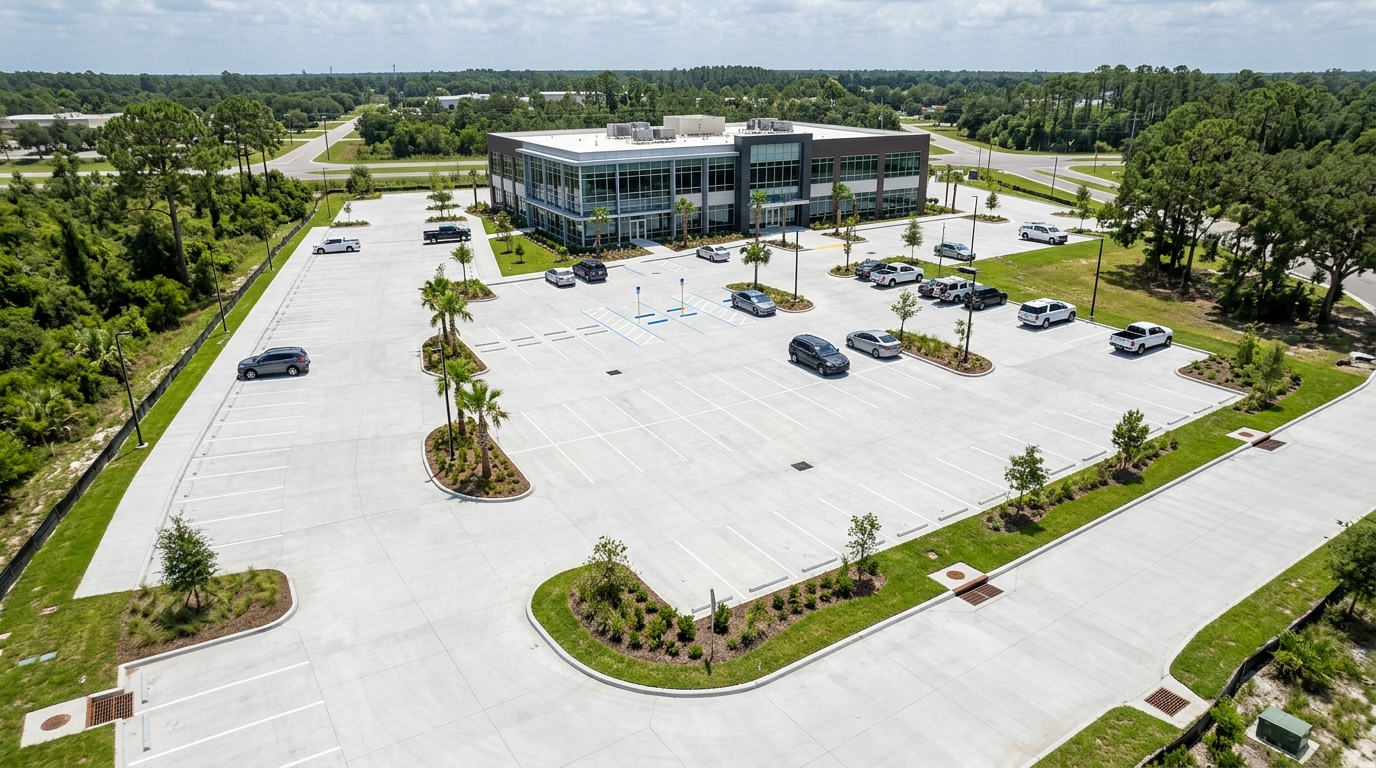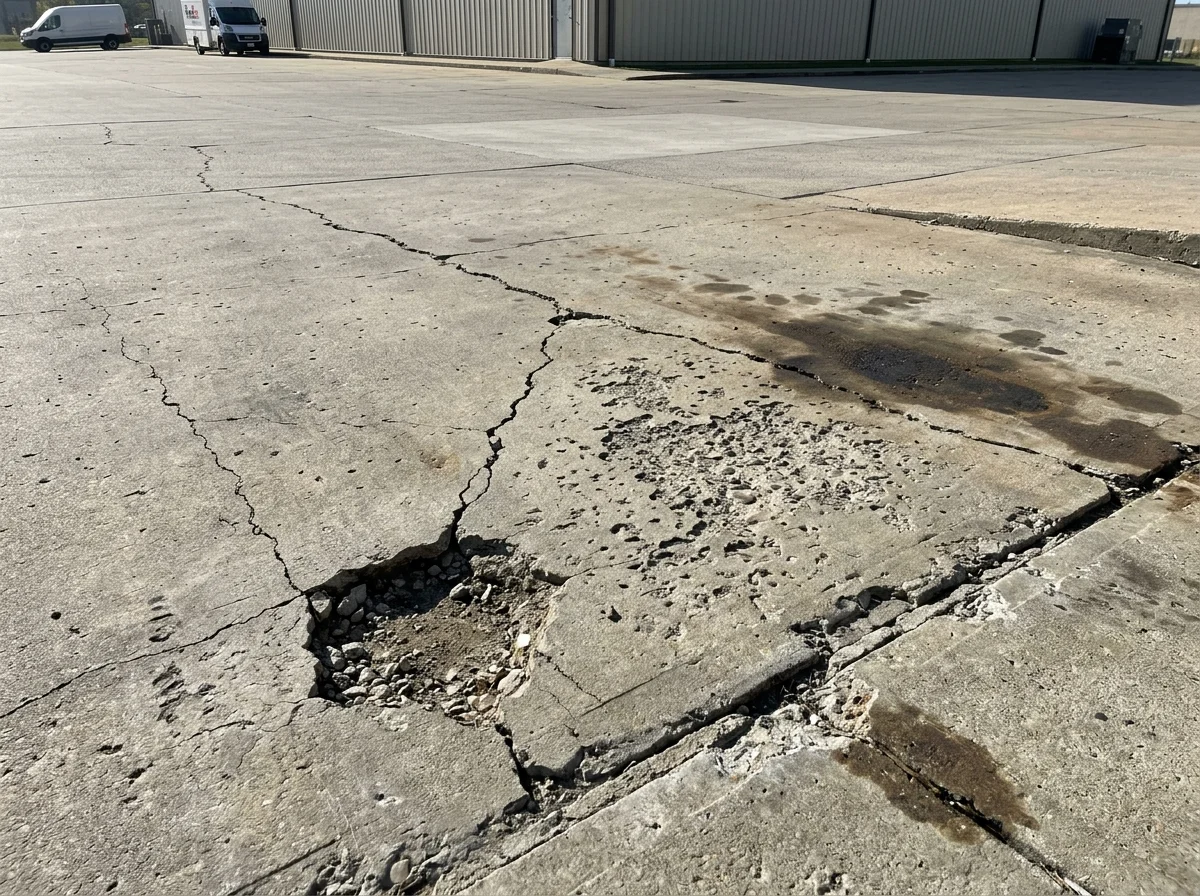

A commercial concrete job can look simple on paper: order the mix, place it, finish it, and let it cure. The difficult part is making sure the mix suits the building, site, loading, weather, and service conditions.
A useful specification settles those questions before the first truck arrives and gives everyone the same expectations.
Start With the Job, Not the Mix
The right specification begins with use. A warehouse floor, equipment pad, foundation, loading dock, and structural column may all use concrete, but they do not need identical performance.
Before selecting a mix, identify:
- What the concrete will support
- Interior or exterior exposure
- Traffic, impact, or abrasion
- Moisture, chemicals, and temperature
- Reinforcement and member dimensions
- Placement and finishing methods
- Testing needed to confirm compliance
This prevents a common mistake: choosing a familiar mix and trying to make the project fit it.
The Numbers That Belong on the Specification
Concrete specifications contain several measurable requirements. These numbers work together.
| Requirement | Main purpose |
| Compressive strength | Structural performance |
| Water-cement ratio | Strength and durability |
| Slump | Fresh-concrete workability |
| Air content | Exposure-related durability |
| Aggregate | Gradation and placement |
| Admixtures | Setting or water reduction |
| Curing | Strength and surface development |
For structural work, required strength should come from the design rather than a generic commercial standard. A 3,000 PSI mix is not automatically suitable for every project, while specifying 5,000 PSI everywhere does not fix poor detailing, weak support, or bad placement.
Water Is Not a Shortcut to Workability
Slump is easy to confuse with quality. A wetter mix may appear easier to place, but adding water can change the water-cement ratio and affect hardened concrete. If more workability is needed, the approved mix may use a water-reducing admixture instead. The specification should identify the permitted slump range and how adjustments are handled.
That matters on a busy commercial pour: concrete must move around forms and reinforcement without changing the approved mix.
Aggregate Choices Affect the Finished Concrete
Aggregate is not simply filler. Particle size, distribution, purity, and durability influence handling and final results. The specification should identify acceptable aggregate characteristics where required. Maximum aggregate size also needs to work with member thickness and reinforcement spacing.
A mix suited to a thick slab may create problems inside a congested structural member. The materials have to fit the geometry of the work.
Exposure Changes the Requirements
Interior concrete does not face the same conditions as exterior paving, wet areas, or chemically exposed surfaces. Review moisture, drainage, abrasion, chemical contact, and other environmental conditions before setting durability requirements. Air entrainment, water-cement ratio limits, cementitious materials, or admixtures may change according to exposure.
Jacksonville’s current city concrete specifications for applicable city work call for placement temperatures above 35°F and below 90°F when economically feasible. They also say set-retarding admixtures should be considered when concrete being placed is consistently above 75°F. These are city specifications for applicable work, not a universal requirement for every private project.
Reinforcement Has to Match the Design
Concrete does not work alone in reinforced construction. Bars, welded wire reinforcement, dowels, and other systems have specific sizes, spacing, cover, laps, supports, and locations. Those details belong in the drawings and specifications. The field crew should not be deciding reinforcement placement based on what is convenient once the concrete truck arrives.
The specification should also identify acceptable materials and how reinforcement is inspected before concrete covers it.
Placement Details Can Make or Break Good Concrete
The approved mix is only one part of the job. Delivery, discharge, consolidation, finishing, joints, and curing all affect the result.
Project documents should answer practical questions:
- What happens if slump is outside the approved range?
- How will concrete be consolidated?
- What finish is required?
- Where are construction and isolation joints?
- Which curing method will be used?
- What weather conditions require special procedures?
Jacksonville’s published city specifications for applicable work include a 1-hour-30-minute limit from mixing to placement for concrete below 99°F, along with hot-weather curing provisions. Jobsite water added to concrete must also be recorded on the delivery ticket.
Testing Should Be Planned Before the Pour
Quality control works better when everyone knows what will be checked and what counts as acceptable.
- Review delivery tickets and approved mix information.
- Check slump when required.
- Measure air content when specified.
- Make compression test cylinders for strength verification.
- Document placement and curing.
- Compare results with contract requirements.
The testing plan should establish sampling frequency, test ages, acceptance criteria, and reporting. A failed result should have a defined evaluation process instead of becoming an argument after placement.
Jacksonville’s commercial permitting process requires project documents and specifications for review, while structural drawings and specifications form part of commercial submittals. The city currently enforces the Florida Building Code 8th Edition (2023).
A Useful Pre-Pour Review
Before placement, the project team should be able to answer:
□ What strength is required?
□ What is the maximum water-cement ratio?
□ What slump is permitted?
□ Which aggregates and admixtures are approved?
□ What exposure requirements apply?
□ What reinforcement and cover are required?
□ How will the concrete be placed and cured?
□ Which tests will be performed?
This catches gaps before they become expensive.
Concrete Advantage treats the specification as part of the construction plan, not paperwork added at the end. Clear requirements help the field and testing teams work toward the same finished result.
Frequently Asked Questions
What PSI should commercial concrete be?
There is no single PSI value for all commercial work. Required compressive strength depends on structural design, loading, exposure, member type, and project specifications. The engineering documents should establish the required strength.
Does a higher slump mean better concrete?
No. Slump describes fresh-concrete consistency, not final strength. The mix needs enough workability for placement, but unnecessary water can change its designed water-cement ratio.
Are admixtures required on every commercial project?
No. Admixtures are selected according to mix and performance requirements. They may provide water reduction, setting control, workability, or air entrainment when specified.
Who decides the concrete specifications?
The project design team establishes requirements using structural calculations, drawings, codes, exposure conditions, owner needs, and project standards. The supplier then develops a mix that meets those requirements.
Final Thoughts: Specifications That Prevent Guesswork
Commercial concrete performs best when expectations are settled before placement. Strength, workability, materials, exposure, reinforcement, curing, and testing should form one coordinated plan.
For Jacksonville commercial work, Concrete Advantage understands the value of clear specifications and disciplined placement. The exact requirements should always follow the project’s engineering documents, applicable codes, and contract specifications.