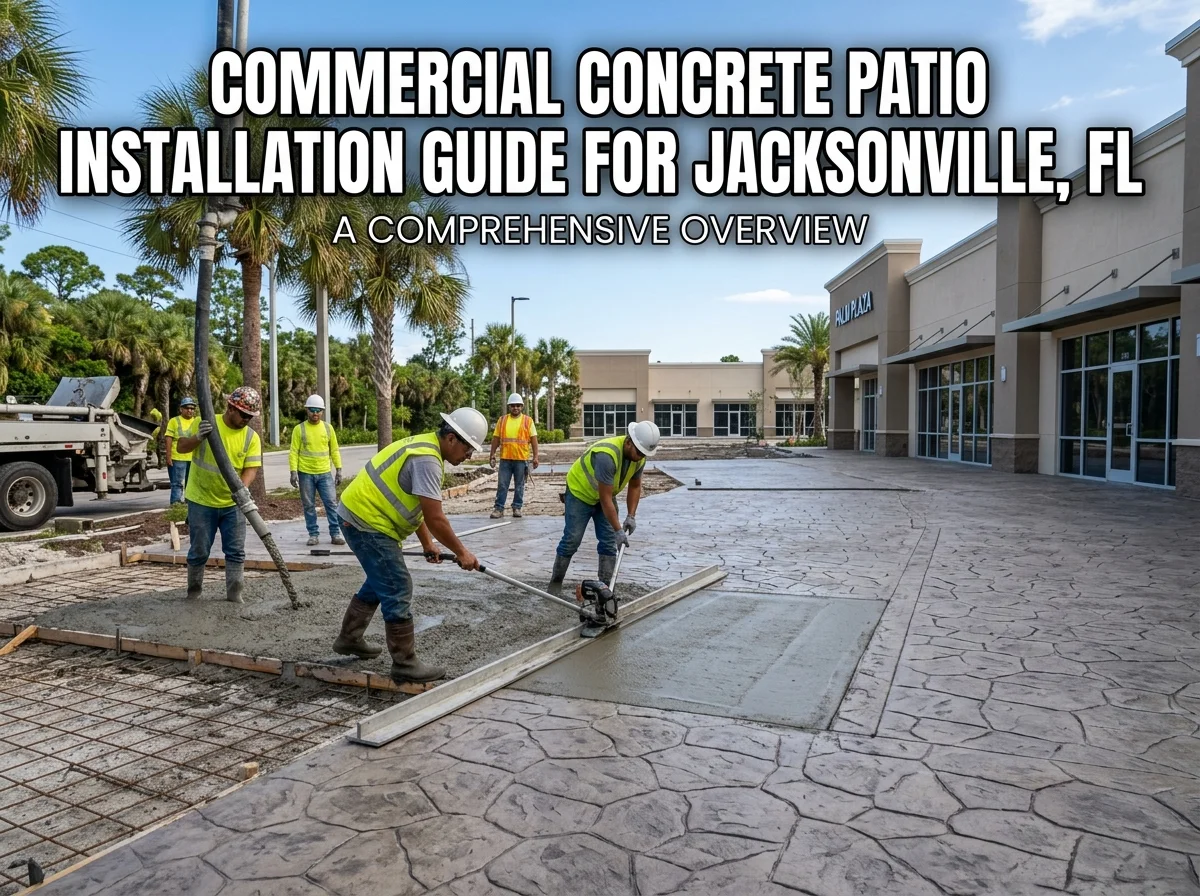
A good construction of a concrete patio can provide a more practical and beautiful outdoor space for commercial properties. Concrete patios can be used in restaurants, hotels, office buildings, retail centers, apartment communities, and other customer spaces for seating, walkways, gathering areas, pool surrounds, and more. These projects can be part of broader commercial concrete construction that needs to account for site use, traffic, drainage, and long-term performance.
However, the installation of a commercial concrete patio is not just a matter of pouring a slab. The design, site conditions, drainage, reinforcement, concrete mix, finishing, and maintenance plan all need to work together. The high temperatures and regular rainfall in Jacksonville make long-term performance preparation a critical need.
Why Concrete Works Well for Commercial Patios
Concrete offers a number of design and performance benefits to commercial property owners. It can be installed as a simple finished slab or enhanced with decorative patterns, colors, borders, and textures.
Some key Benefits Of Concrete Patios include:
- Durable surface for regular commercial foot traffic
- Flexible design and finishing options
- Easier routine cleaning than many outdoor surfaces
- Compatibility with outdoor seating and commercial amenities
- Lasting performance with proper installation and upkeep
- Options for slip-resistant textures and decorative finishes
Concrete can also be used to seamlessly tie the rest of the outdoors together, such as between patios, walkways, entrances, pool decks, and more.
Planning a Commercial Concrete Patio in Jacksonville
Good patio design planning starts with how the business will actually use the space. For the restaurant, they might require space for tables and foot traffic, whereas the hotel could need space around a swimming pool or outdoor meeting spot.
The layout must consider furniture, walkways, entrances and service access, drainage, lighting, landscaping and connection to existing concrete paving and site concrete. Also, homeowners should take into account any potential future changes before deciding on the size and shape of the patio
Jacksonville properties also need to account for local weather conditions. Heavy rain can expose problems with poor grading or inadequate drainage, so water movement should be part of the design from the beginning.
How Professionals Install Commercial Concrete Patios
Professional concrete patio installation in Jacksonville, FL, projects normally follow several important stages.
Site Preparation and Ground Excavation
The first part of the job the contractor does is to assess the ground and get rid of any unsuitable material as needed. Excavation of the ground may be needed to get the correct grade and adequate room for the concrete system. The soil is then prepared and compacted before the base is installed, following the requirements of the overall concrete contracting project.
Neglecting or hurriedly completing this phase will lead to a higher chance of settling and surface issues later.
Gravel Base Installation
If the concrete slab is to be supported on a gravel base, it should be properly prepared. The base needs to be distributed and compacted according to the project’s requirements. The planning of drainage is also important here. The patio should be sloped to ensure adequate drainage away from buildings and low areas.
Reinforcement Placement
Reinforcement can be used as part of a project design to influence the structural demands and crack control as needed. The reinforcement required will be dependent on the dimensions of the slab, loads to be expected, soil type, project specifications, etc.
Commercial patios should not automatically be designed like small residential slabs because usage and loading conditions can be significantly different.
Concrete Pouring and Leveling
When the site and forms have been prepared, concrete is poured over the area. Crews use concrete leveling and striking off the surface to set the appropriate elevation and slope. The timing of each finishing stage is important because concrete needs to reach the right condition before additional finishing work begins.
Surface Finishing
There are a few ways to complete the surface. Simple broom-textured concrete can add texture, and decorative concrete can add a more individual look.
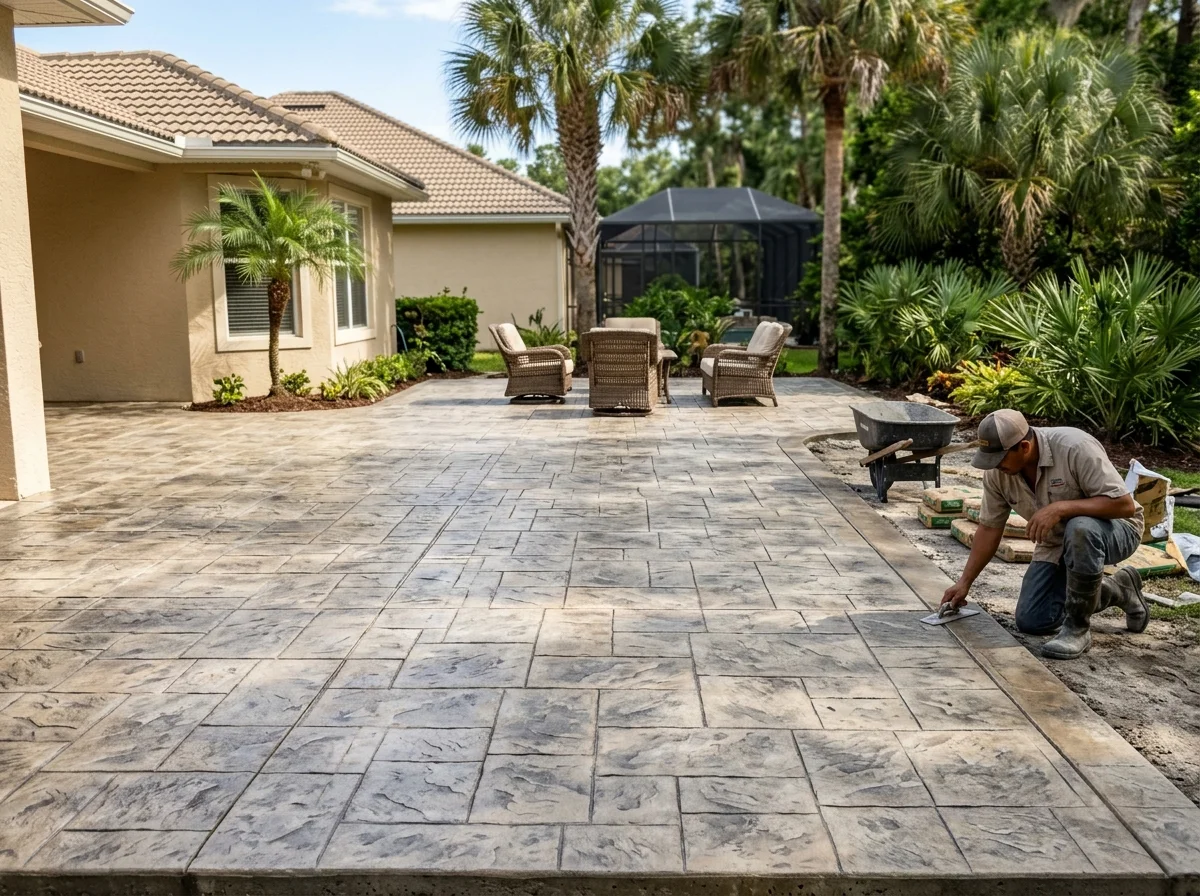
For businesses wanting a higher-end look, stamped concrete patio installation can reproduce patterns resembling brick, stone, slate, or other materials. The selected finish should match both the property’s appearance and its expected traffic.
Expansion Joints and Curing
Expansion and control joints are designed according to the design of the project to assist in controlling movement and cracking. Correct curing is also important since concrete requires time to achieve the desired strength and performance.
The contractor must be able to give clear instructions when the patio is safe for normal usage, including foot traffic, furniture, and other uses.
Choosing a Concrete Patio Design
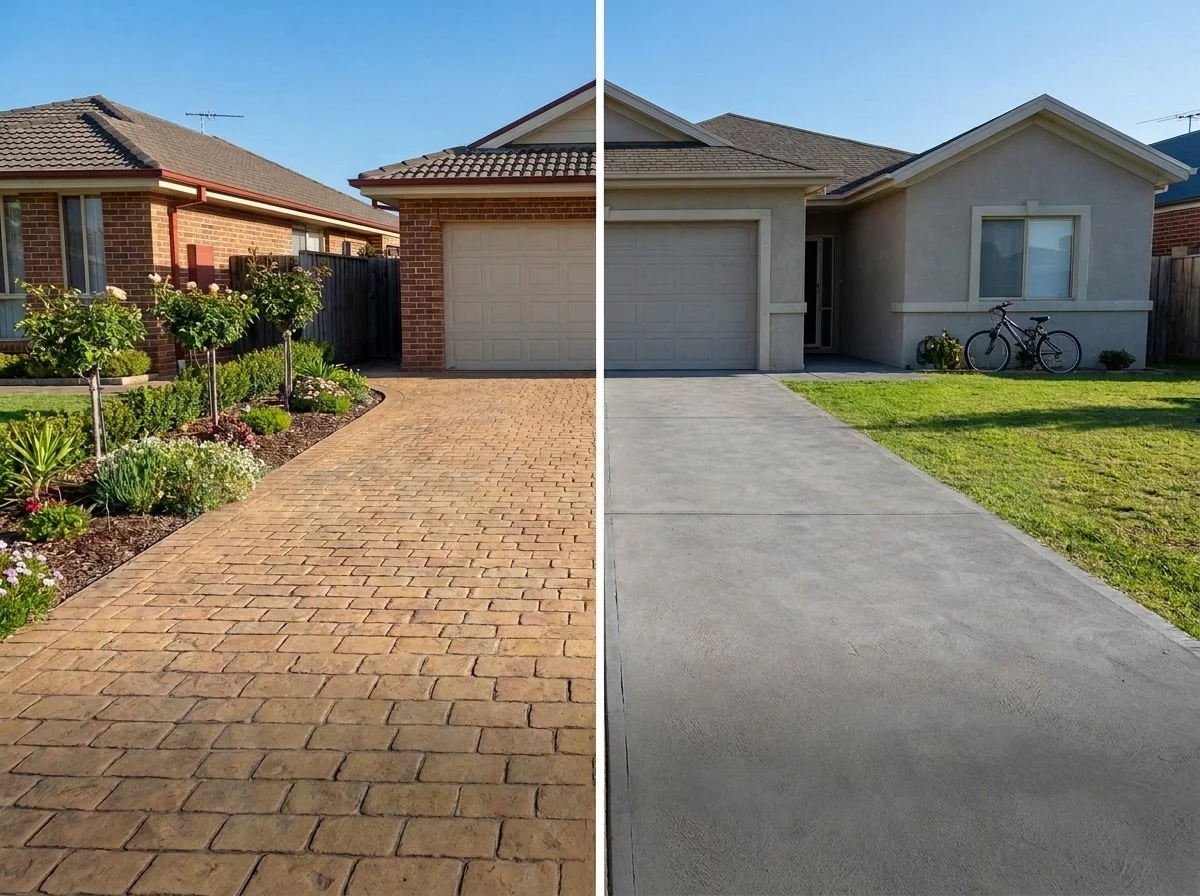
There are a lot more options for commercial property design than just gray concrete. Concrete Patio Design Ideas Jacksonville businesses may consider include stamped patterns, contrasting borders, exposed aggregate, colored concrete, and textured finishes.
Decorative concrete can be used to demarcate dining areas in restaurants. Patio finishes can be designed in conjunction with pool decks and landscaping in hotels, or in simple patterns that match the building in office and retail spaces.
A strong design doesn’t have to be overly detailed. It should provide the desired aesthetic appeal while remaining practical to clean, maintain, and repair.
Jacksonville Weather and Concrete Performance
There are a few things to take into account when considering outdoor concrete in Jacksonville. Hot weather and heavy summer rainfall are possible. For instance, National Weather Service climate records indicate that the summers in Jacksonville are hot, with average maximum temperatures in July over 90°F.
That means that while weather-resistant concrete patios can be made with a decorative finish, it is crucial that they be installed correctly. The water should be directed away from any structure and not allowed to sit in water. The proper curing, jointing, surface finishing, and sealing of the concrete will also prevent further exposure of the patio to weather elements.
There may be other environmental factors to consider for commercial properties close to the coast, so materials and maintenance should be appropriate for the site.
Repair, Replacement, and Patio Maintenance
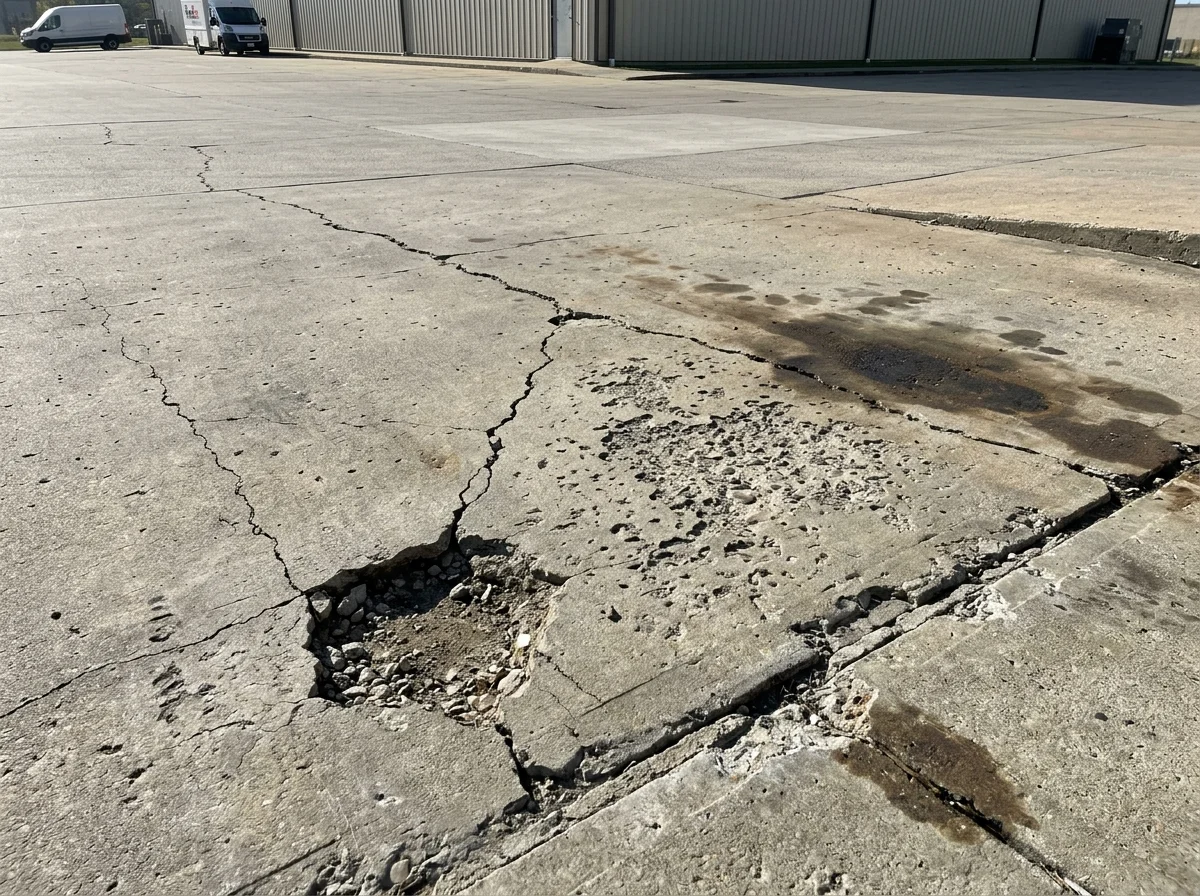
Not all of the cracked patio has to be replaced. In cases where only specific areas of the patio are affected by cracks, damage, or deterioration, patio concrete repair services might be appropriate.
However, widespread settlement, major cracking, drainage failures, or serious structural problems may make replacement more practical. The first step in concrete patio replacement Jacksonville projects is to evaluate the causes of the failure of the original surface; this ensures that the same issues will not be repeated.
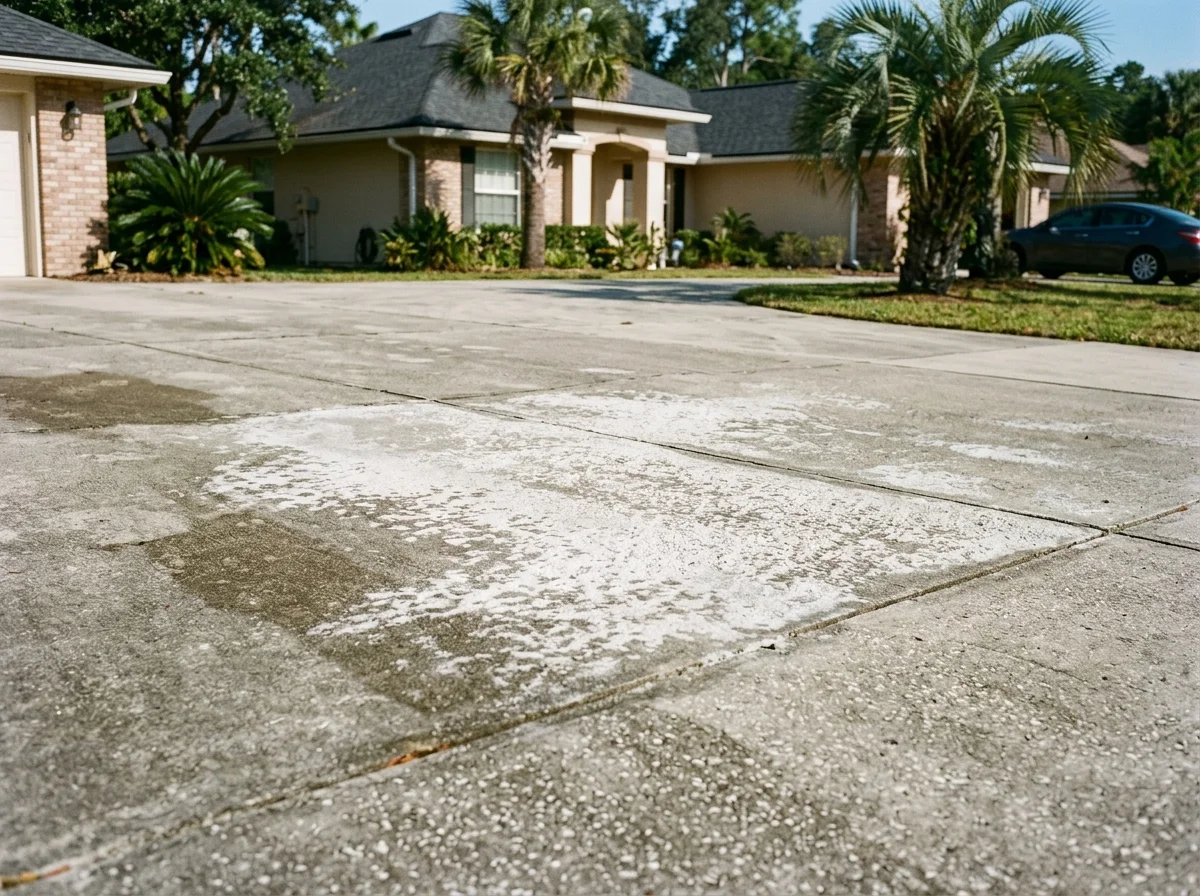
Maintenance activities should involve removing debris, checking for drainage, inspecting for cracks, and cleaning as needed. Sealing concrete can also serve to prevent staining, surface moisture, and general commercial use.
Pressure washing may be helpful to remove buildup of dirt, but the type and intensity of the pressure needs to be suited for the type of concrete finish and sealer.
Working With Commercial Concrete Contractors
Picking the right concrete patio contractors really matters; the way they install the patio affects how long it lasts and how good it looks. Before signing off on a project, commercial property owners should ask questions about the site prep, what kind of concrete will be used, reinforcement, drainage, finishing, curing, joints, sealing, cleanup, and the project timeline.
It helps to get a clear estimate that breaks down all the details, like prep work, materials, labor, decorative features, repairs, and any other expenses. With that kind of breakdown, it’s easier to compare different proposals and see exactly what you’re getting for your money, not just the bottom-line price.
Concrete Advantage can help commercial property owners evaluate their patio requirements and plan a concrete installation around the property’s use, layout, and outdoor conditions.
Frequently Asked Questions
How much does a concrete patio cost in Jacksonville, FL?
Price depends on patio size, the site’s condition, what specs you want for the concrete, any reinforcement, access, the finish, drainage needs, and any decorative options. You want an estimate based on a real site visit, not just a price per square foot.
How long does a concrete patio last in Florida?
If you design and build it right, a concrete patio can serve you for years. The actual lifespan really depends on soil, drainage, the concrete’s quality, foot traffic, exposure to the weather, how the joints are done, whether you seal it, and how you keep it up over time.
What is the best concrete finish for Jacksonville weather?
There isn’t just one perfect finish for every property. A textured broom finish gives you good traction, but stamped and decorative styles give you more to work with design-wise. In the end, you’ll want to think about foot traffic, drainage, maintenance, and how it all looks.
Do concrete patios need sealing?
Sealing isn’t always a must, but it adds extra protection, and for a lot of surfaces it’s a smart move. It helps cut down on stains, water getting in, and surface wear. The best sealer (and how often you need to use it) depends on your finish, exposure, and the manufacturer’s advice.
How long after installation can you use a concrete patio?
The waiting period depends on the concrete mix, weather, curing conditions, and intended use. Light foot traffic may be allowed earlier than furniture, equipment, or heavier commercial activity. The installation contractor should provide specific instructions for the project.
Final Thoughts: Planning a Commercial Patio That Performs
A solid concrete patio installation guide for Jacksonville covers a lot more than how the slab will look when it’s done. Good results come from getting the prep work, drainage, reinforcement, concrete pouring, finishing, curing, and regular maintenance right.
For Jacksonville commercial properties, planning around local weather and actual site use can help create an outdoor surface that is attractive, functional, and easier to maintain. Concrete Advantage can be part of that planning process, from the initial design through the completed installation.