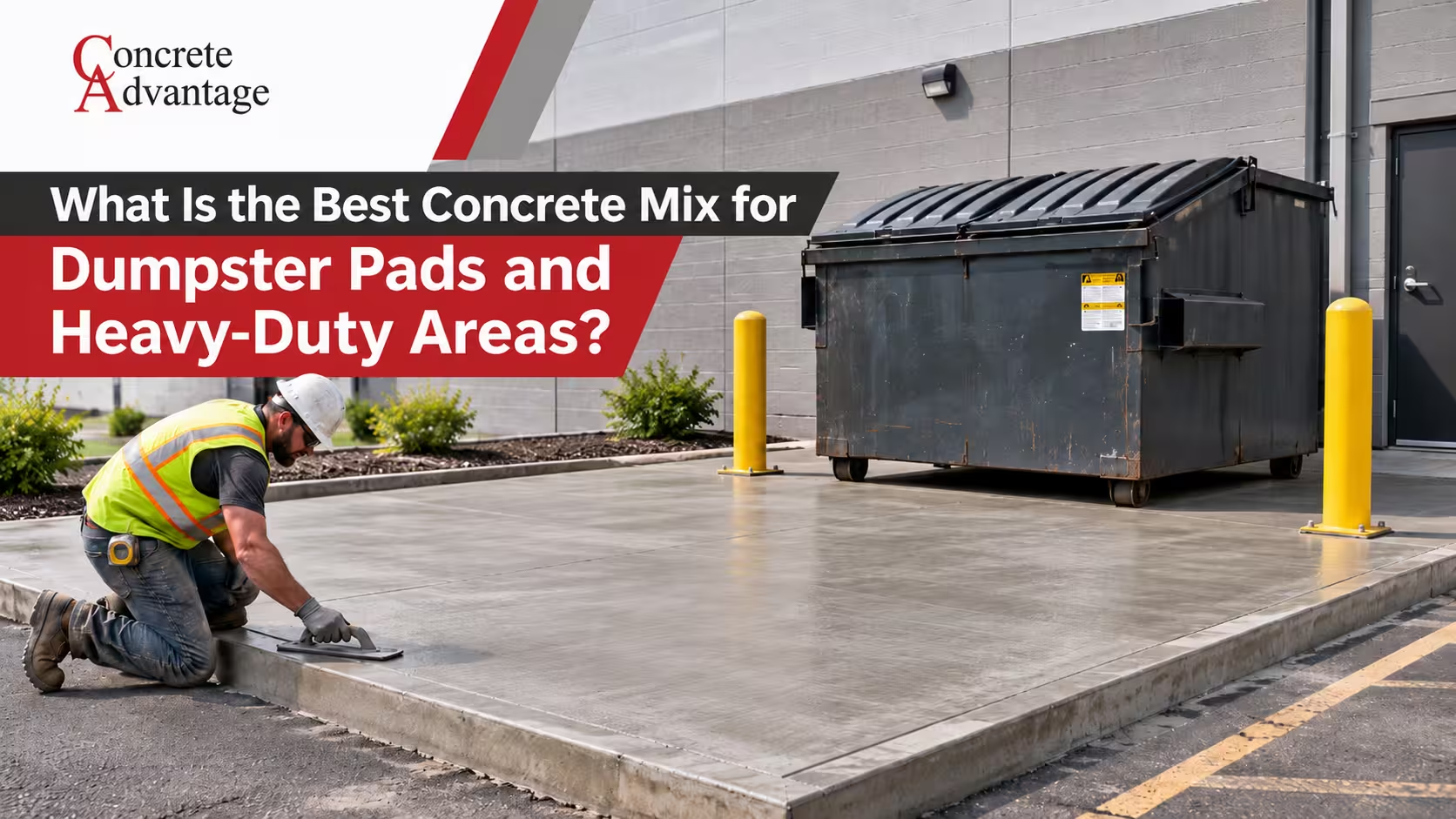
Even if a dumpster pad looks solid when first poured, ongoing container shifts and frequent garbage truck visits can lead to cracking over time. Damage often appears near edges or turning areas when the slab was built like an ordinary walkway instead of a working service area.
In Jacksonville, FL, a concrete dumpster pad must handle more than container weight. Truck access, loading activity, soil support, reinforcement, moisture, and drainage all influence the mix and slab design.
Start With the Loads the Pad Will Carry
The dumpster is just one component of the overall load the pad carries. Collection trucks approach, stop, lift, turn, and may place wheel loads near the pad edge. Roll-off trucks and compactors create different demands, so the design must reflect the actual equipment and movements.
Before selecting concrete, confirm:
- Container type, dimensions, and expected full weight
- Collection vehicle type, axle loads, wheel paths, and turning movements
- Pickup frequency and whether trucks drive onto or beside the pad
- Whether a compactor, roll-off container, or multiple dumpsters will be used
- Soil conditions and the quality of the prepared subbase
A pad that supports a stationary dumpster may still fail if truck wheels cross an unsupported edge. Assess the approach area as well as the container footprint.
What Concrete Mix Design and Strength Should You Use?
A properly specified ready-mix concrete for exterior, heavy-use flatwork is generally more suitable than a basic pedestrian-grade mix. The designer should select compressive strength based on loading, exposure, subgrade, and local requirements. Higher strength alone cannot make up for poor base preparation or slab design.
A practical specification review should cover these items:
| Design item | What the project should address |
| Concrete strength | Specify the required 28-day compressive strength for the expected loads |
| Mix exposure | Account for outdoor moisture, cleaning, and local environmental conditions |
| Reinforcement | Use engineered steel rebar or another specified reinforcement system |
| Slab thickness | Determine from truck loading, container weight, soil support, and edge conditions |
| Finish | Use a durable, slip-resistant finish without creating water-holding low spots |
Do not assume every site needs the same mix strength or thickness. The final specification should reflect actual site conditions and use.
Reinforcement and Base Support Matter as Much as the Mix
A Reinforced Concrete Dumpster Pad uses steel to help control cracking and hold the slab together under tension. The design may specify rebar or welded wire mesh. Bar size, spacing, placement, laps, and concrete cover must follow the project details; steel placed randomly in the pour is not proper reinforcement.
The subbase matters just as much. Weak or uneven material can settle under truck traffic and leave concrete unsupported. Before pouring, remove unsuitable soil, establish grade, place specified aggregate, and compact the base evenly.
Common failure points include soft or poorly compacted fill, misplaced reinforcement, thin edges under truck wheels, badly located joints, and water collecting beside the slab.
Concrete Advantage can assess the site layout and construction requirements so the pad design reflects how the waste area will actually be used.
Plan the Edges, Joints, and Truck Approach
Stress often concentrates near corners, gates, and truck approach points. These areas may need thickened edges, added reinforcement, protective curbs, or a separate approach apron, depending on vehicle movements.
Contraction joints create planned locations for shrinkage cracks. These joints keep the concrete pad separate from surrounding structures. The design should specify joint spacing and depth before the pour.
For a more durable layout, check that:
- The pad is large enough for the container and safe user access.
- The truck can reach and service the container without repeated tight turns on weak pavement.
- The approach surface can support the truck’s wheel loads.
- Gate posts, bollards, and enclosure walls do not interfere with container removal.
- Concrete edges are protected from impact by wheels, containers, and handling equipment.
Jacksonville, FL Requirements: Do Not Overlook Drainage
Jacksonville’s Land Development Procedures Manual, Volume 2, effective January 2026, gives specific direction for commercial solid waste areas. It requires solid waste containers to sit on a concrete pad designed using acceptable engineering practices, including steel reinforcement. The pad must extend at least 2 feet beyond the container edges and have a 6-inch-high header curb. It must also be shaped to drain to a common point within the curb.
The manual also states that the dumpster pad must drain to either a pretreatment swale at least 6 inches deep and equal in area to the pad, or directly to a sanitary sewer. The immediate area used by the collection vehicle is suggested to be concrete, although the wider service-vehicle area may use concrete or asphalt. These are Jacksonville design requirements and guidance; confirm how they apply to the specific development and current review process.
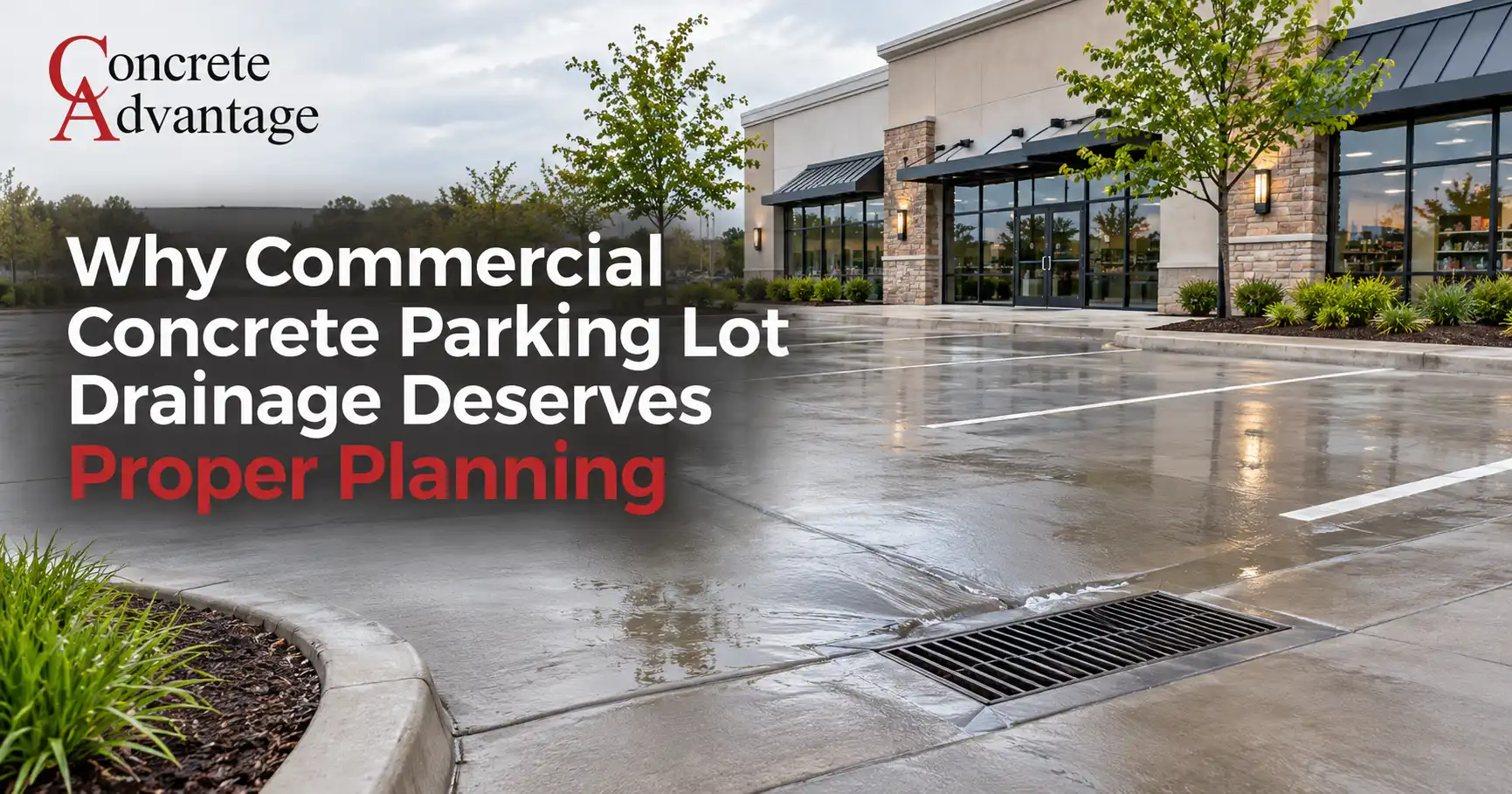
This local drainage rule matters because washdown water and waste residue should not simply run into the municipal storm drainage system. The grading plan, curb, and approved drainage route should be considered before construction begins.
What to Confirm Before the Concrete Is Poured
Review the complete dumpster pad construction plan before work begins:
- Verify the dimensions of the hauler’s dumpster and the specifications of its collection trucks.
- Verify the expected container weight when full.
- Review soil conditions and subbase preparation.
- Approve concrete strength, slab thickness, and reinforcement details.
- Confirm joint locations, edge protection, and approach pavement.
- Check drainage slope and the approved discharge route.
- Coordinate enclosure dimensions, gates, bollards, and truck clearance.
Do not copy a thickness from a generic online example. A six-inch slab may suit some sites, but heavier trucks, weak soil, frequent turning, or compactor equipment may require a different engineered design.
Frequently Asked Questions
Is regular concrete strong enough for a dumpster pad?
Not necessarily. Concrete intended for sidewalks or light pedestrian use may not be designed for loaded waste containers and collection trucks. The mix, thickness, reinforcement, and base should be selected for the actual service loads.
Does a dumpster pad need rebar?
Jacksonville’s current land development manual calls for engineering design that includes steel reinforcement. The type, size, and spacing should be determined by the project design rather than guessed during installation.
How thick should a commercial dumpster pad be?
There is no single thickness that fits every site. The designer should consider container weight, truck axle and wheel loads, soil support, traffic frequency, and whether vehicles cross the slab or its edges.
Why does drainage matter around a dumpster enclosure?
Standing water can carry waste residue, create sanitation concerns, and contribute to deterioration around joints and edges. Jacksonville also specifies how large-container pads must drain, so drainage needs to be planned before the pour.
Final Thoughts: Build for the Work the Pad Must Handle
The best concrete is part of an engineered system, not simply the strongest mix available. Reinforcement, subbase, slab dimensions, joints, edge protection, truck access, and drainage all affect performance.
For commercial properties in Jacksonville, Concrete Advantage can help evaluate the site requirements and plan concrete work around the demands of waste collection. A design based on actual equipment and site conditions is more reliable than copying a standard slab detail from another property.