Loading docks experience constant pressure from delivery trucks, forklifts, pallet jacks, and heavy equipment. Repeated vehicle movement, concentrated impact, and exposure to moisture can gradually weaken concrete around loading bays. Small cracks or chipped edges may seem minor at first, but untreated damage can interfere with daily operations and create safety hazards.
Concrete loading dock damage often develops because of several conditions working together. Poor drainage, deteriorating joints, inadequate slab support, and repeated heavy loading can all contribute to structural problems. Understanding these causes helps warehouse operators identify early warning signs, schedule repairs, and protect their loading areas over the long term.
Why Does Concrete Around Loading Docks Get Damaged?
Loading dock slabs handle different types of stress throughout the day. Trucks repeatedly approach and leave the dock, while forklifts move heavy materials between trailers and warehouse floors. Certain areas experience more concentrated pressure than others, especially around dock levelers, bumpers, and approach slabs.
Several conditions contribute to concrete deterioration.
Repeated Truck and Forklift Traffic
Heavy goods vehicles place substantial pressure on dock approach slabs and nearby pavement. Repeated loading can contribute to cracking, settlement, and surface deterioration, particularly when the supporting base is weak or uneven.
Forklifts create additional stress through frequent turning, braking, and concentrated wheel loads. Repeated movement near dock doors can accelerate wear around joints and high-traffic paths.
Impact Around Dock Equipment
Dock levelers, bumpers, bollards, and vehicle restraints help protect loading areas, but these components also experience repeated contact and movement.
Common impact-related problems include:
- Cracking around dock leveler mounting angles.
- Broken concrete near loading dock bumpers.
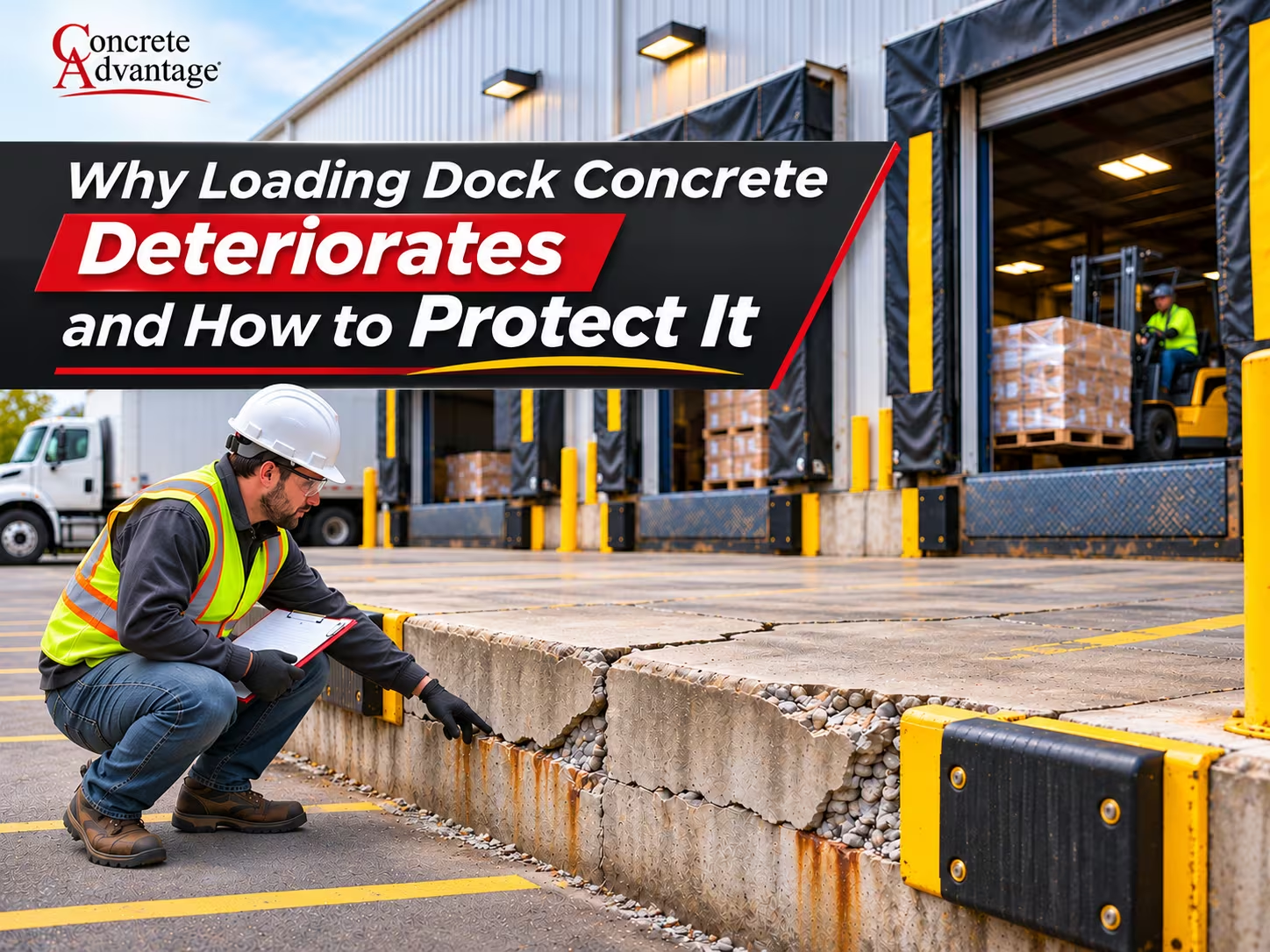
- Spalling around bollards and protective barriers.
- Damaged slab edges near trailer contact points.
If equipment becomes loose or improperly aligned, repeated movement may place additional stress on surrounding concrete.
Joint Deterioration and Poor Slab Support
Concrete expansion joints and control joints allow slabs to accommodate movement. When joint sealants deteriorate, water and debris can enter the openings. Over time, joint edges may crack, chip, or break under repeated traffic.
Poor base support can create another problem. When water moves beneath a slab, or supporting material becomes unstable, sections may settle or shift. Heavy vehicles passing over unsupported areas can increase movement and cause additional cracking.
Drainage Problems and Chemical Exposure
Standing water around loading bays can enter cracks and joints, weakening supporting materials and contributing to deterioration. In Jacksonville, FL, drainage deserves attention because frequent rainfall can leave poorly graded dock approaches exposed to recurring moisture.
Oil, fuel, cleaning products, and other industrial substances may also affect concrete surfaces. Spills left untreated can contribute to surface deterioration or create slippery working conditions.
How to Identify Concrete Loading Dock Damage
Regular inspections help warehouse managers recognize problems before they interfere with dock operations.
Look for these warning signs:
| Damage pattern | What to inspect |
| Concrete edge spalling | Chipped or broken areas around joints and dock equipment |
| Surface cracking | Cracks spreading across approach slabs or loading areas |
| Slab settlement | Uneven surfaces or height differences between concrete sections |
| Joint deterioration | Missing sealant, open joints, or crumbling edges |
| Impact damage | Broken concrete around bumpers, bollards, and levelers |
| Drainage problems | Standing water, water entering cracks, or soil erosion |
Pay particular attention to cracks that continue growing, slabs that move under vehicle traffic, and concrete that breaks away around equipment anchors. These conditions may indicate problems beyond surface wear.
How Can Loading Dock Concrete Damage Be Prevented?
Preventive maintenance helps extend the life of reinforced loading areas and reduces unexpected interruptions. A consistent inspection schedule also makes it easier to identify developing problems.
Consider these maintenance practices:
- Inspect high-impact areas: Check dock levelers, bumpers, bollards, and vehicle restraint mounting points for cracks or loose connections.
- Maintain concrete joints: Replace deteriorated joint sealants to limit water and debris infiltration.
- Improve drainage: Keep drains clear and correct areas where water collects near dock doors.
- Address spills quickly: Remove oil, fuel, and chemical residues using appropriate cleaning procedures.
- Monitor vehicle movement: Investigate recurring impact damage and unsafe truck positioning.
- Schedule preventive inspections: Document cracks, settlement, spalling, and previous repairs to track changes.
Dock equipment should also receive routine inspections. Properly maintained levelers, bumpers, and restraints help reduce unnecessary impact on surrounding concrete.
When Is Loading Dock Concrete Repair or Replacement Necessary?
Not every damaged loading dock requires complete reconstruction. The appropriate solution depends on the damage depth, affected area, and condition of the supporting base. Concrete Advantage works with commercial property owners to assess loading dock deterioration, identify suitable repair options, and address concrete problems before they disrupt daily operations.
Localized repairs may be suitable when damage remains near the surface or affects a limited section. Contractors may remove deteriorated concrete, prepare the repair area, and install a compatible repair material.
Full-depth repairs become necessary when cracks extend through the slab, concrete edges have lost substantial support, or damage affects reinforcement and load transfer.
Slab replacement or reconstruction may be the better option when deterioration is widespread, settlement continues, or previous repairs have failed because the underlying support problem remains unresolved.
Possible repair methods include partial-depth patching, full-depth concrete replacement, joint reconstruction, and slab stabilization. Slab lifting or grout injection may address certain settlement problems, but only when the underlying conditions make those methods appropriate. A professional assessment should examine the concrete, joints, drainage, reinforcement where accessible, and supporting base before selecting a repair method.
Frequently Asked Questions
What causes cracks in concrete loading docks?
Repeated truck traffic, forklift movement, impact near dock equipment, poor slab support, and joint deterioration can all contribute to cracking. Construction or material problems may also play a role.
Is concrete spalling around dock levelers dangerous?
It can create uneven surfaces, loose debris, and trip hazards. Severe deterioration may also affect equipment anchoring and the stability of the surrounding concrete.
Can damaged loading dock concrete be repaired without replacement?
Yes. Localized cracks and shallow spalling may be suitable for targeted repairs. However, widespread deterioration or full-depth structural damage may require concrete replacement.
How often should loading dock concrete be inspected?
Inspection frequency should reflect traffic volume, operating conditions, and previous damage. High-traffic facilities benefit from routine visual checks and documented professional assessments.
Does standing water contribute to loading dock damage?
Yes. Water can enter cracks and joints, affect supporting materials, and contribute to settlement. Poor drainage also increases slip hazards around active loading areas.
Final Thoughts: Keeping Loading Areas Strong and Reliable
A damaged loading dock can affect worker safety, equipment performance, and warehouse productivity. Identifying cracks, spalling, joint deterioration, and drainage problems early helps prevent more extensive repairs. Concrete Advantage helps commercial property owners address concrete deterioration and maintain dependable loading areas through appropriate repair solutions.