A commercial concrete pour may look uniform as it leaves the truck, but appearance alone cannot confirm that it will reach the strength required by the plans. Before a slab, footing, column, or elevated deck is accepted, project teams need reliable evidence that the delivered concrete meets the specified requirements.
That evidence comes from a planned testing process. Technicians check fresh concrete at the site, prepare samples under controlled conditions, and send test cylinders to a laboratory for compression testing. The results help contractors, engineers, and inspectors assess quality while there is still time to investigate concerns.
What Is Being Measured?
Concrete compressive strength is its ability to resist a crushing load. It is reported in pounds per square inch (psi) and compared with the specified strength, f′c. The required value depends on the design and concrete element. Fresh concrete also needs workability for proper placement and consolidation, but an acceptable slump does not prove hardened strength.
The Testing Sequence Starts at the Job Site
Testing begins with a representative sample, not a random scoop from the truck. Under ASTM C172, fresh concrete is sampled using procedures intended to reflect the batch being delivered. The technician records project details and performs the tests required by the specifications or inspection plan.
Common field checks include:
| Test | What it tells the project team |
| Slump – ASTM C143 | Measures consistency and workability of fresh concrete |
| Temperature – ASTM C1064 | Records the concrete temperature at sampling |
| Air content – ASTM C231 or C173 | Checks the amount of air in the fresh mix |
| Unit weight – ASTM C138 | Measures density and can help assess yield |
Why Slump Does Not Prove Strength
The approved mix, contract documents, and testing plan determine which checks are required and how often. Report results promptly so the team can address an out-of-range measurement before placement continues. For a slump test, fresh concrete is placed and consolidated in a standard cone. The cone is lifted, and the vertical distance the concrete settles is recorded as the slump measurement.
Slump indicates consistency, not compressive strength. Adding water at the site may make concrete easier to place, but an unauthorized water addition can change the water-cement ratio and affect strength and durability. Any adjustment must follow the approved mix and project procedures, with required retesting.
How Test Cylinders Are Made and Cured
For a concrete cylinder compression test, the technician uses a sample of fresh concrete to mold standard test cylinders. ASTM C31 covers making and curing these field specimens. Proper consolidation, identification, initial storage, and transport matter because poor handling can affect the test result.
The process is straightforward:
- Collect and remix the representative sample as required by the sampling procedure.
- Fill cylinder molds in the required layers and consolidate each layer correctly.
- Label each cylinder with traceable project, placement, and sample information.
- Protect specimens from vibration, moisture loss, and temperature extremes during initial curing.
- Deliver them to the laboratory for controlled curing and scheduled testing.
Several cylinders may be made from one sample. Some are tested early, often at seven days, while others are reserved for the specified acceptance age. Extra specimens may be required by the project plan.
What Happens in the Laboratory?
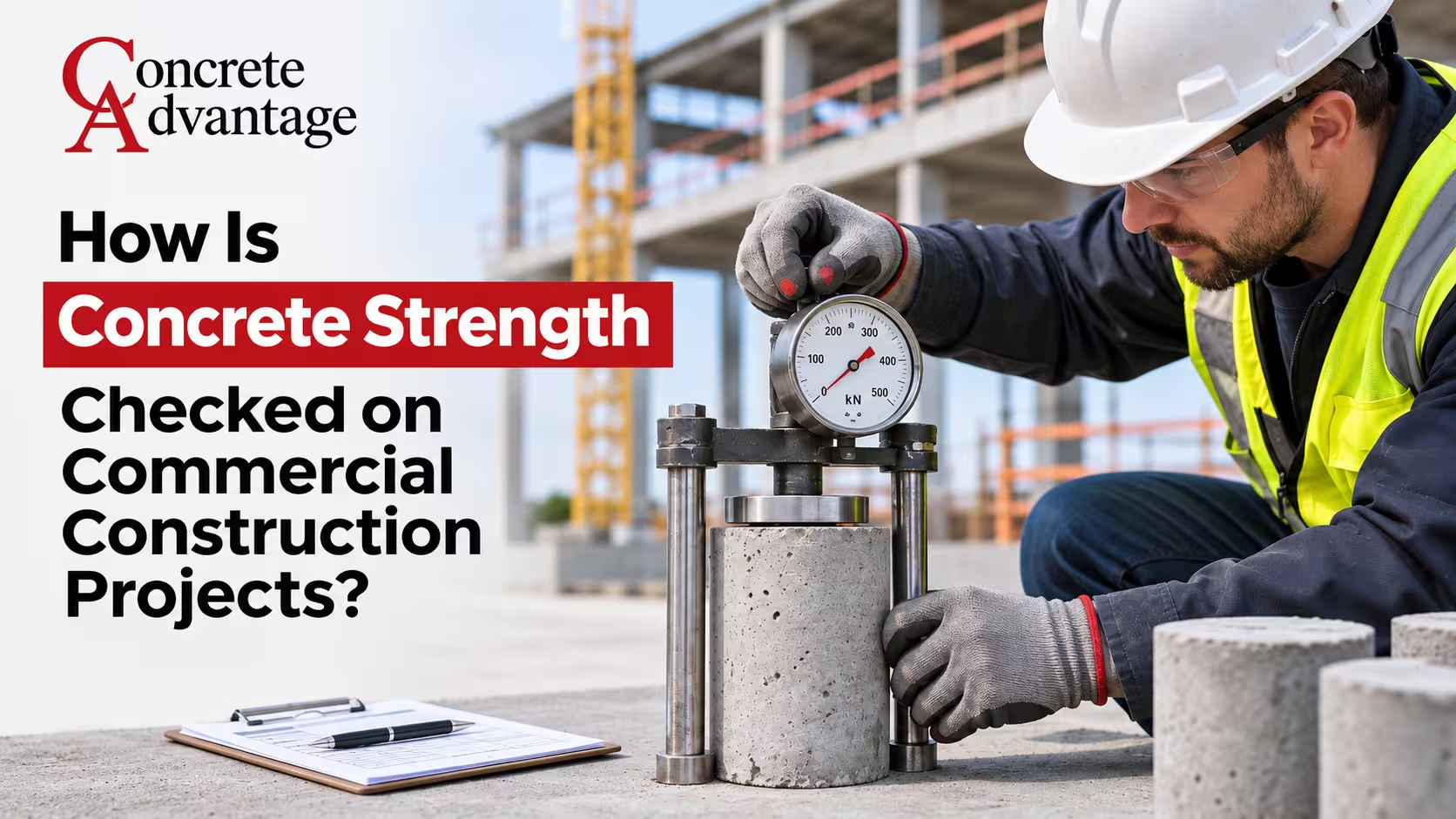
At the laboratory, a prepared cylinder is placed in a compression testing machine. The machine applies a steadily increasing load until the specimen fails. The maximum load is divided by the cylinder’s cross-sectional area to calculate compressive strength in psi. ASTM C39 sets out the standard method for testing cylindrical specimens.
A 7-day result gives an early indication of strength development. It can help the team see whether the concrete is gaining strength as expected, but it does not automatically determine acceptance. For many structural applications, ACI 318 bases specified compressive strength on 28-day results unless the construction documents state another age.
| Test age | Typical purpose |
| 7 days | Early indication of strength gain and possible trends |
| 28 days | Common specified age for evaluating design strength |
| Later age | Used when project documents or an investigation require it |
The project documents may set different testing ages for specialty or high-early-strength concrete, so confirm the schedule before the pour.
How Are Results Accepted or Flagged?
ACI 318 does not judge acceptance by comparing one cylinder with the specified psi value. A strength test generally averages at least two standard-cured cylinders tested at the same age. The code also evaluates consecutive averages and individual results.
For concrete with a specified strength of 5,000 psi or less, the familiar ACI criterion requires each individual strength test to be no more than 500 psi below f′c, while the average of any three consecutive strength tests must meet or exceed f′c. Different limits apply above 5,000 psi. The adopted code edition and project documents must be checked before applying criteria.
If a result is low, the team should review the sampling, cylinder curing, transport, testing procedure, batch records, and placement conditions. The engineer may request additional evaluation, which can include cores taken from the structure under ASTM C42. One low result should trigger a documented review, not an automatic assumption that the entire placement must be removed.
Keep Testing Tied to the Project Requirements
Testing works best when responsibilities are clear. Before placement, confirm who orders tests, the sampling frequency, the approved laboratory, report recipients, and who reviews results. Keep batch tickets, field records, cylinder IDs, and laboratory reports together.
Jacksonville applies the Florida Building Code, 8th Edition (2023), to permit documents submitted from January 1, 2024. Required inspections must be requested before work is covered. These rules do not set every project’s concrete testing criteria; teams must also follow approved plans and specifications.
Concrete Advantage views testing as part of quality control: checking delivered concrete, documenting field conditions, and comparing strength results with project requirements.
Frequently Asked Questions
Is a 7-day concrete test enough to approve a commercial pour?
Usually not by itself. Seven-day results help monitor early strength gain, while acceptance commonly relies on the specified test age, often 28 days. The construction documents and applicable code determine the actual acceptance schedule.
Does a slump test measure concrete strength?
No. Slump measures the consistency of fresh concrete. Compressive strength is determined by testing hardened cylinders or other approved specimens in a compression testing machine.
What happens if a 28-day cylinder test is below the specified strength?
The engineer and project team review the result against the applicable acceptance criteria and investigate possible testing or concrete issues. Additional testing, including cores, may be required before deciding whether the structure meets requirements.
Who decides how often concrete must be tested?
The project specifications, structural documents, applicable code, and testing plan establish sampling frequency and required tests. The owner, engineer, contractor, and testing agency should understand their responsibilities before concrete placement begins.
Final Thoughts: Verify Strength With Documented Testing
Appearance and slump alone cannot confirm concrete strength. Representative samples, properly made cylinders, controlled curing, and laboratory compression tests provide measurable evidence. Following project requirements helps teams identify concerns and make informed decisions about structural performance. Concrete Advantage helps keep that testing process documented and useful.