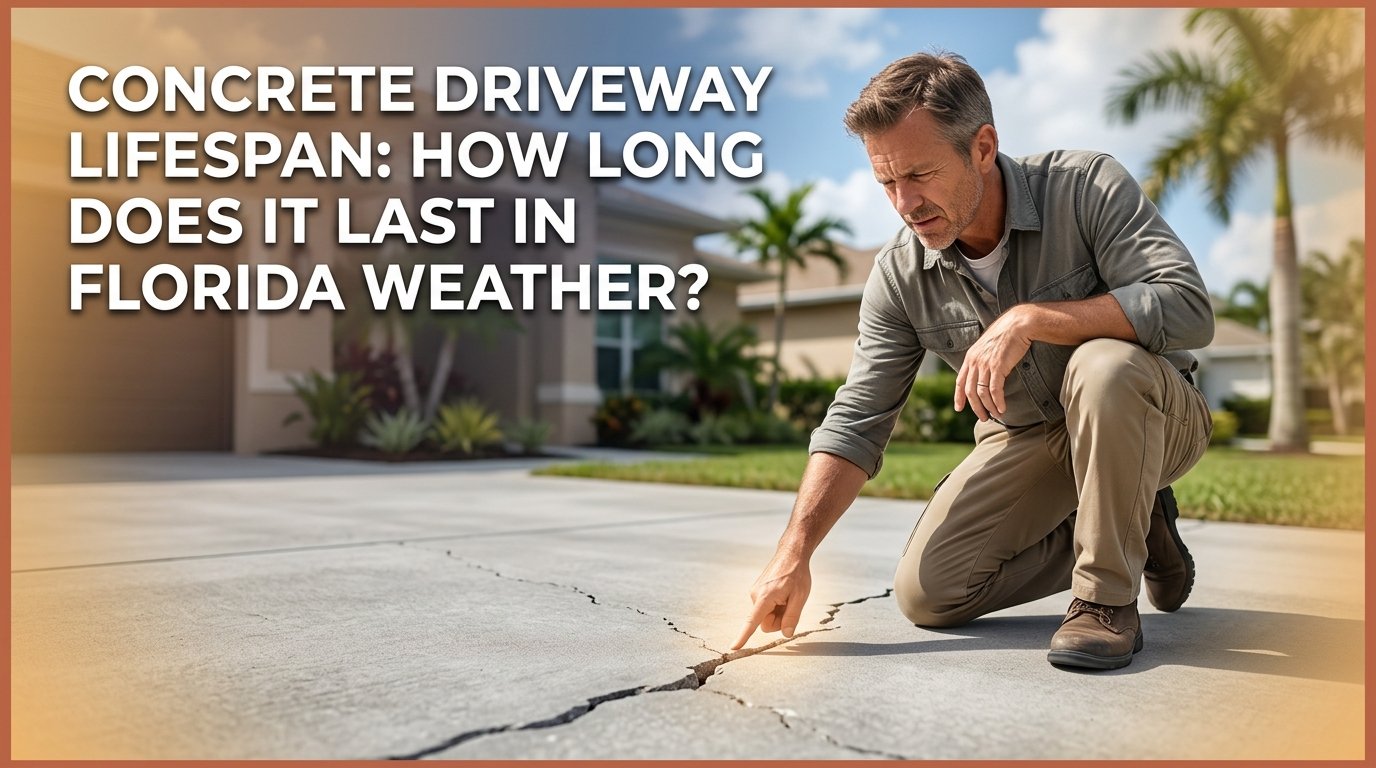
Your driveway faces strong sun, heavy rain, hot days, and humid nights. You want it to stay smooth, safe, and useful for many years. Florida weather can shorten its life when water, heat, and weak drainage work together.
A normal concrete driveway lifespan in Florida often reaches about 25 to 40 years. Good installation and steady concrete maintenance can help some driveways last even longer. Poor drainage, weak soil preparation, and missed driveway repair can cause early failure.
This guide explains common Florida concrete problems, warning signs, and useful care steps. You’ll learn how weather affects concrete and when repairs still make sense. By the end, you can protect your driveway and plan future work wisely.
How Long Can a Concrete Driveway Lifespan Reach in Florida?
A well-built Florida driveway can often serve your property for several decades. A planning range of 25 to 40 years works for many driveways. Strong concrete pavements often have 30-year designs and may reach 40 or 50 years.
What makes one driveway last longer than another?
The base, mix, thickness, joints, curing, drainage, and daily loads all matter. Light family vehicles create less stress than delivery trucks or heavy equipment. Good work during installation gives every later care step a stronger starting point.
Does Florida heat always damage concrete?
Florida heat doesn’t always ruin a driveway, but temperature changes create movement. The slab grows during hot afternoons and shrinks during cooler nights. Proper joints reduce random concrete cracking by guiding this movement safely.
Can an older driveway still remain safe?
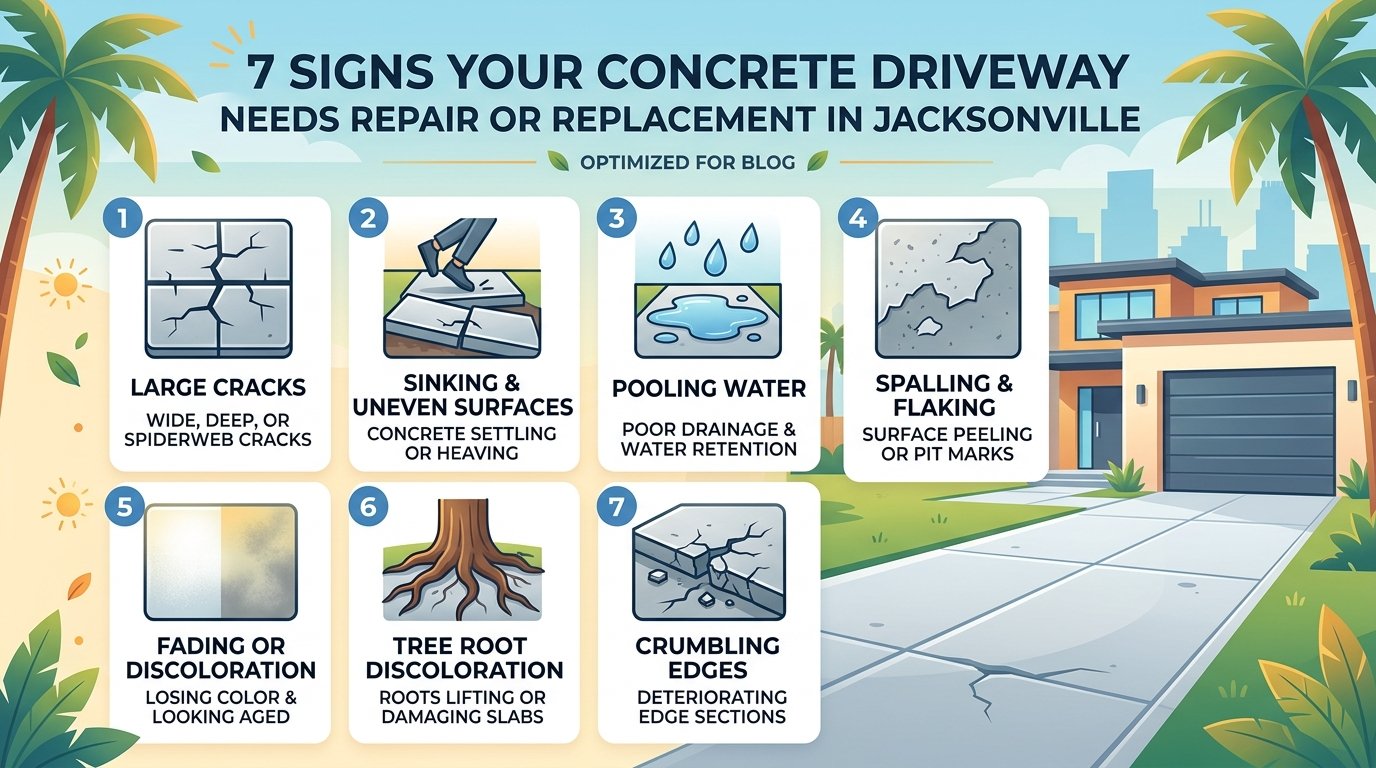
Age alone doesn’t mean your driveway needs full replacement right away. Small stable cracks and light surface wear may only need simple repairs. Deep movement, sinking panels, or wide cracks can create serious safety concerns.
Why Does Driveway Life Matter for Florida Property Owners?
Driveway life matters because early damage can raise costs and limit safe access. A strong driveway also supports parking, deliveries, guests, and daily business use. Regular care helps you find small problems before Florida weather makes them larger.
Why does longer life protect your budget?
Why this matters becomes clear when repair costs start growing quickly. Small crack filling usually costs less than removing broken concrete panels. Planned driveway maintenance helps you avoid sudden replacement during busy months.
Why does a stable surface improve safety?
Important because raised edges and sunken panels can trip people walking nearby. Standing water can also hide holes, cracks, and weak surface areas. Quick repairs reduce risks for families, workers, customers, and delivery drivers.
Why does maintenance protect your property’s appearance?
Benefits are easy to see when the driveway stays clean and even. Dark stains, weeds, broken edges, and open cracks can hurt curb appeal. Regular cleaning and concrete sealing help the surface look cared for.
Which Florida Weather Problems Shorten Driveway Life?
Florida weather brings repeated moisture, strong sunlight, storms, and long warm seasons. These conditions don’t destroy every driveway, but they test weak construction quickly. Florida’s wet season includes frequent thunderstorms fueled by warm, tropical moisture.
How do heavy rain and poor drainage cause damage?
Water can collect beside the slab when the driveway has poor slope. That water may soften or wash away supporting soil under the concrete. Empty spaces then allow panels to sink, rock, or break under vehicles.
How do heat and sunlight affect the surface?
Strong sunlight heats the top surface faster than deeper concrete layers. Uneven heating adds stress around corners, joints, and thin slab sections. Quality materials, proper mix design, and correct curing support better strength.
How can humidity, coastal air, and storms cause problems?
Long wet periods can increase humidity damage when water enters open cracks. Coastal properties may also face wind-driven rain and salty air during storms. These Florida concrete problems grow faster when blocked drains keep the slab wet.
Which Installation Choices Help a Florida Driveway Last?
The best concrete maintenance plan begins before workers pour the first load. Proper site preparation helps the finished slab carry vehicles without uneven movement. Poor work under the surface can’t always be fixed with sealer later.
Why does the driveway base matter so much?
A stable, compacted base spreads vehicle weight across the soil below. Workers should remove soft areas and correct places that hold water. Heavy trucks may need a stronger base and slab than passenger vehicles.
Why do joints and reinforcement matter?
Control joints guide normal shrinkage into straight, planned lines between panels. Reinforcement holds cracked sections together, but it doesn’t stop every crack. The American Cement Association recommends planned contraction joints for concrete flatwork.
Why does proper curing protect long-term strength?
Fresh concrete needs enough moisture and time to gain useful strength. Hot wind and direct sun can dry the surface too quickly. Poor curing may cause dusting, weak edges, and early surface cracks.
What Driveway Maintenance Helps Concrete Last Longer?
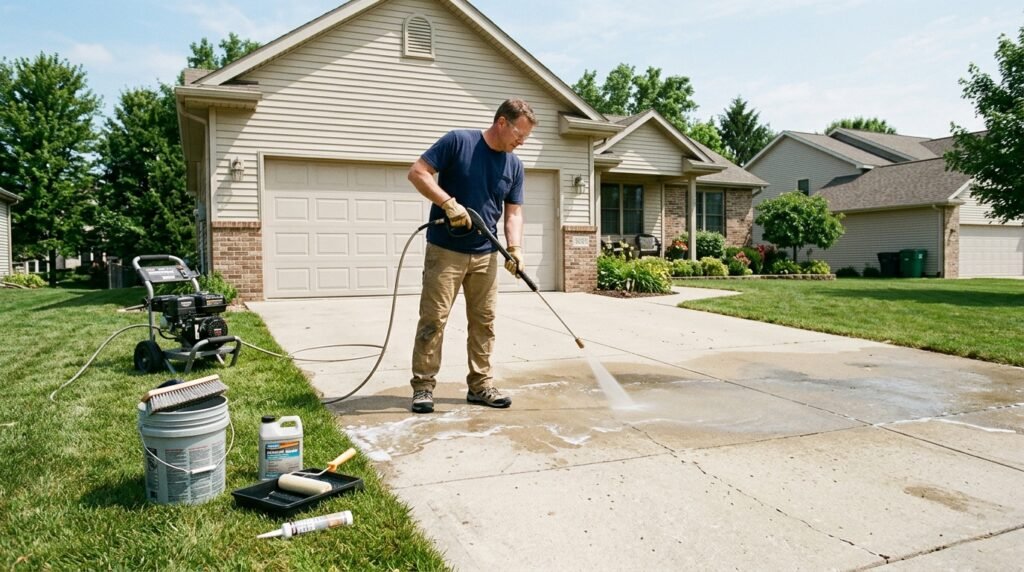
Simple care can’t fix bad construction, but it can slow common damage. You should inspect the driveway several times each year and after major storms. Focus on cracks, drainage, stains, joint gaps, and moving panels.
How often should you clean and inspect the driveway?
Clean the surface when dirt, leaves, oil, or plant growth builds up. Check joints and edges after Florida’s wet season and strong storms. Remove blocked soil or plants that stop water from leaving the slab.
When does concrete sealing help?
A suitable penetrating sealer can reduce water entering the concrete surface. ACI research notes that water-repellent sealers can reduce moisture-related damage and extend service life. The right schedule depends on product type, traffic, sunlight, and surface wear.
When should small cracks receive attention?
Handle small cracks before water, dirt, and roots enter them deeply. Some cracks only need cleaning and a flexible repair product. Early driveway repair often protects more concrete around the damaged area.
When Should You Repair or Replace a Florida Driveway?
The right choice depends on damage depth, movement, age, and repair history. One damaged panel doesn’t always mean the entire driveway has failed. Widespread movement usually points toward a larger problem below the surface.
Which problems often allow a repair?
Small cracks, chipped corners, worn joints, and limited surface damage may allow repairs. A contractor may seal cracks, patch edges, or replace one panel. Repairs work best when nearby concrete remains firm and level.
Which signs may support full replacement?
Widespread sinking, deep broken panels, and large moving cracks suggest serious failure. Many old patches can show that repairs no longer provide lasting value. Replacement lets crews rebuild the base and improve water flow.
How can you make the final choice?
Compare the repair area with the total driveway size and condition. Ask whether the work fixes the cause or only hides damage. Learn more about Concrete Advantage’s concrete services before planning your next project.
What Should You Remember About Concrete Driveway Lifespan?
A strong driveway often lasts for decades when construction and care work together. Florida rain, heat, humidity, and storms make drainage and timely repairs especially important. Regular checks help protect your concrete driveway lifespan without adding difficult monthly work.
Don’t wait until several panels move or break across the same area. Address water problems, clean the slab, and repair early cracks when needed. Good concrete maintenance helps your driveway stay safer, cleaner, and useful longer.
Frequently Asked Questions
What is the best way to extend a concrete driveway’s life?
Keep water moving away from the slab and inspect cracks after storms. Clean joints and repair small damage before movement spreads across nearby panels. Use a suitable sealer when the surface and local exposure support it.
How much does Florida driveway maintenance cost?
Costs change with driveway size, condition, access, and chosen repair materials. Cleaning and small crack work usually cost less than panel replacement. A local written estimate gives you a better budget than national averages.
Is concrete better than asphalt for Florida weather?
Concrete handles heat well and can provide long service with proper drainage. Asphalt may soften during very hot periods and often needs more surface care. Your budget, traffic, appearance, and site conditions should guide the choice.
How often should I seal a concrete driveway in Florida?
There isn’t one schedule that fits every Florida driveway or sealer. Check product instructions and watch for water soaking into the surface. Heavy sunlight, traffic, and rain may shorten some sealers’ useful life.
How do I choose a contractor for driveway repair?
Ask about licenses, insurance, drainage, base preparation, joints, and curing methods. Request a written scope listing concrete thickness and clear repair limits. Don’t choose only by price when important base work is missing. Read our guide to choosing a residential concrete contractor in Jacksonville before requesting estimates.
When does concrete cracking require professional help?
Call a professional when cracks widen, move, collect water, or cross several panels. You should also seek help when one side rises or sinks. These signs may point to base failure instead of surface wear.