Your driveway’s showing problems. Cracks maybe. Or settling. Or something just looks wrong but you’re not sure what. The question becomes, is this something to fix now or can it wait? Is it a simple repair or does the whole thing need replacing? Concrete driveway repair needs happen to every driveway eventually. Knowing what problems actually matter helps you decide when to call a contractor.
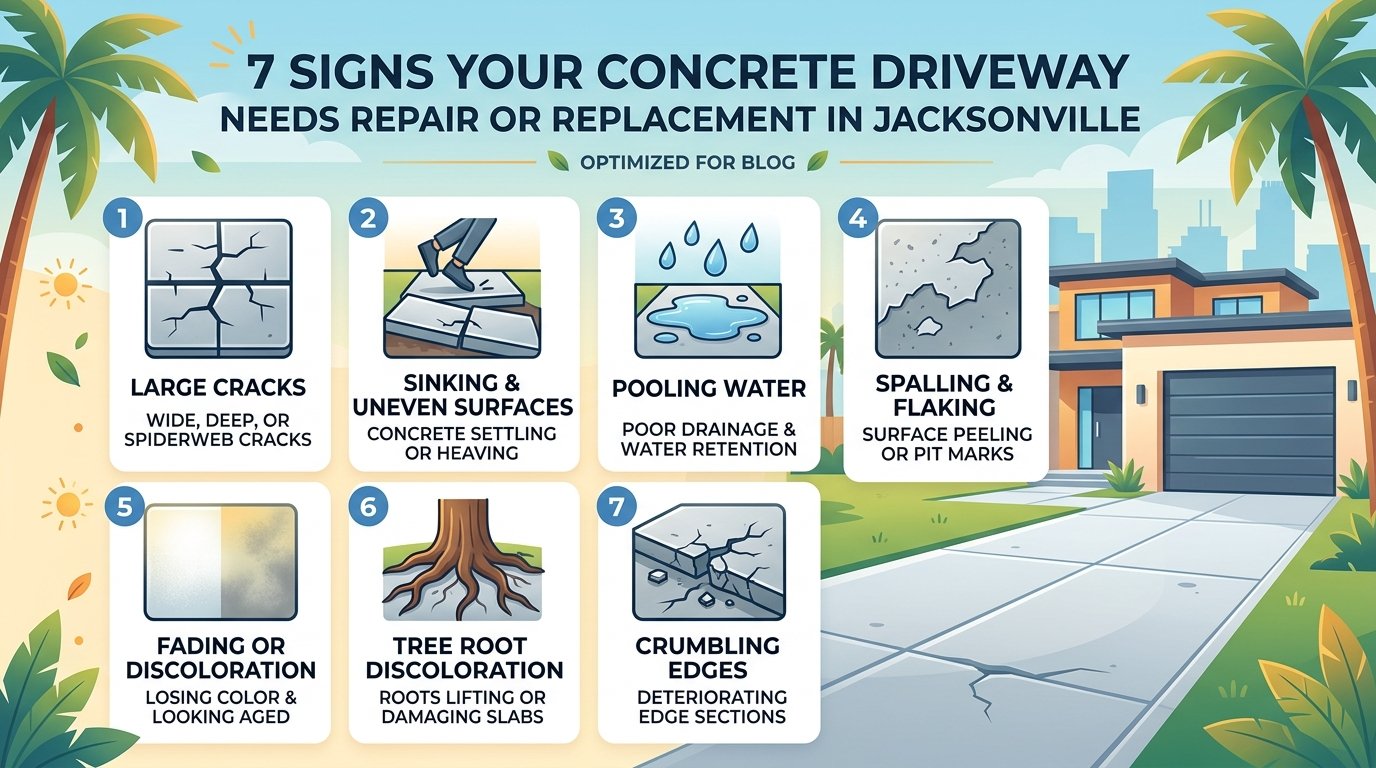
This guide covers seven warning signs that tell you concrete repair Jacksonville FL is necessary. Some signs mean quick fixes. Other signs mean full replacement makes more sense. By the time you finish reading, you’ll understand what’s normal wear and what’s serious damage requiring professional attention. Jacksonville’s specific climate and soil conditions create particular problems we see constantly.
Sign 1: Visible Cracks in the Surface
Hairline cracks that are barely visible and haven’t spread are usually fine. Concrete naturally develops small cracks as it cures and as temperature changes stress it. These surface cracks don’t need immediate attention. Sealing them prevents water from getting inside but they’re not structural problems.
Wider cracks, especially ones that are actively growing, signal real problems. A crack that’s a quarter inch wide or wider indicates stress or movement happening. If you notice a crack is wider this month than last month, that’s your driveway telling you something’s wrong. Growing cracks need professional assessment to understand what’s causing them and whether simple sealing or deeper repair is necessary.
Multiple cracks spreading across the driveway indicate systematic failure. If you’ve got cracks everywhere, the driveway isn’t just cracking in one spot. It’s deteriorating overall. This usually means base failure, settlement, or subgrade problems. Multiple driveway cracks throughout the surface usually leads to full driveway restoration being smarter than patching cracks individually.
Sign 2: Sinking or Settling Sections
A sinking driveway where one section is lower than the next tells you the base or subgrade underneath is failing. You might notice this as a lip where the concrete meets the street. Or one side of your driveway slopes differently than it used to. Or there’s a noticeable depression in one area. These aren’t cosmetic issues. They indicate serious problems underground.
Settling happens when soil underneath compacts unevenly or washes away from water. Jacksonville’s sandy soil and our heavy rain patterns can cause settlement over years. Once a driveway section sinks, it doesn’t come back up on its own. The section keeps sinking or staying low permanently. Water pools in sunken areas, which causes more damage and more settling.
A few inches of difference between sections isn’t just ugly. It’s a trip hazard and it means water’s pooling in the low spots. This accelerates deterioration. Sinking sections usually require professional repair or replacement because the problem is underground, not just the concrete surface. Sealing won’t fix settlement problems.
Sign 3: Uneven or Heaving Concrete
Uneven concrete can result from settlement like we discussed, but it can also come from upheaving. In northern climates, frost heave causes concrete to push up. Jacksonville’s freeze-thaw cycles are less severe but they still happen. We don’t get the brutal winter damage that happens up north, but freeze cycles still stress concrete.
Heaving also happens when tree roots grow under concrete and push it up. Jacksonville’s trees are aggressive and roots seek water. If there’s a tree near your driveway, roots might be pushing the concrete up from underneath. This creates an uneven, humped surface. Removing the root cause (literally the tree or root) might be necessary for permanent fix.
Uneven concrete also creates drainage problems. Water doesn’t flow away properly when the surface is uneven. It pools in low spots and runs off wrong from high spots. This ongoing water problem accelerates deterioration. Uneven driveways should be addressed before they get worse. Sometimes leveling works. Sometimes replacement is necessary.
Sign 4: Spalling and Surface Deterioration
Spalling is when concrete surface breaks apart and crumbles in chunks. It starts in small areas and spreads if not addressed. You’ll notice concrete pieces coming off in your hand when you run your hand across it. Or chunks of concrete have popped out leaving rough spots. This is concrete actively deteriorating.
Spalling happens from multiple causes. Water getting under the concrete freezes and thaws, breaking the surface. Salt air near the coast accelerates spalling. Poor concrete quality causes spalling. The sun and heat in Jacksonville stress concrete. All of these factors combine to cause surface deterioration. Once spalling starts, it spreads to more area over time.
Small spalling areas can be patched with concrete patching compound. Widespread spalling across the driveway indicates concrete deterioration is advanced. At this point, concrete damage is systematic and patching everything costs almost as much as replacement. You’re probably looking at full driveway restoration rather than patchwork repairs.
Sign 5: Potholes and Deep Holes
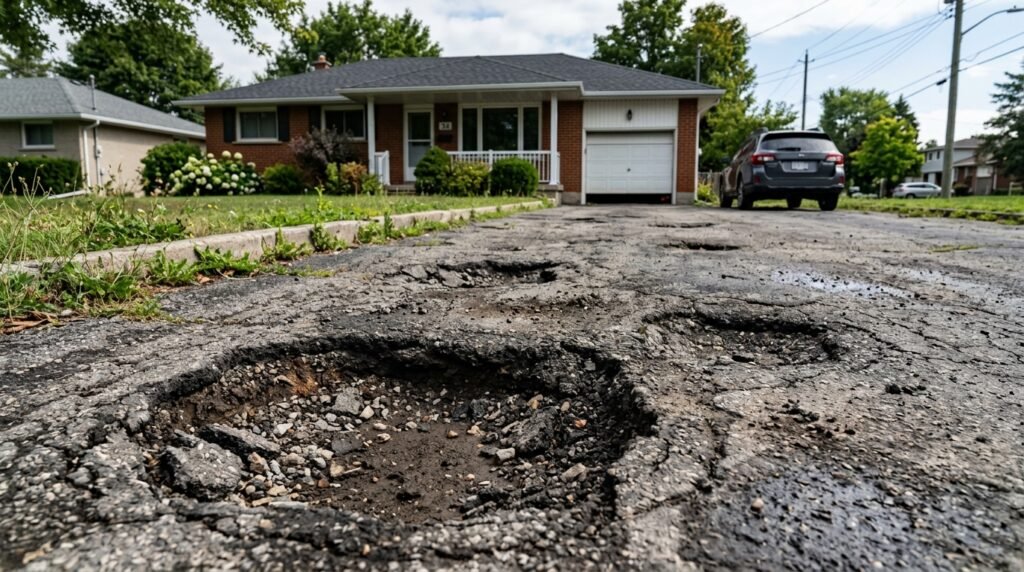
A pothole means concrete has failed completely in that spot. The base underneath has given way. Water’s getting in and breaking up concrete. Potholes start small and grow larger as traffic drives over them and breaks more concrete. A pothole that’s only an inch deep this month might be three inches deep in three months.
Potholes are dangerous. They’re trip hazards. They damage car tires and suspension. They look terrible. Most importantly, they indicate the concrete has completely failed in that area. Filling a pothole with patching compound is temporary fix. The pothole comes back because the base underneath is the problem, not just the surface.
One pothole might be fixable with repair. Multiple potholes spread across the driveway means the whole driveway’s failing. You’re looking at driveway repairs turning into driveway restoration because base issues are widespread. Addressing multiple potholes usually makes replacement more economical than repeated repairs.
Sign 6: Persistent Water Pooling
Standing water on your driveway after rain indicates drainage problems. Water should run off your driveway. If it’s pooling and sitting there, something’s wrong. It could be the driveway is settling creating low spots. It could be the slope isn’t steep enough. It could be drains are clogged.
Water sitting on concrete accelerates deterioration. Constant moisture breaks concrete down. Algae and moss grow in wet areas. The concrete underneath gets softer. Eventually, that area fails. What looks like a cosmetic pooling problem is actually a structural problem developing underground.
Check if pooling is new or if it’s always been there. If it suddenly started happening, something changed. Settlement or slope change. If it’s always pooled there, the driveway was poorly installed with inadequate slope. Either way, standing water needs addressing before it causes serious damage to your concrete.
Sign 7: Age and Visible Wear
A driveway that’s over twenty years old has earned a hard life in Jacksonville. Twenty-five plus year old driveways are reaching end of expected lifespan. If your driveway is this age and showing minor problems, replacement might make more sense than repeated repairs. You’re at the point where the investment in replacement versus ongoing repair changes the equation.
Older driveways also accumulate problems. One problem this year. Another problem next year. Before you know it you’re spending thousands on repairs for a driveway that’s approaching end of life anyway. At some point, investing in a new driveway makes more financial sense than maintaining an old one.
Age combined with visible wear like fading, minor cracks, and surface roughness tells you the concrete’s tired. It’s still functional but it’s aged. If the driveway looks old and worn out, it probably is. Time to think seriously about driveway restoration through replacement rather than ongoing maintenance and repair.
Getting Professional Assessment
If you’re seeing any of these signs, get a professional assessment. A concrete driveway repair contractor can evaluate whether repair or replacement makes sense for your specific situation. Some problems are fixable easily. Others indicate replacement is the only real solution. Professional assessment costs time but saves money by pointing you toward the right choice.
Don’t ignore warning signs hoping they’ll go away. Concrete problems don’t improve on their own. They get worse. A small problem that’s cheap to fix now becomes expensive problem later. Early intervention prevents expensive emergency repairs or premature failure of your driveway.
Frequently Asked Questions About Concrete Driveway Repair Signs
What size crack should I worry about in my concrete driveway?
Hairline cracks under an eighth inch wide are cosmetic. Seal them but don’t stress. Cracks a quarter inch wide or wider indicate stress or movement. Growing cracks require assessment to understand what’s causing the growth. Multiple cracks throughout indicate systematic failure. One or two isolated cracks might be minor. Many cracks spreading across the driveway means the whole driveway’s failing.
Is a sinking driveway repairable or does it need replacement?
Sinking driveway problems indicate base or subgrade failure. The concrete itself might be fine but what’s underneath is failing. Sometimes leveling the sunken section works. Sometimes the section needs replacement. Sometimes the whole driveway needs replacement depending on how widespread the settling is. Professional assessment determines the right approach for your specific situation.
What does spalling concrete mean and can it be fixed?
Spalling is when concrete surface breaks apart and crumbles. Small areas can be patched. Widespread spalling indicates concrete deterioration is advanced. At this point, patching everything is almost as expensive as replacement. Systematic spalling across the driveway usually means driveway restoration through replacement rather than patching is the smarter choice.
How do I know if my driveway needs repair or replacement?
One or two isolated problems with otherwise solid concrete usually means repair makes sense. Multiple widespread problems, extensive cracking, severe settling, or age over twenty-five years usually means replacement makes more sense. Professional contractor can assess and recommend which is right for your specific driveway condition and cost factors.
Can standing water damage my concrete driveway?
Yes. Constant moisture breaks concrete down. Water gets under the concrete, freezes and thaws, and breaks it apart. Concrete damage from water happens over time but it’s real and serious. Pooling water should be addressed by improving drainage or repairing the driveway’s slope. Ignoring water pooling accelerates deterioration.
How often should I inspect my driveway for problems?
Check your driveway at least twice a year. Look for new cracks, settling, pooling water, or spalling. Catching problems early when they’re small and fixable is better than ignoring them until they’re big and expensive. Regular inspection costs nothing but saves money by catching problems before they become serious.