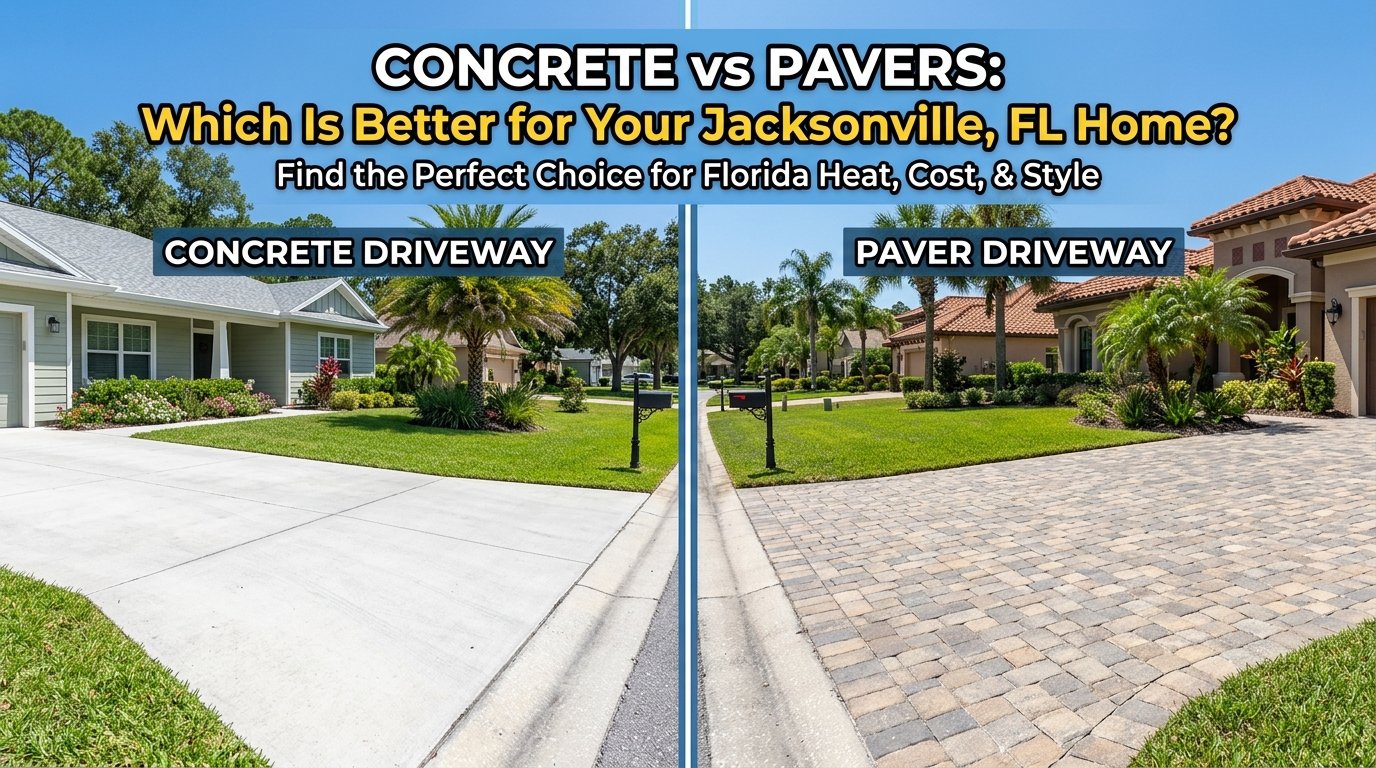
You’re deciding what to install for your driveway and you’re looking at options. Concrete. Pavers Jacksonville FL. Both have fans. Both have downsides. One isn’t universally better than the other. The right choice depends on what matters to you: budget, appearance, maintenance, durability in Florida weather, and how long you’re staying in your home.
This guide compares concrete to pavers Jacksonville honestly. We cover concrete paving versus pavers, costs, maintenance, durability, and how Jacksonville’s specific climate affects each option. By the end, you’ll understand the real differences and be able to decide which makes sense for your situation. Neither option is perfect. Both have legitimate advantages and real disadvantages worth understanding. Visit Concrete Advantage to learn more about concrete work across Jacksonville and Northeast Florida.
Cost Comparison Between Concrete And Pavers
Concrete is cheaper upfront. A concrete driveway costs less per square foot than paver installation. In Jacksonville, basic concrete runs three to four thousand dollars for average driveway. Jacksonville concrete pavers run more like six to ten thousand for the same driveway size. That’s a significant price difference. Budget matters, and concrete wins on initial cost.
Pavers cost more to install because each paver is individually placed. The labor is more intensive. Material cost per paver is higher than the cost of concrete per square foot. You’re paying for the customization and individual placement that pavers require. If budget is your main concern, concrete is the more affordable driveway material.
Long-term costs tell a different story though. Concrete needs sealing every two to three years. Pavers need occasional maintenance but don’t need sealing. Over twenty years, maintenance costs for concrete add up. Pavers might cost more upfront but maintenance costs less over time. The question becomes which cost structure fits your budget. Paying less now with ongoing maintenance, or paying more upfront with minimal maintenance.
Appearance And Aesthetic Appeal
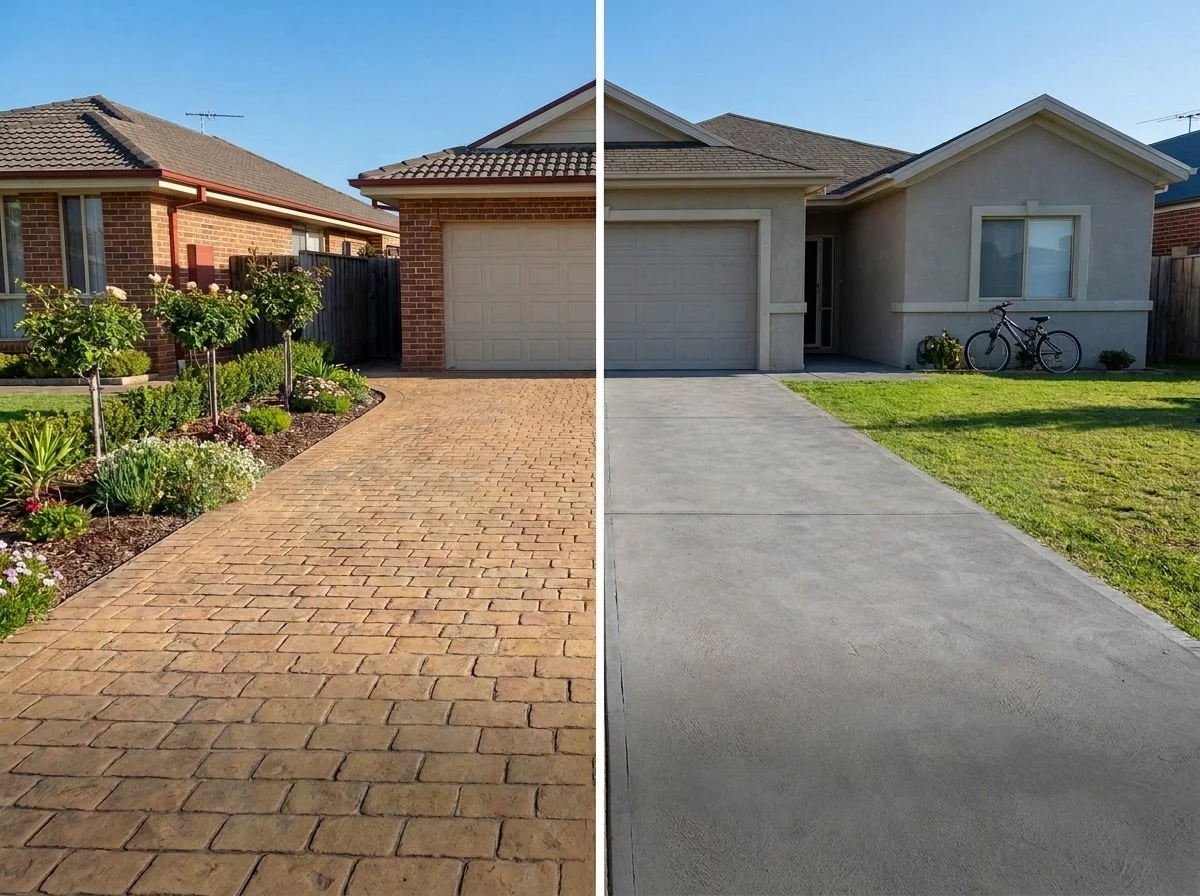
Concrete comes in basic gray or you can add color for extra cost. You can get decorative finishes like stamped patterns. The appearance is professional and clean. Concrete driveways look good. They age somewhat gracefully with minor weathering over years. They stay relatively dark unless sealed white pigment is added.
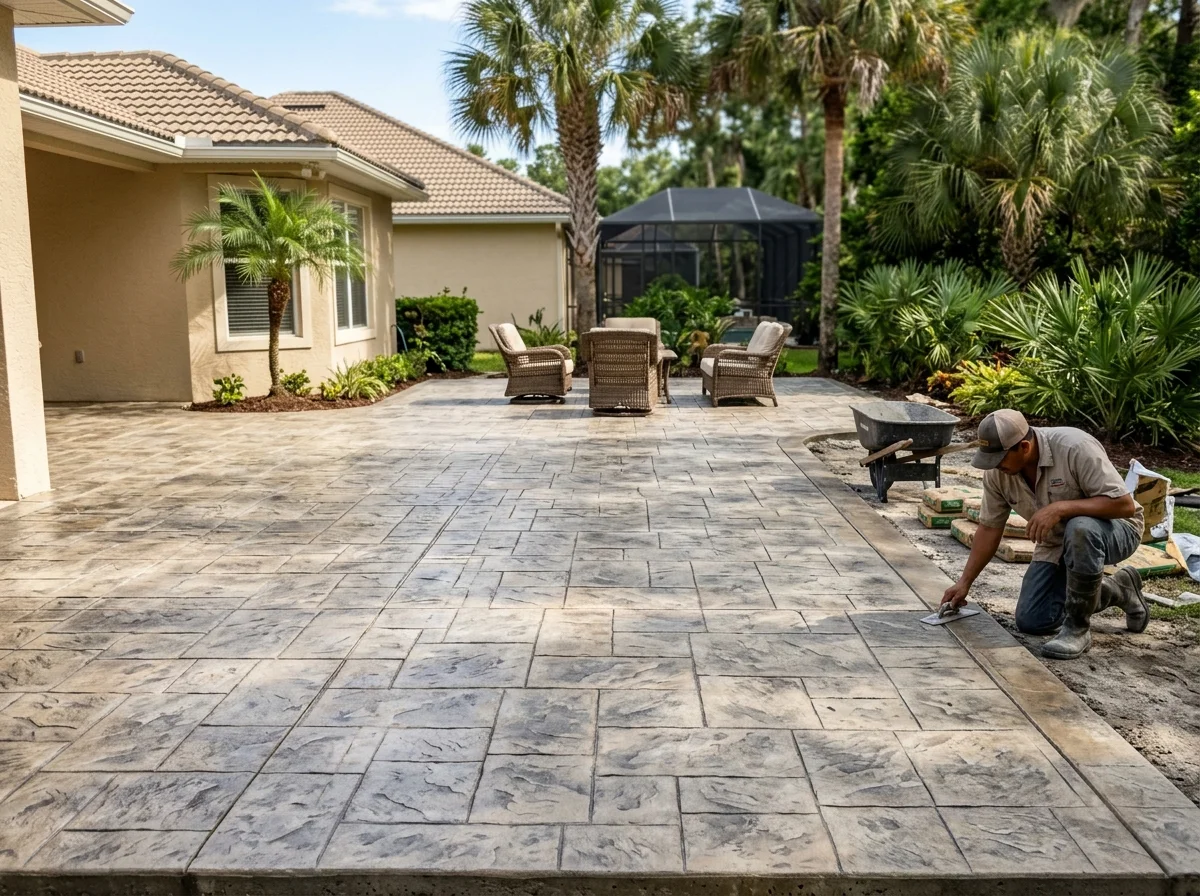
Pavers Jacksonville offer more aesthetic options. Different colors, patterns, different arrangements. You can create custom designs. Pavers look more upscale and distinctive than plain concrete. They add curb appeal in a way that standard concrete doesn’t. If appearance matters and you want something unique, pavers win this comparison. They let you customize in ways concrete doesn’t.
That said, concrete can look great too especially if you choose stamped or colored options. Stamped concrete approximates paver look at lower cost. For homeowners who want that upscale appearance but want to save money, stamped concrete is a compromise. Plain gray concrete is utilitarian and clean. Pavers are more visually interesting if that’s important to you.
Durability In Jacksonville Climate
Florida weather puts stress on outdoor surfaces. Heat and humidity. Sun exposure. Salt air near the coast. Occasional freeze-thaw stress even in Jacksonville. Both concrete and pavers experience these conditions. Both are durable but in different ways.
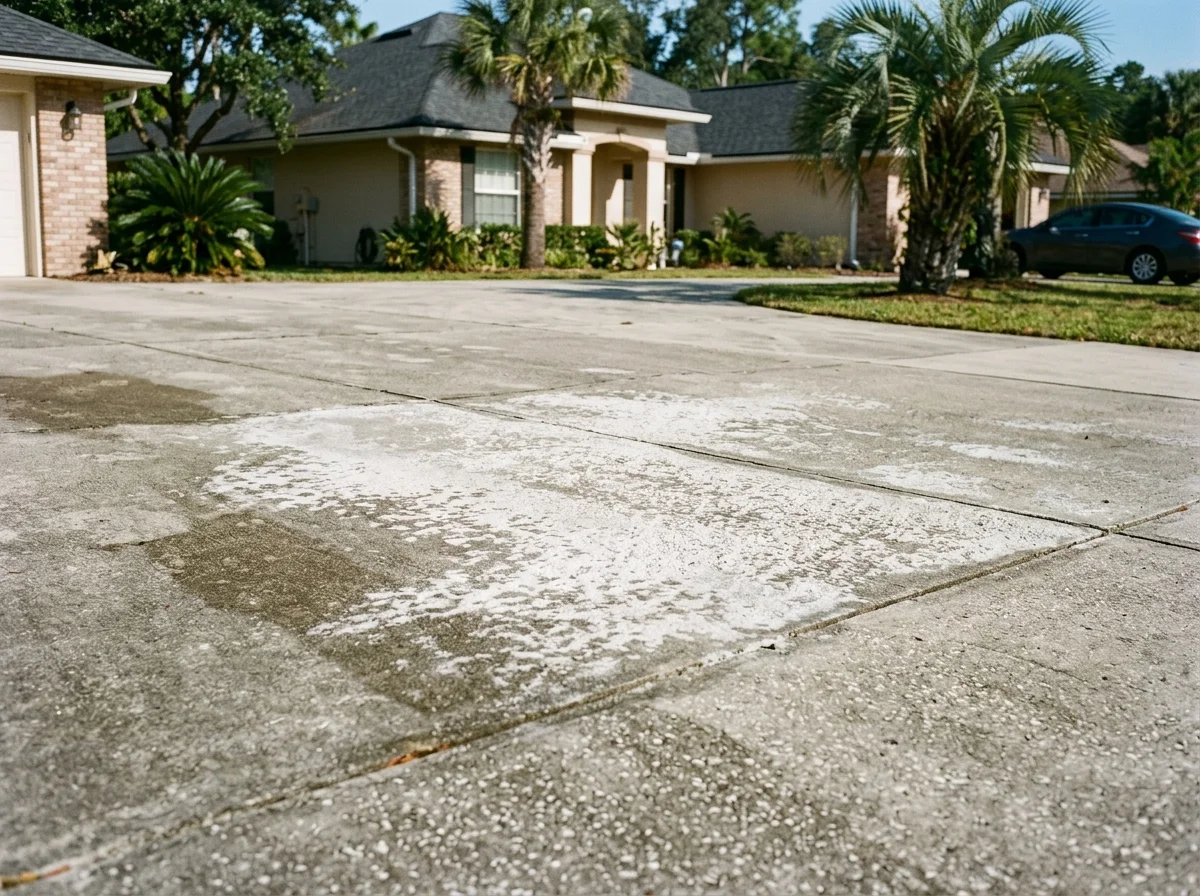
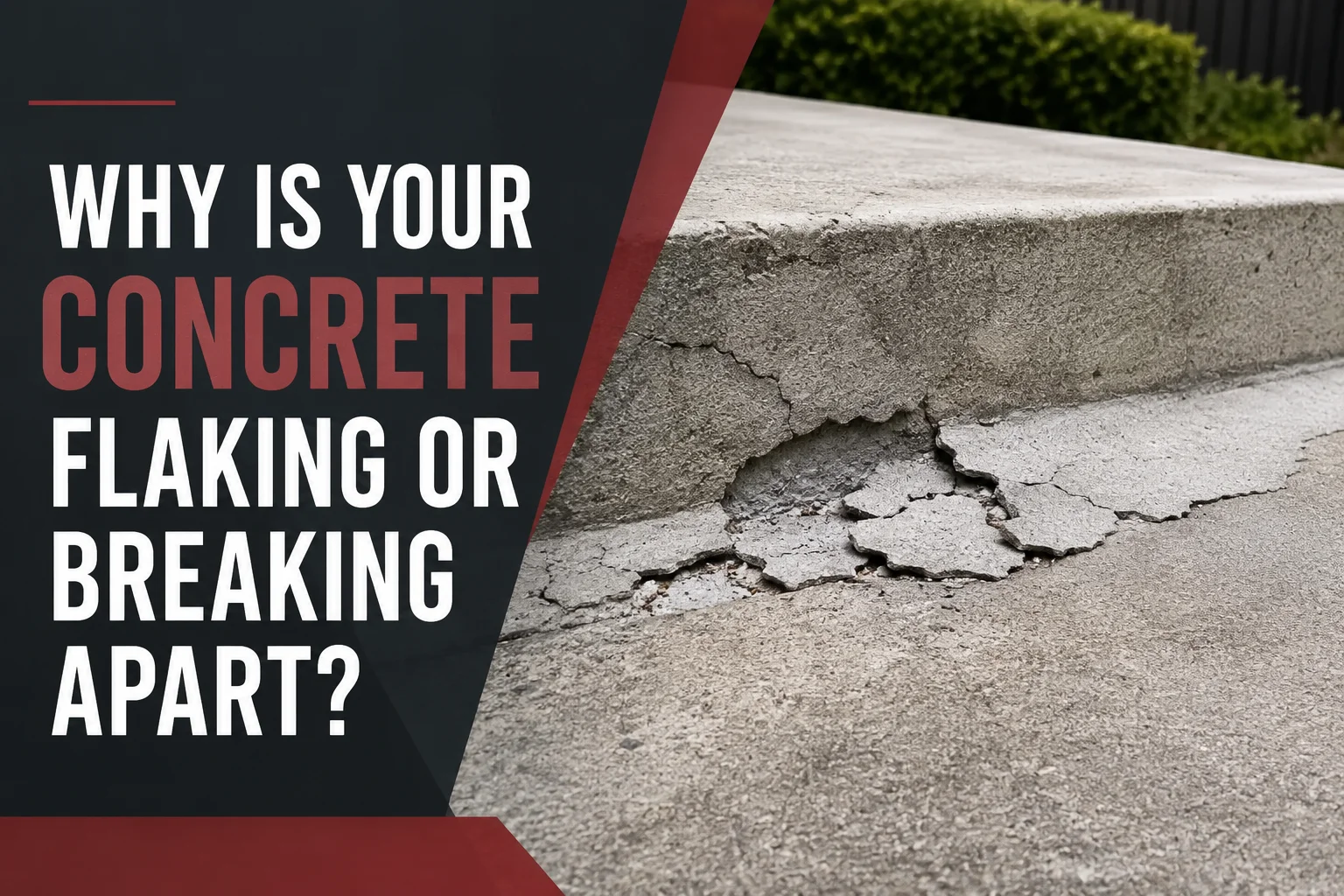
Concrete in Jacksonville typically lasts twenty to forty years depending on installation quality and maintenance. Sealed concrete lasts longer than unsealed. Concrete can develop cracks from temperature stress and settlement. Properly installed concrete with good maintenance lasts a very long time. The main enemy is water getting under concrete causing expansion problems.
Pavers in Jacksonville last similarly, twenty to forty years. The advantage is individual paver failure doesn’t affect the whole driveway. If one paver cracks or breaks, you replace that one paver. With concrete, cracks spread and affect the whole surface. Pavers are more modular so failure is more isolated. This makes pavers arguably more durable in the sense that problems don’t cascade like they do with concrete.
Maintenance Differences
Concrete requires sealing every two to three years in Jacksonville. This is essential because our heat and humidity breaks down unsealed concrete quickly. Sealing is the main maintenance task. Cleaning concrete by pressure washing is also good maintenance. Small cracks should be sealed to prevent water intrusion. This ongoing maintenance keeps concrete looking good and lasting longer.
Pavers require different maintenance. You’re looking for settling or shifting. Weeds grow between pavers which need removal. Joint sand between pavers needs occasional refreshing. Pressure washing cleans pavers but doesn’t require sealing like concrete. Pavers need less ongoing maintenance than sealed concrete but the maintenance is different in nature.
For someone willing to do maintenance, concrete works fine. For someone wanting lower maintenance, pavers might be better. Neither option is completely maintenance-free. Both require attention to look good and last long. The question is what type of maintenance you’re willing to do.
Water And Drainage Considerations
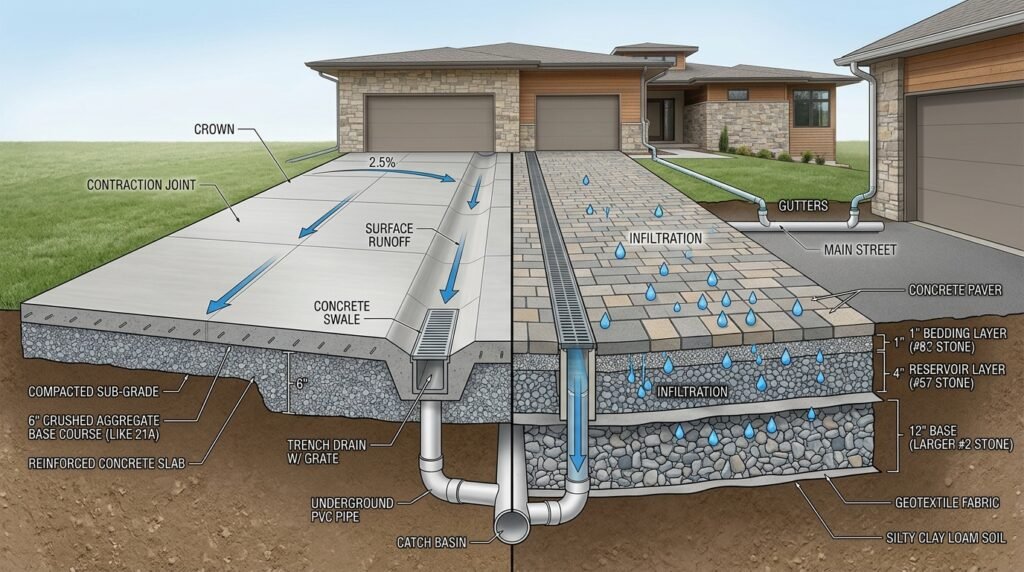
Concrete directs water off the surface if sloped properly. Water runs off and away from your home. Drainage for concrete depends on the slope and base preparation. Properly installed concrete handles Jacksonville’s rainfall without issues. Water pooling indicates installation problems. Good drainage is essential for concrete longevity.
Pavers allow water to permeate between them. This is actually an advantage in terms of drainage. Water soaks through joints and into the base. This reduces runoff and can help manage stormwater. In Jacksonville where heavy rain happens, permeability can be valuable. However, this permeability means pavers require proper base preparation to handle the water infiltration.
If you have drainage issues in your yard, pavers might actually be beneficial because they allow water through. Concrete forces water to go somewhere, which might not be ideal for properties with existing drainage challenges. Consider your property’s existing drainage when choosing between these options.
Repair And Replacement Costs
A cracked concrete driveway might need full replacement or extensive patching depending on crack extent. Widespread cracking means replacing the whole driveway. Repair costs can add up if you’re constantly fixing cracks. Eventually full replacement becomes necessary. The cost of replacing concrete is significant.
A broken paver is replaced by removing that one paver and installing a new one. Labor to replace one paver is minimal. Material cost for one paver is cheap. If pavers settle or shift, the affected area is leveled and reset. Problems are isolated and fixable. This modularity means repair costs are usually lower than concrete repair when problems occur.
Over decades, this adds up. Concrete problems require expensive solutions. Paver problems are usually fixable individually. If longevity matters to you financially, the ability to address paver problems individually without affecting the whole driveway is valuable compared to concrete where problems propagate.
Installation Timeline
Concrete installation is relatively fast. Prep work, installing base, pouring concrete, finishing, curing. Most driveways are installed in a week or two depending on size. The process is straightforward. Curing time before you use the driveway adds to timeline. After curing, it’s immediately usable.
Paver installation takes longer. Each paver must be individually placed. Proper slope and leveling takes time. Joint sand must be applied and settled. The process is more labor-intensive. Installation might take two to three weeks for the same driveway that takes one week for concrete. The extended timeline means your driveway is under construction longer.
If you need your driveway done quickly, concrete is faster. If timeline isn’t urgent, pavers might be worth the wait for the aesthetic results and individual replacement benefits you get.
Best Choice Depends On Your Priorities
Concrete is better if you want lowest cost upfront, want installation done quickly, and don’t mind ongoing maintenance like sealing. It’s also better if you like clean, simple appearance and want proven, time-tested driveway materials.
Pavers are better if appearance and customization matter, you’re willing to pay more upfront for lower maintenance, you plan to stay long term to benefit from the investment, and you like the modularity of being able to repair individual pavers instead of the whole driveway.
Neither is objectively better. Both are legitimate choices for Jacksonville driveways. The right choice depends on your budget, aesthetic preferences, maintenance willingness, and how long you’re staying. Think honestly about these factors and you’ll know which makes sense for your situation.
Frequently Asked Questions About Concrete Vs Pavers
Are pavers worth the extra cost compared to concrete?
That depends on your priorities. Pavers cost more upfront but maintain better long-term. Concrete costs less initially but needs ongoing sealing maintenance. If you’re staying long term and care about appearance and customization, pavers might be worth it. If budget is tight or you’re not planning to stay long, concrete makes more sense financially.
Which lasts longer, concrete or pavers in Jacksonville?
Both last similar timeframes, twenty to forty years with proper care. Concrete gets damaged systematically when cracks develop. Pavers can have individual failures without affecting the whole driveway. Pavers arguably last longer practically because problems don’t cascade. Concrete might fail completely while pavers keep functioning with individual paver replacements.
Which needs more maintenance, concrete or pavers?
Concrete needs regular sealing every two to three years in Jacksonville’s heat and humidity. Pavers need weeding, occasional sand refreshing, and pressure washing but no sealing. Different types of maintenance but similar amount of effort required. Pavers require less intensive maintenance but both need attention to stay looking good.
Can pavers be repaired individually if one breaks?
Yes, that’s a major advantage of pavers. If one paver breaks or settles, replace that paver. No effect on surrounding pavers. With concrete, if part of the slab cracks, the crack often spreads affecting more area. Individual paver replacement is easier and cheaper than addressing concrete problems that cascade.
Which is better for Florida weather and salt air near the coast?
Both handle Florida weather but in different ways. Properly sealed concrete withstands our heat and humidity well. Pavers’ permeability can be advantageous for drainage in our rainy climate. Near the coast where salt air is a factor, both need attention to durability. Sealed concrete with regular maintenance or pavers with proper drainage both work.
What’s the resale value impact of concrete vs pavers?
Pavers typically add more curb appeal and perceived value. Buyers see pavers as upscale. Concrete is utilitarian but professional looking. The resale impact depends on your neighborhood and buyer preferences. In some areas, decorative concrete adds as much value as pavers. In others, pavers command premium. Consider your neighborhood when deciding.