
Ordering concrete may seem easy until delivery day gets close. You need the right mix, amount, crew, tools, access route, and weather plan. A missed step can slow the pour or leave you with extra material. Homeowners may face these problems on driveways, patios, walkways, and small slabs. Contractors face the same risks on larger jobs with tight schedules. This guide explains how ready mix concrete Jacksonville FL service works, what happens before the truck arrives, and how to avoid common delivery mistakes. It also helps you plan a safer, cleaner site and ask better questions before placing an order.
You’ll learn how plant-batched concrete differs from concrete mixed at the job site. You’ll also learn about site prep, permits, costs, placement, and curing. The goal is to help you speak clearly with a ready mix supplier and prepare the work area before delivery. Concrete starts changing after water meets cement, so the crew must be ready to place and finish it. Good planning also helps protect lawns, curbs, forms, and nearby property. By the end, you’ll know which details to confirm and when to ask a contractor for help. This guide also shows why timing matters once the pour begins.
What Is Ready Mix Concrete?
Ready mix concrete is made for a set project need. Cement, water, sand, stone, and other materials are measured to form the mix. The concrete may be mixed at a plant or inside a truck mixer. It then arrives fresh for placement and finishing. The National Ready Mixed Concrete Association says ready mixed concrete is commonly made and delivered under ASTM C94 requirements. The mix should match the needed strength, loads, exposure, and placement method. There isn’t one recipe for every slab. A driveway, footing, sidewalk, and loading area may need different mix details. Traditional ready mix concrete delivery uses a rotating drum truck. A volumetric truck carries separate materials and performs the final mixing at the site. Concrete Advantage states that it uses volumetric mixing for its Jacksonville delivery work.
How Does Ready Mix Concrete Jacksonville FL Delivery Work?
A successful order starts before any truck leaves the yard. Give the supplier the job address, project type, planned amount, mix needs, pour time, and placement method. Explain gates, tight turns, slopes, soft ground, curbs, and overhead lines. For larger work, the supplier may plan truck spacing so concrete arrives at a steady rate. The NRMCA ordering checklist also covers washout space, safety notes, mix code, slump, air content, and emergency contacts. These details help both sides understand the job before concrete delivery Jacksonville FL begins. They also let the dispatcher decide whether a drum truck, volumetric truck, pump, or other setup may fit the site.
What Should Be Ready Before the Truck Arrives?
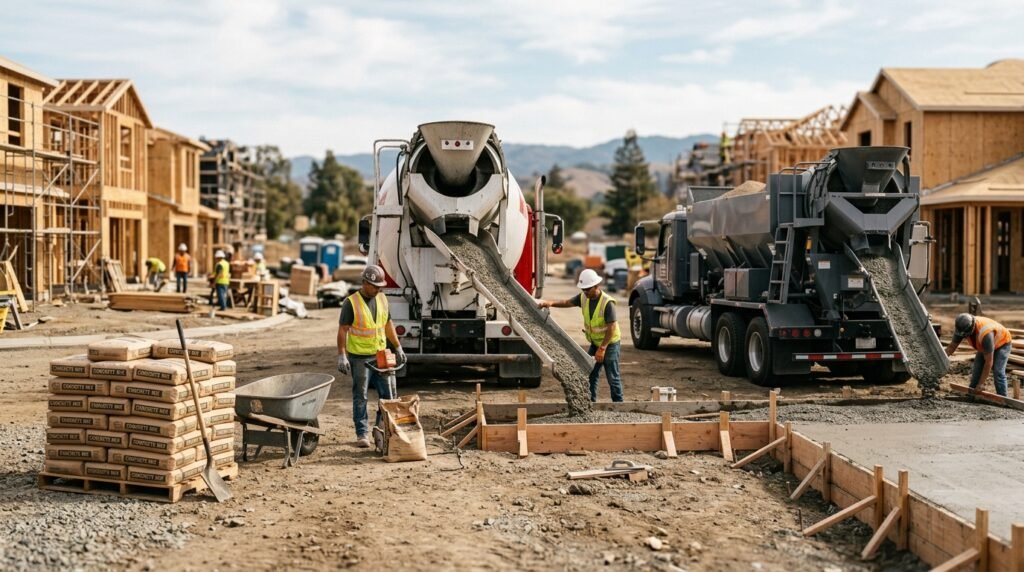
Finish the base, forms, steel, and drainage work first. Check every measurement again. Forms should be firm and set at the right height. The base should be stable and shaped for the planned slab. Keep boots, gloves, eye protection, screeds, floats, and curing supplies nearby. You also need enough workers to place and finish the concrete without delay. Clear a safe route for the truck. A loaded mixer is very heavy and may damage weak pavement, lawns, curbs, or soft soil. When direct truck access isn’t safe, plan a pump, buggy, chute, conveyor, or other placement method before delivery day.
What Happens During the Pour?
The crew should check the delivery ticket before discharge. It shows the mix, amount, and other order details. The driver then moves into the planned position. Workers spread, level, compact, and finish the concrete based on the slab type. Don’t add water without the proper approval. Too much water can lower strength and raise the chance of cracks or surface problems. Once placement starts, the crew should keep a steady pace. Long stops can make finishing harder. After the surface is complete, curing begins. Curing helps the concrete hold moisture while it gains strength. Keep people, pets, tools, and vehicles away until the installer says the surface is ready for use.
Why Does Delivery Planning Matter in Jacksonville?
Jacksonville’s heat, sun, wind, and rain can affect the pour plan. Fresh concrete may lose slump as time and temperature rise, so the site should be ready before the truck arrives. Weather may also change finishing and curing needs. Planning protects your schedule, property, and budget. A blocked truck can delay placement. A wrong amount may cause a short load or unused concrete. Poor base work may cause movement or drainage trouble later. Clear planning also helps the ready mix supplier choose a useful delivery method. If work touches a public street, sidewalk, easement, or right of way, local permit rules may apply. Jacksonville says work within a city right of way or easement needs a separate permit. Check the address and scope before work starts.
How Do You Choose the Right Mix and Amount?
Start with the project design, not a guess. Tell the producer what you’re building and how the concrete will be used. A walkway has different needs than a driveway, footing, equipment pad, or busy commercial slab. The order may include a set strength, stone size, slump, fiber, color, or setting time. Contractors should follow the plans and project specs. Homeowners should ask the installer to explain the mix in simple words. Concrete is sold by volume, usually in cubic yards. Measure the length, width, and planned thickness. Then allow for uneven base areas and small form changes. A concrete supplier Jacksonville team can review your math, but it can’t see every low spot at the site. Careful measuring lowers the risk of ordering too little or too much.
Ready Mix, Volumetric, or Bagged Concrete: Which Is Best?
Traditional ready mix works well when you know the amount and the crew can place it at a steady rate. The truck arrives with concrete ready to discharge. Its main limits include time, truck access, order size, and unused material. Volumetric concrete uses on-site concrete mixing. The truck carries water and dry materials in separate sections, then measures and mixes concrete at the job. This may help when the final amount is hard to predict, several mix types are needed, or work happens in stages. Concrete Advantage describes this as its local delivery method. Bagged concrete may fit fence posts, small pads, and minor repairs. It needs more hand labor and repeated concrete mixing. It’s often less practical for a large slab because each batch must stay even and arrive at the forms quickly.
What Affects the Cost of Concrete Delivery?
The total cost includes more than concrete. The mix design, amount, delivery distance, short-load rules, fibers, additives, pumping, and special hours may change the quote. Site prep, forms, steel, removal, labor, finishing, curing, permits, and disposal may cost extra. Ask what each bid includes before comparing prices. Current rates can change with material, fuel, labor, and scheduling needs, so a price found online may not match your job. Share the measurements, project use, access details, needed date, and service type when asking for a quote. Also ask about waiting time, returned concrete, cleanup loads, and schedule changes. NRMCA guidance notes that added charges may apply to short loads, returned material, weekends, or late changes.
How Should You Choose a Concrete Supplier?
Choose a company that asks clear questions before taking the order. It should discuss the job type, mix needs, amount, truck route, placement method, timing, and washout area. Ask whether it provides plant-batched concrete, volumetric concrete, delivery only, or full concrete work. Those services aren’t always the same. When comparing a concrete supplier Jacksonville company, ask who chooses the mix, checks the amount, and handles placement. Confirm the service area and delivery times. Ask how delays are handled and what happens if the site isn’t ready. For structural or permitted work, follow the plans and speak with the right licensed contractor or design professional. Concrete Advantage lists delivery, commercial concrete work, and Jacksonville-area service. Ask the team to confirm that your project and address fit its current schedule.
Plan Your Jacksonville Concrete Delivery With Care
Good concrete work begins with a clear plan. Measure the project, choose the mix, prepare the base, build firm forms, and clear a safe truck route. Have enough workers and tools ready before the concrete arrives. Check permits when work may touch a public right of way, easement, driveway apron, or regulated structure. A well-planned ready mix concrete Jacksonville FL order also matches the delivery method to the job. Drum trucks work well for many planned pours. Volumetric trucks can make concrete at the site as work moves forward. Bagged material fits smaller tasks. For concrete delivery Jacksonville FL, confirm the mix, amount, delivery time, access, placement method, washout space, and curing plan. These steps reduce waste, delays, and last-minute changes.
Frequently Asked Questions
How Much Concrete Should I Order?
Measure the slab’s length, width, and planned thickness. Allow for uneven base areas and form changes. Ask the supplier or contractor to review the math before you place the order.
Is Volumetric Concrete the Same as Ready Mix?
Both provide fresh concrete, but their delivery methods differ. Traditional ready mix arrives already mixed. A volumetric truck carries separate materials and completes the mixing at the job site.
Can a Concrete Truck Drive on My Yard?
It may damage lawns, soft soil, curbs, pavers, or weak pavement. Share photos and access details first. Use a pump or another method when direct truck access isn’t safe.
Do I Need a Permit for Concrete Work?
It depends on the project and location. Jacksonville may require permits for structures or work in a public right of way or easement. Check with the city before work begins.
What Should I Ask the Supplier?
Ask about the mix, amount, delivery time, access needs, added fees, and washout. Also confirm whether the company provides delivery only or handles preparation, placement, finishing, and curing.
When Should I Schedule Delivery?
Schedule ready mix concrete delivery after the base, forms, steel, crew, tools, and truck route are ready. Place the order early enough for the supplier, then report weather delays or job changes quickly.