Concrete doesn’t fail on its own. When a driveway drops a few inches or a patio starts tilting toward the yard, the slab is only doing what gravity told it to do once the ground underneath stopped holding it up. Sinking concrete is one of the more common calls locals make around Jacksonville, and it usually has a specific, findable reason behind it rather than just bad luck.
This guide breaks down why concrete sinks or becomes uneven, what makes Jacksonville soil different from what most articles assume, and how to tell a minor dip from something that needs real attention. By the end, you’ll know what your slab is actually telling you and what a proper fix involves.
What It Looks Like When Concrete Is Sinking
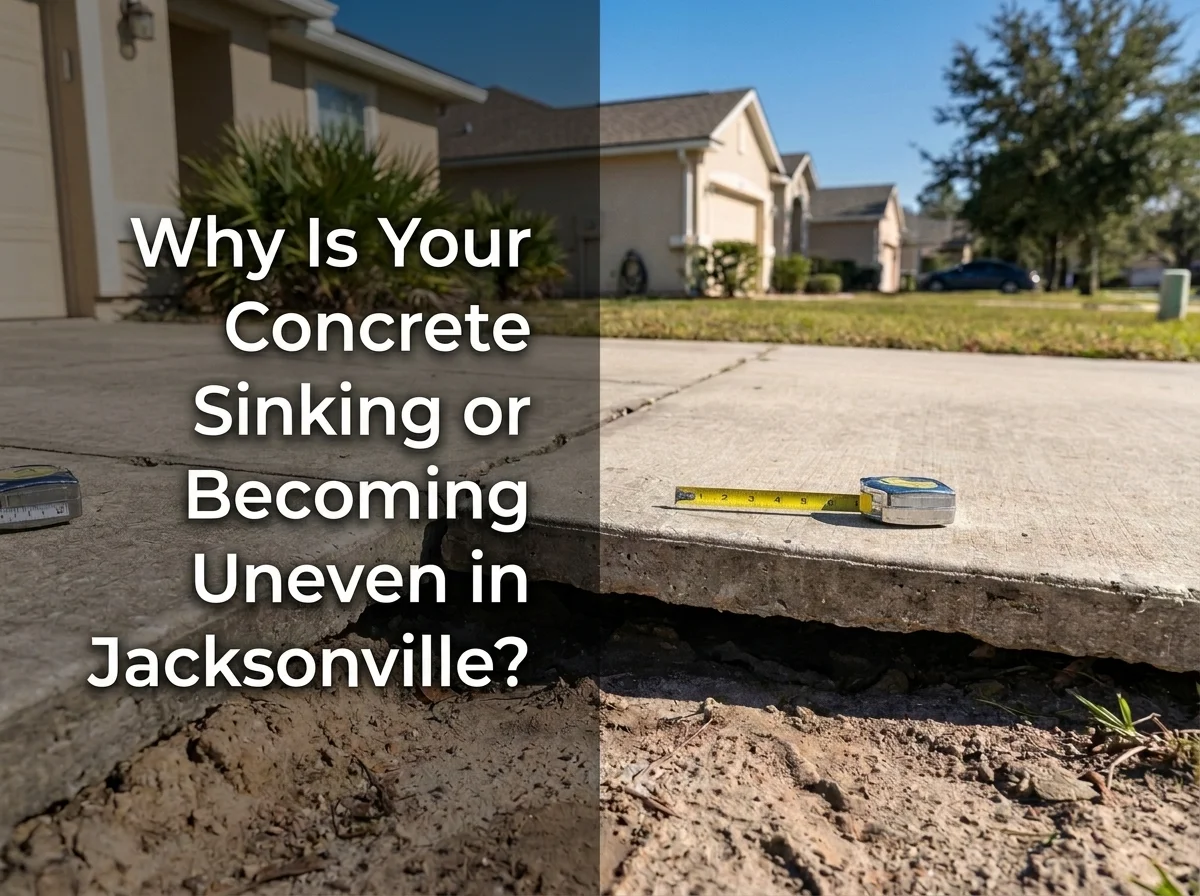
Sinking concrete rarely drops all at once. It settles slowly, and the shape it takes usually says something about the cause underneath it. A driveway might dip near the street end while the section closer to the garage stays level. A patio can pull away from the house, leaving a gap wide enough to catch a shoe. One panel of a walkway sits noticeably lower than the panels on either side of it, creating a small step where there used to be a flat surface.
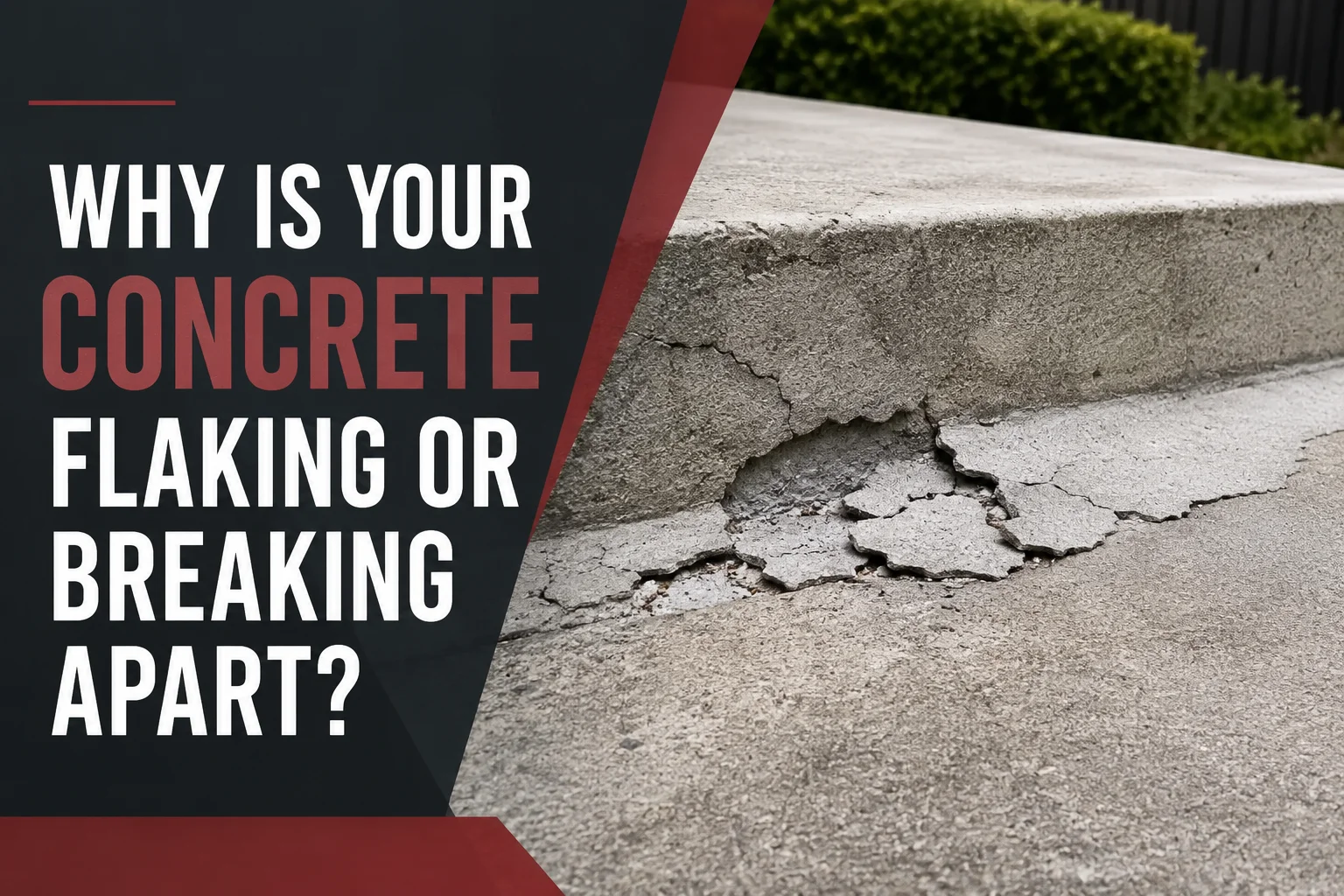
Water pooling in a spot that used to drain fine is often the earliest sign, well before you’d notice any visible tilt. It’s worth separating this from a related but different issue. Cracking without any real drop or tilt is often something else entirely, like shrinkage during curing or a joint that was never sealed properly, and it doesn’t always mean the ground underneath has moved. If you’re also noticing cracking or surface damage, knowing the signs concrete needs repair can help you determine whether the problem is becoming more extensive.
Why Concrete Sinks or Becomes Uneven
Concrete is a strong material, and it seldom wears out. If a slab sinks, the real problem is almost always underneath the slab. The soil must have shifted or settled somehow, and the concrete simply followed gravity down into the available space. Starting with the most common, here are some of the reasons we encounter most frequently on Jacksonville driveways, walkways, and patios.
Soil Erosion from Rain and Poor Drainage
Jacksonville gets a lot of rain in a short window each year, and water is the single most common way soil disappears from under a slab. Downspouts that dump straight onto the ground, poor grading around the house, and low spots in the yard all send water to the same place over and over. Over time, that water carves out a void beneath the concrete, and the slab has nothing left to rest on in that spot. This is the cause behind most of the sinking concrete we see across the area, and it tends to get worse with every rainy season if it goes unaddressed.
Jacksonville’s Sandy Soil and Poor Compaction
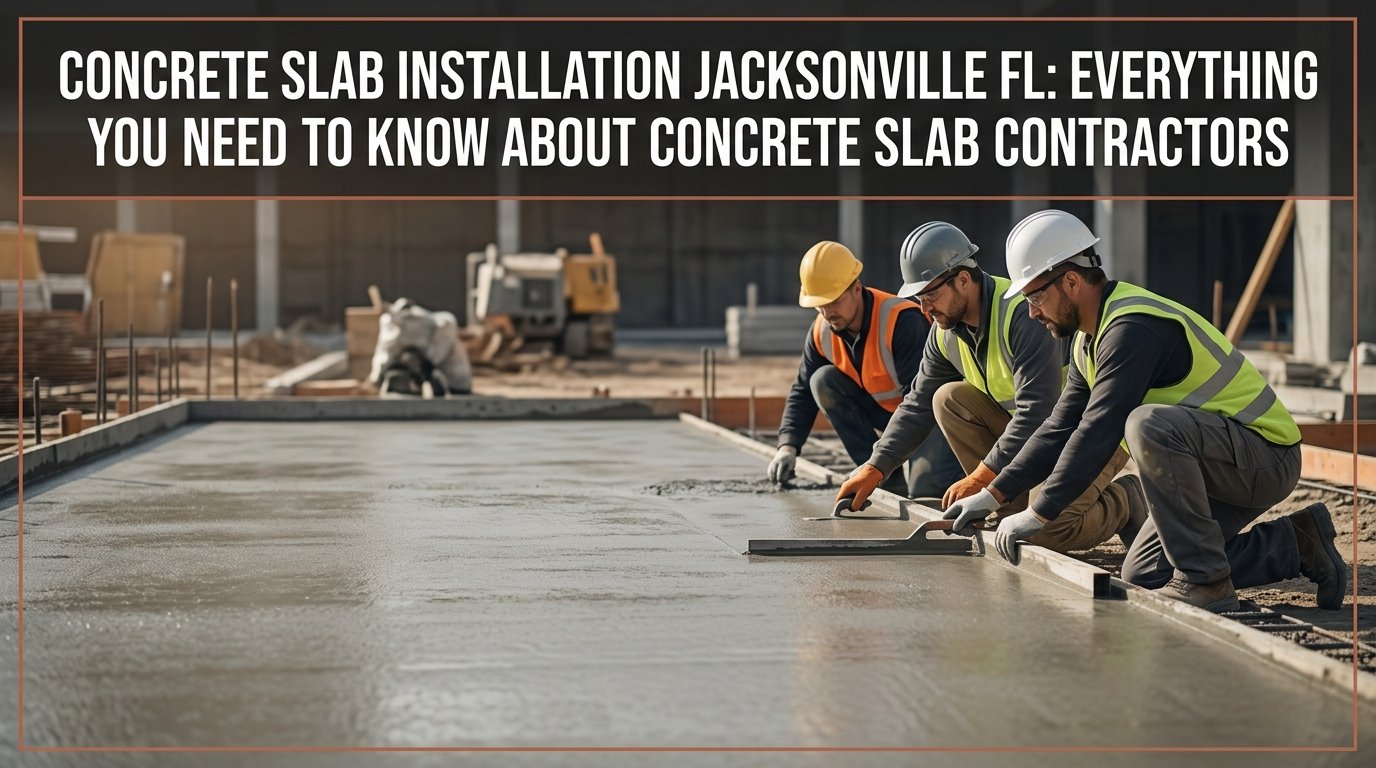
A large share of the region sits on sandy, loose soil that was never especially strong ground to build on in the first place. If that soil wasn’t compacted properly before the original concrete pour, it settles under the slab’s own weight over the years, with no dramatic storm or event required to trigger it. This shows up often in newer construction, additions, or driveways poured over ground that was recently disturbed by grading or landscaping work, making proper concrete slab installation especially important.
A High Water Table Softening the Base
The same high water table that causes moisture problems in concrete plays a role here too. Soil that stays wet loses much of its load-bearing strength, so a slab sitting over saturated ground settles more and faster than one built over dry, stable soil. This tends to hit hardest in low-lying yards, properties near the coast, and anywhere runoff naturally collects and lingers.
Tree Roots Disrupting the Base
Large tree roots growing near a driveway or walkway create two different problems, depending on where they end up. Roots pushing up directly under a slab can lift and crack it. Roots that grow, then later die off or shift away, can leave behind gaps that let the slab settle down into the empty space. This shows up most on older, established lots where mature trees sit close to the concrete.
Heavy Vehicle Loads Over Time
Repeated weight from cars, trucks, or equipment compresses soil that’s already on the weaker side, especially under driveways that see daily traffic. This problem gets worse where the base underneath wasn’t built to handle that kind of load from the start, which usually traces right back to compaction during the original installation.
Most articles on sinking concrete lead with freeze-thaw cycling as the top cause, since that’s what drives the problem across much of the country. It barely factors into Jacksonville’s ground. Our climate doesn’t put soil through the freeze-and-expand cycle that fractures concrete bases up north, so if you’re reading advice built around winter freezing, it wasn’t written with Florida soil in mind.
What Your Slab Is Telling You
The way that your slab is sinking on your property often gives a pretty good clue to what is going on, and this is very helpful before you hire somebody out to see what it is. If a driveway is sinking near a downspout, it is a different story than if it’s settling evenly over the entire surface and is likely due to a cause below.
| What you’re seeing | What it usually points to |
| Sinking near downspouts or low yard spots | Erosion from water runoff |
| Gradual, even settling across a whole slab | Poor compaction or soft soil |
| Sinking that follows heavy rain or a wet season | High water table, saturated base |
| Lifting or cracking near large trees | Root disruption |
| Sinking mainly in driveway wheel paths | Repeated vehicle load on a weak base |
Some situations point to something more serious than a routine void. A section that sounds hollow when you tap on it, sinking that keeps getting worse rather than holding steady, or settling that’s creeping toward a foundation wall instead of staying out on the driveway all deserve a closer look before any repair goes forward.
Sinking Concrete vs. a Foundation Problem
Most sinking driveways and patios are isolated slab problems, not foundation issues, even though the two can look similar from a few feet away. It’s a fair worry to have, especially once you’ve noticed one part of your property sitting lower than it used to, and it’s worth sorting out early rather than losing sleep over it.
If the sinking stays limited to a driveway or patio that isn’t structurally attached to the house, and you’re not seeing cracks running up interior or exterior walls or doors that have started sticking, it’s very likely just the slab. On the other hand, cracking that runs from ground level up into the walls of the home, doors or windows that no longer close right, or sinking that’s happening right along the foundation line itself are worth a foundation-specific evaluation before anything else happens.
How Sinking Concrete Gets Fixed
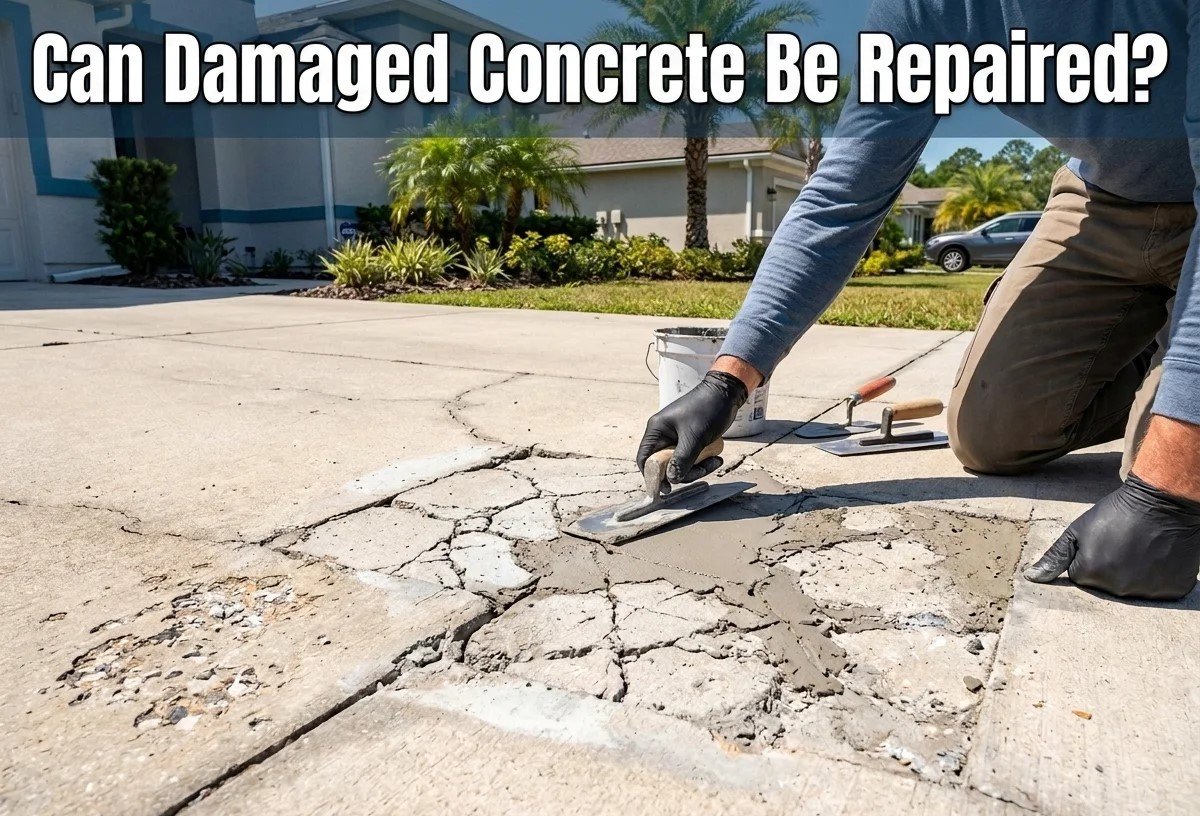
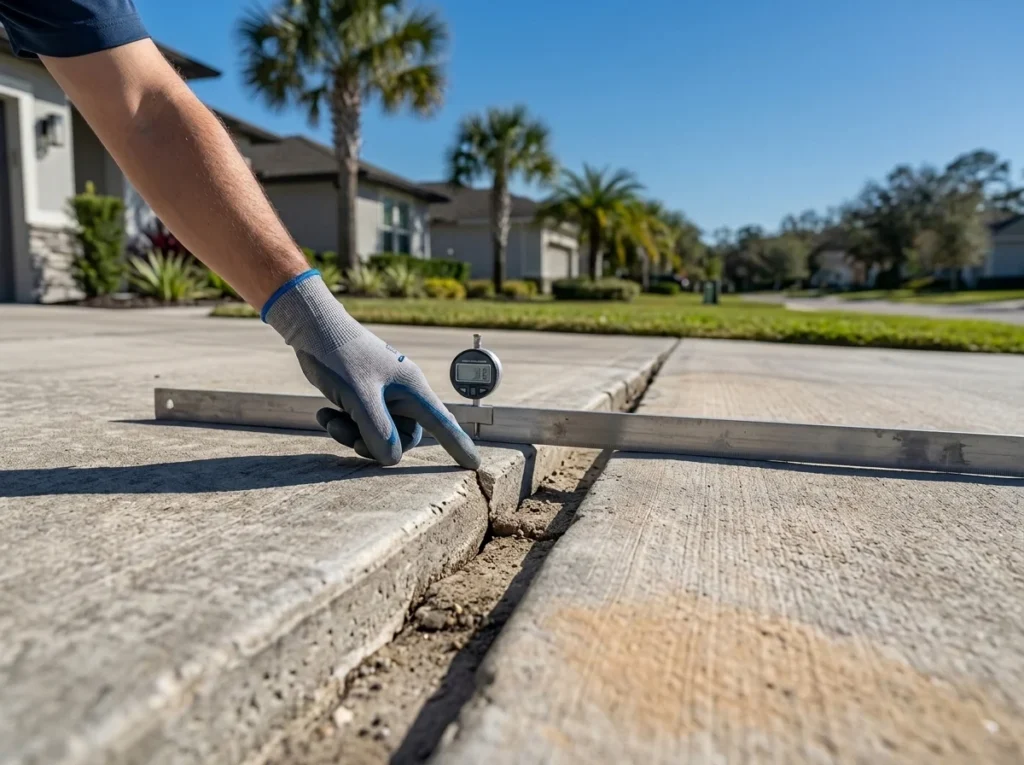
Sinking concrete is fixed by first finding why the slab lost support. If the concrete remains sound, contractors can pump material beneath it to fill voids and lift it back into place. Drainage problems must also be corrected when water causes erosion. Severely cracked or damaged slabs may need complete replacement. Concrete Advantage can evaluate the condition of the slab and help determine which approach makes sense.
Concrete Slab Leveling Cost
Concrete slab leveling typically costs $3 to $25 per square foot, depending on the size of the affected area and the extent of the settlement. The final price can vary based on several factors, including how much concrete needs lifting, the size and depth of the void underneath, the leveling method used, and whether drainage or soil problems also need correction.
A small settled section usually costs less to level than an entire driveway or patio. If the concrete is still structurally sound, leveling is generally less expensive and less disruptive than full replacement. However, severely cracked or deteriorated slabs may require replacement instead, which is why understanding concrete repair vs. replacement can be useful before choosing a solution.
Preventing Sinking and Settling in Jacksonville
A few habits go a long way toward keeping a leveled slab from settling again down the road, and most of them come back to controlling water before it ever reaches the soil under your concrete. None of this requires special equipment, just paying attention to where water goes after it hits your roof and yard.
Keep downspouts extended well away from driveways, patios, and walkways instead of letting them dump water right at the edge of the slab. Regrade any low spot in the yard that collects water near concrete, since standing water is doing more damage underground than you can see on the surface. Keep an eye on large trees planted close to concrete, and deal with root growth before it has a chance to undermine the base beneath a driveway or walkway. Reseal joints and cracks as soon as you notice them, since an open joint is really just an entry point for water. Most importantly, don’t ignore early, minor settling. A small void costs far less to fix than a slab that’s already dropped several inches.
When to Call a Professional
A proper evaluation identifies whether erosion, poor compaction, a high water table, or root damage is behind the sinking you’re seeing, and that identification matters more than most homeowners realize. Guessing at the cause usually leads to a repair that doesn’t actually address what’s happening underground, and the same problem shows back up within a year or two.
Concrete Advantage offers free evaluations for Jacksonville property owners dealing with sinking or uneven concrete. We look at the pattern of settling, check what’s likely happening underneath, and give you a straight answer on whether leveling or replacement makes more sense for your situation, rather than pushing whichever service happens to pay better.
Frequently Asked Questions
Why is my concrete driveway sinking in Jacksonville?
The most common causes locally are soil erosion from heavy rain and a high water table softening the ground. Repeated vehicle weight over a weak base also plays a role on older driveways.
Is sinking concrete a sign of a foundation problem?
Usually not. Most sinking driveways and patios are isolated slab issues that never touch the home’s structural foundation. Cracks running up into walls or sinking right along the foundation line are the signs worth a closer look.
Can sinking concrete be leveled instead of replaced?
In most cases, yes. If the slab itself is still in good condition and only the support underneath has failed, leveling fills the void and lifts the concrete back into place without the cost and disruption of a full replacement.
How much does concrete slab leveling cost?
Most residential projects run between $750 and $3,000, averaging around $1,232, or roughly $3 to $25 per square foot depending on the method used. The actual number depends on the size of the void and how much of the slab needs lifting. A small settled section costs far less than a full driveway, and either option typically costs less than tearing out and replacing the concrete.
How do I stop my concrete from sinking again after repair?
Fix the drainage issue that likely caused it in the first place. Extend downspouts away from the slab, regrade low spots that collect water, and reseal joints and cracks so water isn’t finding its way underneath the concrete again.
Final Thoughts
Sinking concrete almost always traces back to what’s happening in the ground underneath it, not the slab itself. Once that cause gets identified correctly, the right fix usually becomes clear pretty quickly, whether that’s leveling a settled section or addressing a drainage problem that’s been quietly working against your driveway for years.
If your driveway, patio, or walkway has started sinking or sitting unevenly, Concrete Advantage can take a look and tell you what’s actually happening underneath it.