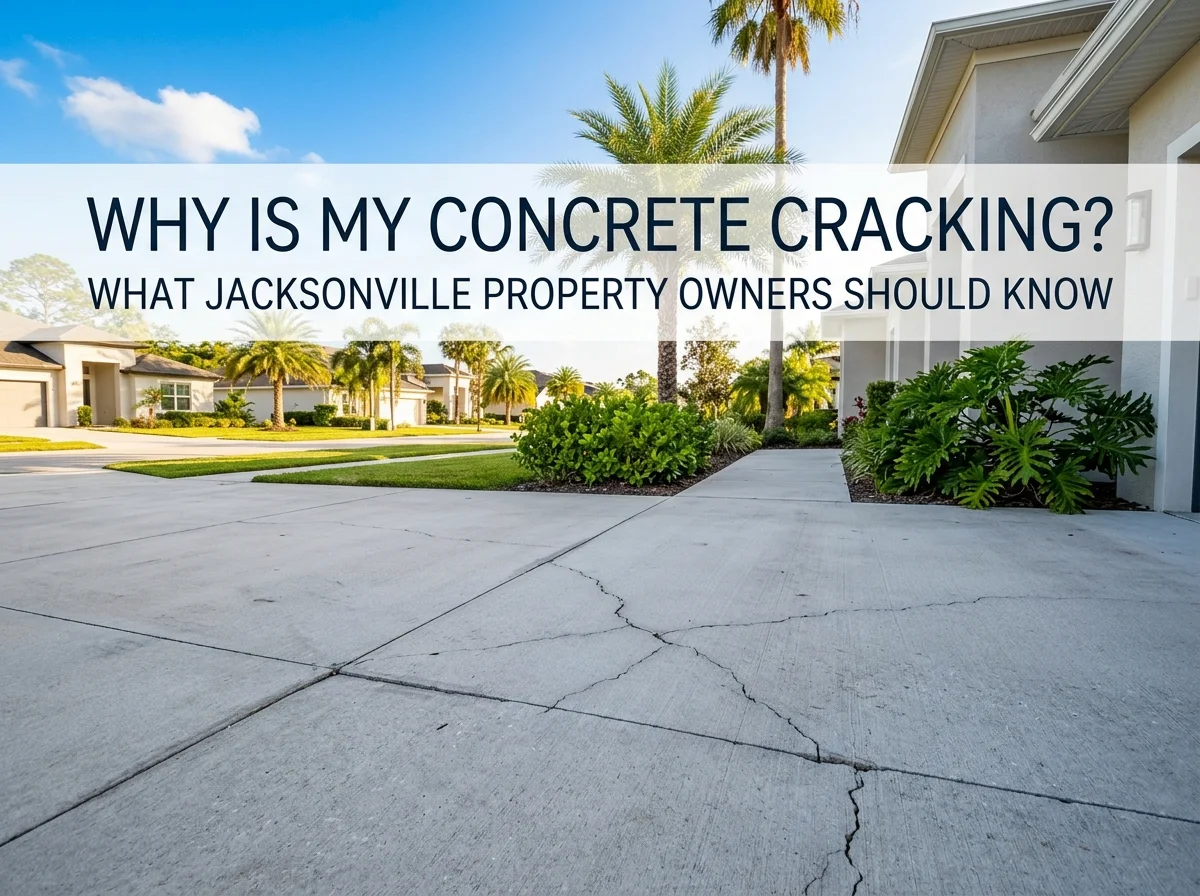
Concrete typically lasts for years, but cracks can still develop in slabs, parking areas, warehouse floors, sidewalks, and other concrete surfaces. Some are not serious and are mostly cosmetic. Others have even been able to cite settlement, water, loading, or deeper structural issues.
Not only is the question being asked, “Is there a crack?” but the important question is, “Do you know where they are located?” It’s all about the cause of the cracks, whether the cracks are worsening, and what is going on under and around the slab. Drainage, sandy subgrade, heavy rains, long hours of hot temperatures, and commercial traffic can all be a factor to Jacksonville property owners.
Not All Concrete Cracks Mean the Same Thing
Slab-movement cracks are different from those that form as concrete cures. Examining the width, pattern, location, and whether or not the crack is moving will help make an educated guess on the severity of the problem.
Hairline cracks in concrete are often part of the curing process and are considered to be signs of shrinkage. Any wide cracks, irregular sections, or cracks that are enlarging should be examined more carefully, as they can be signs of movement below the slab or greater stress on the concrete.
The table below provides a general way to think about common crack patterns:
| Crack Type | Possible Cause | Level of Concern |
| Fine hairline crack | Shrinkage or surface curing | Often low |
| Long straight crack | Slab movement or joint-related stress | Varies |
| Wide or expanding crack | Settlement or ongoing movement | Higher |
| Uneven crack | Differential settlement | Higher |
| Cracks near heavy traffic | Load-related stress | Depends on severity |
| Multiple connected cracks | Widespread movement or deterioration | Needs evaluation |
A crack cannot be diagnosed by appearance alone, but the pattern often provides useful clues about what is happening.
Shrinkage Cracks: Often a Concrete Curing Issue
Concrete contains water when it is placed. As it cures and loses moisture, the material can shrink slightly. If that natural movement is restrained, cracks may develop.
The concrete shrinkage cracks are usually not very wide and do not necessarily mean that the slab is structurally damaged. They may occur in fresh concrete if, during curing, placement practices, or joint spacing, or if the slab is restrained, result in stresses.
Control joints are designed to help manage where concrete cracks. If joints are missing, improperly positioned, or not effective for the design of the slab surface, cracking can be more likely to happen in unexpected places. Excessive uncontrolled cracking is also considered an unacceptable condition by the City of Jacksonville’s pavement specifications for rigid pavement.
Settlement Cracks Can Point Below the Surface
Slabs settle because parts of them lose support, or parts of them move at different speeds. This can make the decision between concrete repair and replacement more complicated than simply filling the visible crack. This can be caused by poor compaction of the concrete, erosion, voids, or changes in the underlying soil. A crack can be seen where one part of a slab is supported and the other part sinks. If the crack is not level, it could be due to more than normal surface shrinkage.
Jacksonville-area contractors commonly identify sandy subgrade, drainage problems, and water movement as factors that can contribute to voids and settlement beneath concrete slabs.
Structural Cracks Need a Closer Look
There are some cracks that require more attention because they could compromise the performance of the slab and/or be a symptom of a structural issue. It does not imply that all the wider cracks need to be replaced, but it does mean that the cause should be determined prior to cosmetic repair.
Warning signs can include:
- Cracks that become noticeably wider over time
- Uneven slab sections
- Multiple cracks spreading across the same area
- Cracks associated with sinking or heaving
- Damage near load-bearing or heavily trafficked areas
- Repeated cracks after previous repairs
Commercial properties also require consideration of the type of traffic. A crack in a lightly-used walkway is not under the same stresses as a crack in a commercial concrete construction project involving loading areas, parking lots, or warehouse floors
Why Concrete Cracks Differently in Jacksonville
Jacksonville’s climate and site conditions can create a different set of concerns than areas where freeze-thaw cycles are the primary source of concrete damage.
Drainage and Heavy Rainfall
Poor drainage can allow water to collect around or beneath concrete slabs. Over time, moving water may contribute to erosion or loss of support in the subgrade. The land-development specifications for Jacksonville take specific account of protecting and curing concrete pavement during its construction when exposed to rain, and demonstrate why weather management is important when concrete is placed locally.
Sandy Subgrade Conditions
The soil conditions in much of Northeast Florida are sandy and will need to be properly prepared and compacted for concrete construction. Differential settlement and cracking can occur if the foundation under a concrete slab is uneven. The problem is that not all sandy soils make cracks. Appropriate site preparation, base conditions, compaction, and drainage can make a big difference.
Prolonged Heat and Moisture Exposure
The subtropical climate in Jacksonville causes concrete to be subjected to extended periods of high temperature and humidity. Fast drying during installation may cause shrinkage-related issues, and alternating wet and dry weather may exacerbate already existing imperfections or cracks.
Commercial Vehicle Loads
Like residential slabs, commercial slabs should also be assessed based on their function. Stresses may occur in parking areas, warehouse floors, loading docks, and other high-traffic areas that may warrant a more robust approach to concrete paving and site concrete.
A surface crack could be a simple problem, but a crack that is linked to the loss of support under a heavily loaded slab would need a thorough investigation of the whole system.
Tree Roots Can Also Move Concrete
Jacksonville has an older tree canopy, which poses another potential cause of cracking. Concrete slabs are susceptible to pressure from large tree roots under or near them, especially when slabs are near established trees. The pieces can uplift, split, or be uneven as a result of root-related damage. Filling the cracks exposed is not enough if the root is still pushing against the slab.
The correct solution depends on the tree, where the roots are located, how valuable the concrete surface is, and whether it can be repaired without unnecessary damage to surrounding areas.
How Does Concrete Crack Repair Work?
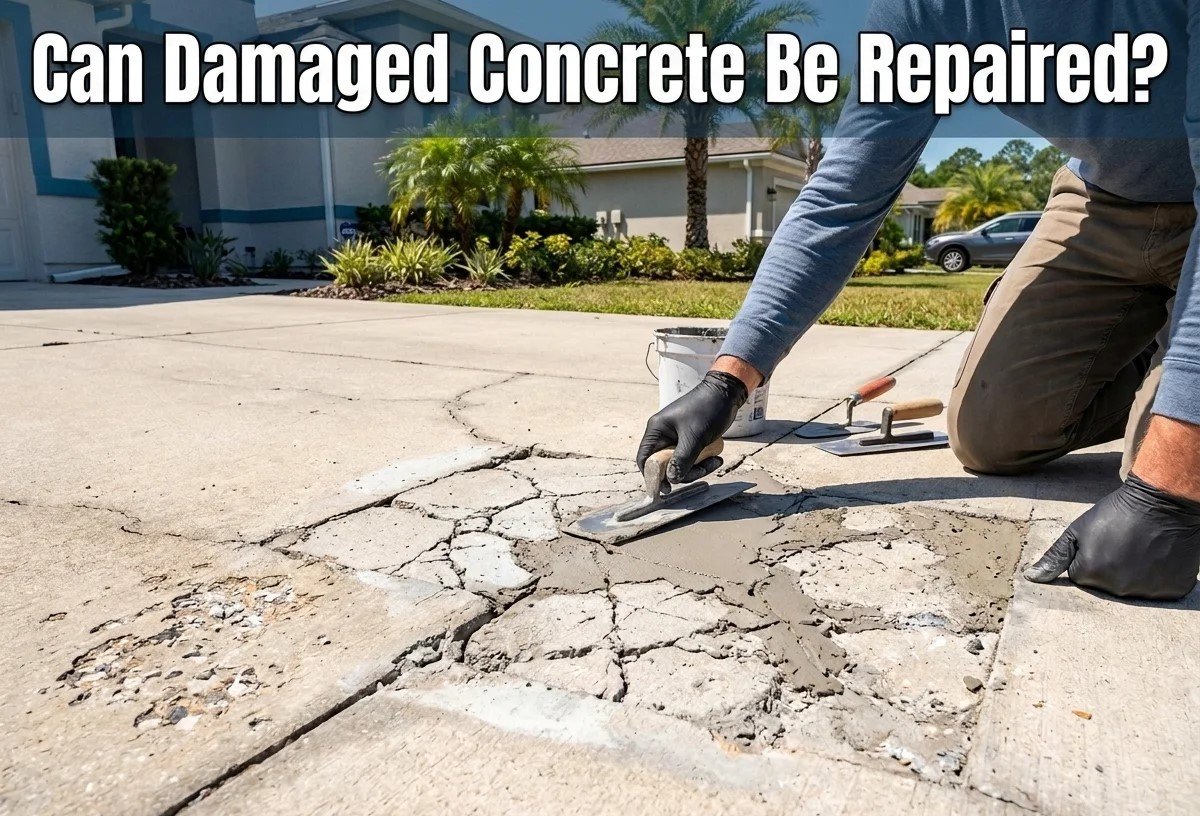
The correct concrete crack repair method depends on whether the crack is cosmetic, dormant, active, structural, or related to settlement. Small stable cracks should be cleaned and filled with the appropriate repair material. On occasion, surface cracks will be treated in conjunction with a larger resurfacing project due to the floor slab itself still being good.
For cracks that are longer or associated with structural problems, the repair process may involve more preparatory work or the use of special materials. The contractor must resolve any voids, drainage, or undepinned ground challenges before remedying the surface if such damage is related to settlement.
| Helpful Note: A crack repair is only as effective as the diagnosis behind it. If water continues to erode the soil beneath a slab, or if the concrete is still moving, filling the crack alone may only hide the problem temporarily. |
When Should You Repair a Crack?
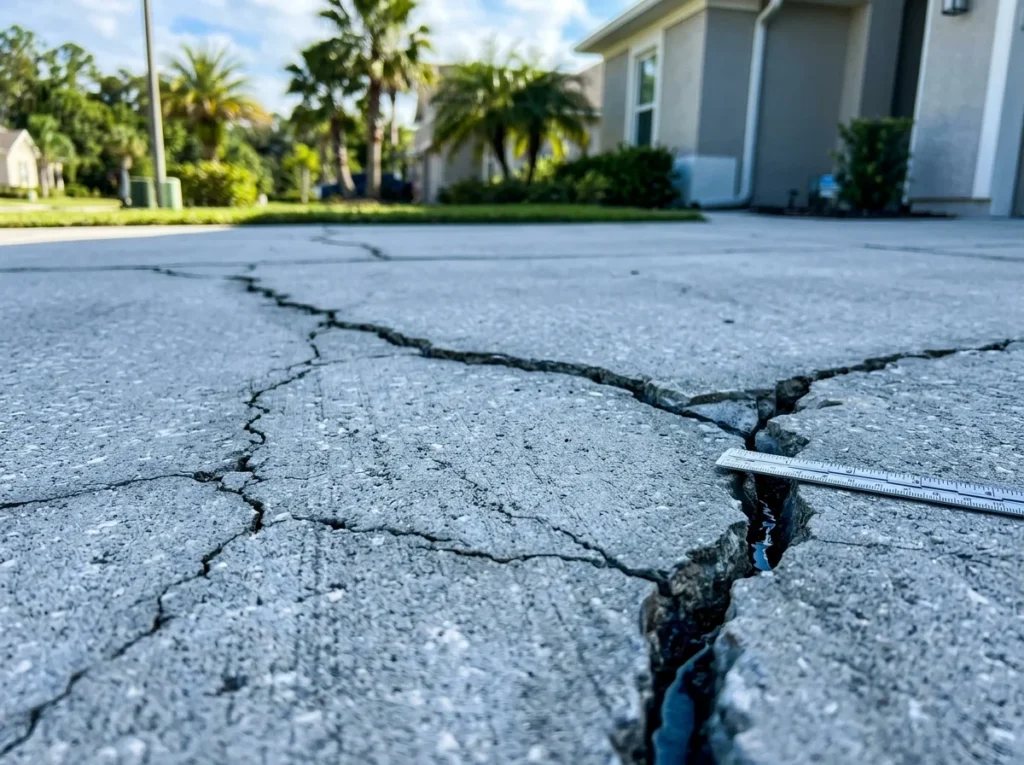
Early repair can be a practical option when the damage is localized, and the slab remains structurally sound. It may help reduce water entry, protect damaged edges, and prevent a small surface problem from becoming more extensive.
However, cracked concrete repair should not automatically mean applying filler to every crack. The following comparison can help explain when a straightforward repair may be appropriate and when further evaluation is more important:
| Situation | Possible Next Step |
| Stable hairline cracks | Monitor or repair if needed |
| Localized surface damage | Patch or surface repair |
| Cracks with water intrusion | Evaluate drainage and repair |
| Uneven slab sections | Assess settlement and support |
| Expanding structural cracks | Professional evaluation |
| Widespread slab failure | Compare repair with replacement |
The exact solution will depend on the crack pattern, depth, movement, surrounding conditions, and how the concrete is used.
What About Concrete Crack Repair Cost?
There is no one price for concrete crack repair, since a narrow surface crack and a slab impacted by settlement are completely different repair projects. Costs can be influenced by the length and depth of the crack, accessibility, preparation requirements, repair material, whether leveling or stabilization is needed, and the size of the affected area.
Commercial projects may also involve traffic management, phased work, equipment access, or the need to keep parts of a property operational during repairs. That is why an inspection of the actual cause is generally more useful than relying on a flat per-crack price.
For Jacksonville property managers and owners dealing with cracks in parking areas, warehouse floors, ramps, loading zones, or other commercial concrete surfaces, Concrete Advantage can help evaluate the damage and determine whether targeted repair, stabilization, or replacement is the more practical option.
Can You Prevent Future Concrete Cracks?
Concrete cannot realistically be guaranteed never to crack. Even properly installed slabs can develop minor cracks over time. The goal is to reduce unnecessary stress and address conditions that make cracking more likely.
Long-term prevention often starts before the concrete is poured, with appropriate subgrade preparation, compaction, reinforcement where required, joint placement, and drainage planning. Proper concrete slab installation can help reduce problems associated with poor preparation and uncontrolled movement.
For existing concrete, regular inspections can help identify developing cracks before they become larger or allow more water into the slab system. Keeping drainage paths clear and addressing settlement early can also help protect the surface.
Frequently Asked Questions
Are hairline cracks in concrete normal?
Small hairline cracks are common as concrete cures and shrinks and tend to be cosmetic. Any increase in width, length, or surrounding slab elevation should be documented.
How do I know if a concrete crack is structural?
Uneven surfaces, widening cracks, continued movement, multiple connected cracks, or damage affecting a heavily loaded area can be warning signs. A professional evaluation can help determine the cause.
Can cracked concrete be repaired without replacing the slab?
Yes, many cracks can be repaired when the surrounding concrete and subgrade remain in good condition. The best fix depends on what caused the crack and how serious the damage is.
Why do concrete slabs crack after heavy rain?
Heavy rainfall can expose drainage problems and contribute to water movement beneath a slab. If soil or supporting material is eroded or shifts, the concrete may lose support and crack.
Can filling a concrete crack keep the damage from spreading?
Not always. Filling a crack may protect the surface from water entry, but it will not correct ongoing settlement, soil movement, root pressure, or other underlying causes.
Should I repair concrete cracks right away?
Small stable cracks may not require immediate major work, but cracks that are widening, becoming uneven, or allowing water intrusion should be evaluated before the problem becomes more extensive.
Final Thoughts
Concrete cracking can be caused by normal shrinkage, soil movement, drainage issues, tree roots, heavy loads, and deeper structural problems. The look of a crack is important, but the knowledge of what is causing it is far more important.
For Jacksonville and Northeast Florida properties, local conditions such as sandy subgrade, intense rainfall, heat, moisture exposure, and commercial traffic can all influence how a concrete slab performs over time. A proper evaluation should look beyond the crack itself and consider the condition of the supporting soil, drainage, and intended use of the surface.
Before deciding how to address damaged concrete, Concrete Advantage can help property owners evaluate the cause of the cracking and choose an approach that fits the condition and long-term needs of the concrete surface