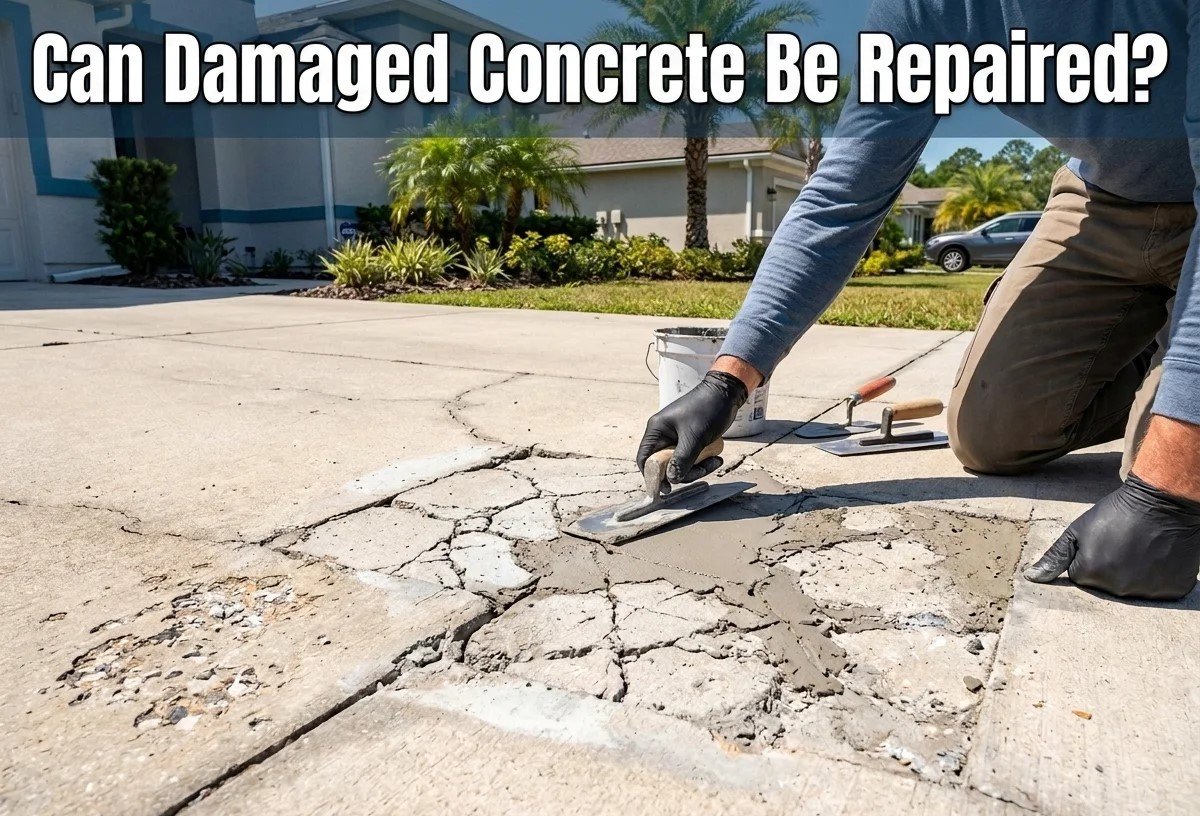
It is not always necessary to remove and replace damaged concrete. When conditions are such that the underlying structure of the concrete slab is sound and the surface is in need of repair, concrete slab repairs can bring the surface back into use, enhance safety, and increase the useful life of the slab.
Whether or not concrete has cracked isn’t the only important question. The reasons for the damage should be understood by the property owner. A small crack that formed at the surface due to normal shrinkage is quite different than a slab that is subsiding due to the washing out of the subgrade below it.
It’s important in Jacksonville, Florida. The longevity of concrete surfaces depends on factors such as sandy soil, heavy rainfall, drainage issues, humidity, and challenging commercial traffic. Common soil issues in Northeast Florida that concrete contractors typically see as contributing to cracked slabs include soil movement, moisture, poor drainage, and subbase issues.
When Damaged Concrete Can Be Repaired
There are many types of concrete damage that can be fixed without replacing the entire concrete surface. The most promising slabs are those with limited damage and still have structural support for the concrete. For example, hairline cracks, minor spalling, isolated surface deterioration, damaged joints, and small holes may respond well to cracked concrete repair or other targeted restoration methods.
A repair might also be warranted if the slab is not generally sloping or is unstable. This may result in an unnecessary expense and disruption if an entire parking area, warehouse floor section, or loading area is removed in these situations.
The repair method is determined by the problem. Depending on the condition of the concrete and the cause of the damage, the contractor may choose from the following methods to repair the cracks: crack filling, epoxy injection, patch materials, joint repair, slab leveling, and resurfacing.
Common Damage That May Be Repairable
| Type of Damage | Possible Approach | Replacement Always Needed? |
| Hairline or small cracks | Crack repair or sealing | No |
| Surface spalling | Patching or resurfacing | Usually no |
| Localized holes or broken areas | Patch repair | Usually no |
| Failed joints | Joint repair or resealing | No |
| Minor slab settlement | Leveling or stabilization | Not always |
| Widespread structural damage | Structural repair or replacement | Sometimes |
The important thing to note is that a visible crack doesn’t necessarily indicate that the slab has failed. The condition underneath the concrete can be just as important as what you see on the surface.
Why Concrete Gets Damaged in Jacksonville
Concrete is durable, but it is not immune to environmental and site conditions. Jacksonville commercial properties can experience problems when water, soil movement, traffic loads, or installation issues affect the slab.
With poor drainage, supporting material can be washed away or moved under the concrete during heavy rains. Additionally, the sandy ground of Jacksonville can lead to variable support conditions under slabs as water percolates through and causes erosion or voids to form.
Surface deterioration can be caused by high humidity and repeated moisture exposure, especially if water is able to enter cracks, joints, or moisture-damaged areas. There is also a factor related to commercial traffic. The forklift or loading dock in a warehouse might be assessed differently from a lightly used sidewalk.
Common causes include:
- Poor drainage around the slab
- Subgrade settlement or erosion
- Inadequate compaction during installation
- Heavy vehicle or equipment traffic
- Tree root movement
- Surface wear and tear
- Improper joint placement
- Moisture exposure
| Helpful Note: Although it may be possible to repair the visible damage, the solution does not address the underlying cause, so the problem can recur. A surface patch may not be a long-term solution if water is washing out soil under the slab, such as in the case of a slab. |
Repair vs. Replacement: How Do You Decide?
The decision between concrete repair vs replacement usually comes down to three things: the magnitude of the damage, the condition of the subgrade, and the use of the concrete surface.
When the damage is concentrated, a repair is likely to be more cost-effective. If only one section of a parking lot or warehouse floor has deteriorated, targeted work may preserve the surrounding concrete.
When several sections have failed, if the slab is structurally damaged or if the supporting base is no longer able to give good support, concrete replacement is more sensible. Jacksonville contractors also stress that they evaluate the drainage and subbase conditions first, before determining whether or not they will achieve a long-lasting repair.
A Simple Decision Checklist
Consider a professional evaluation when you notice:
- Cracks that continue to widen or spread
- Cracks with one side raised above the other
- Multiple areas of slab settlement
- Standing water that repeatedly returns
- Large areas of spalling or deterioration
- Exposed reinforcement or signs of structural damage
- Repeated patch failures
The presence of one or more warning signs does not always indicate the need for concrete slab replacement. But if these issues are combined, it could be an indication of more damage than is apparent at the surface.
What Are the Most Common Concrete Repair Options?
There are no standard repairs for all damaged slabs. The method is to be similar to that of the concrete in actual use.
Crack and Joint Repair
Sometimes, small cracks and damaged joints can be cleaned and repaired using the right materials. The objective can include minimizing water intrusion, restoring the surface, and preventing future deterioration. But, if a crack is moving, you need to treat it differently than a surface crack that does not move. That is why the crack pattern and surrounding concrete should be evaluated first.
Concrete Patch Repair
A concrete patch repair is often used for localized damage such as holes, broken edges, or deteriorated sections. This damaged material is removed, the area is thoroughly cleaned, and the area is repaired with a material that fits. The quality of the surface preparation is important because a high-quality repair product could fail on poor or contaminated concrete.
Resurfacing and Restoration
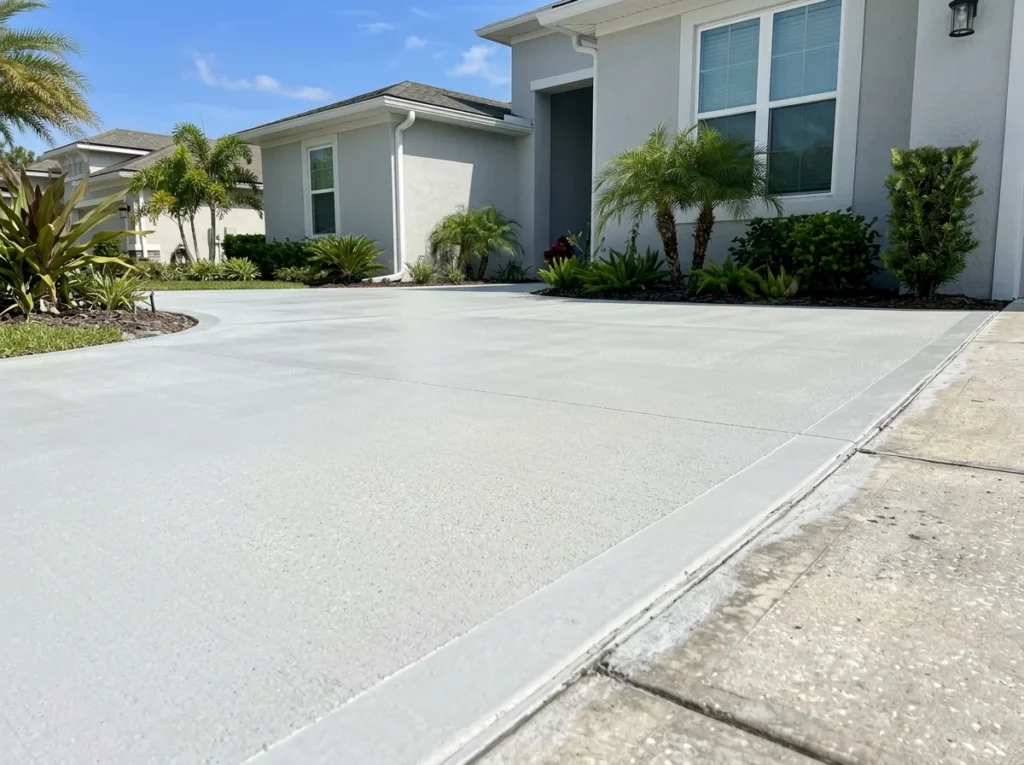
If the concrete slab is structurally sound, but the surface is visibly affected by cosmetic deterioration, scaling, or wear, concrete resurfacing may be an option. The entire slab is not removed; rather, a new layer of material is placed over a well-prepared concrete base. This is often the method used for an area that has become worn and needs some work but not complete destruction.
Slab Leveling or Stabilization
When a slab has settled because of voids or changing soil support, the repair may need to address what is happening underneath. On some occasions, the position of the slab can be restored by stabilization or leveling methods without the need to remove the whole section. This may be especially important in Northeast Florida, where sandy soils and water movement may lead to voids under concrete.
When Is Full Replacement the Better Option?
Repair is at times only a short-term solution. In cases of general structural issues in the concrete or poor performance of the subgrade, replacement may offer less short-term labour to the contractor and result in a more sustainable solution.
A full replacement may give the contractor the opportunity to remove the existing concrete that has been damaged, correct drainage or soil conditions, redo the base, and lay the new concrete slab for its intended purpose. This is particularly crucial in the case of commercial concrete construction. A loading dock or parking lot can require much more load-bearing than a typical sidewalk.
New construction placed over a failed subgrade can have the same issues eventually. That is why the condition below the concrete matters just as much as the visible damage above it.
The Jacksonville Factor: Drainage and Sandy Soil
Jacksonville’s local conditions make drainage an important part of any concrete evaluation.
If there are heavy rainfall events that pass over or around a poorly drained site, a concrete slab over an area of low land can become unsupported. This can lead to uneven parts, cracks, or settlements with the passage of time. The moisture content and sandy subgrade of Jacksonville may be a particularly critical issue for concrete work in the commercial sector.
For property managers, the issue may extend beyond appearance. Uneven concrete around entrances, parking areas, and walkways can create tripping hazards and affect accessibility.
| Quick Note: If a repaired slab repeatedly cracks in the same location, it is worth investigating drainage, soil movement, or loading conditions instead of simply applying another patch. |
What Should Be Checked Before Repairing Commercial Concrete?
The appearance of the concrete is not the only factor that commercial property owners need to take into account. The surface can impact customer access, employee safety, equipment mobility, and day-to-day operations.
An evaluation before deciding on concrete restoration may consider the following:
The damage pattern: Do cracks only occur in one area, or do they show up in several?
The slab elevation: Has the concrete settled or become uneven?
Water movement: Does rainwater run off properly, or does it pool around the slab?
The subgrade: Is there evidence of erosion, voids, or loss of support?
Traffic requirements: Is it used for pedestrians, passenger vehicles, delivery trucks, forklifts, or other heavy equipment?
This kind of testing will assist in differentiating cosmetic concrete surface repairs from difficulties that might call for structural concrete repair/replacement.
For a commercial property owner dealing with damaged parking areas, warehouse floors, loading docks, or ADA ramps, Concrete Advantage can be a resource for evaluating the condition of the concrete and determining whether repair or replacement is the more practical option.
Is Repairing Concrete More Cost-Effective Than Replacement?
In many situations, yes. If a solution is found for a localized issue, it may be possible to avoid the expenses of a full concrete demolition and rebuild.
But sometimes the most cost-effective solution in the short term isn’t the most cost-effective in the long term. Slabs that continue to have an undiagnosed drainage or subgrade problem may end up costing more if they are repeatedly patched than if a correct solution is found.
A good decision considers:
- The current extent of the damage.
- Whether the damage is actively getting worse.
- The condition of the supporting soil and base.
- The expected use and traffic on the surface.
- The likely lifespan of the repair.
The goal should not simply be to make the crack disappear. The intent is to select a solution that is suitable and meaningful for the condition of the concrete and for the needs of the property in the future.
Frequently Asked Questions
Can cracked concrete always be repaired?
No. Some cracks can be patched up, but others may indicate structural or serious settlement or require partial replacement or total replacement. The first step should be to determine the cause and extent of the damage.
Are hairline cracks in concrete serious?
A hairline crack may not be as serious as a wider or uneven crack, particularly if there is no movement. But it is advisable to keep a watch on cracks as they may change in width or move, which is a sign of a problem.
Can sunken concrete be repaired without replacement?
Sometimes. If the slab is otherwise in good condition, leveling or stabilization methods may be possible. The underlying cause of the settlement must also be addressed.
When should concrete be replaced instead of repaired?
Replacement may be a better choice if the slab has significant structural damage, if deterioration is widespread, if there is significant settlement, or if the subgrade is failing and has not been stabilized sufficiently.
Does Jacksonville’s rain affect concrete slabs?
Yes. Heavy rainfall and poor drainage can contribute to water movement around or beneath concrete. In areas with sandy soil, erosion and loss of support beneath a slab can contribute to cracking and settlement.
Can commercial concrete be repaired without shutting down the entire property?
In some cases, repairs can be phased so only part of a property is affected at one time. The approach depends on the scope of the work, safety requirements, traffic flow, and how the property operates.
Final Thoughts
Damage to concrete does not always warrant a full concrete removal. Repairing small cracks, surface damage, broken joints, and localized settling can be done with the proper repair technique.
The more significant question is why the damage was inflicted. Drainage, sandy soil, moisture exposure, and commercial traffic can all have an effect on Jacksonville/ Duval County properties when considering long-term results of repairs.
Before choosing between repair and replacement, evaluate the slab as a complete system rather than focusing only on the visible crack. Concrete Advantage can help property owners assess damaged concrete and determine a practical approach based on the condition, use, and long-term needs of the surface.