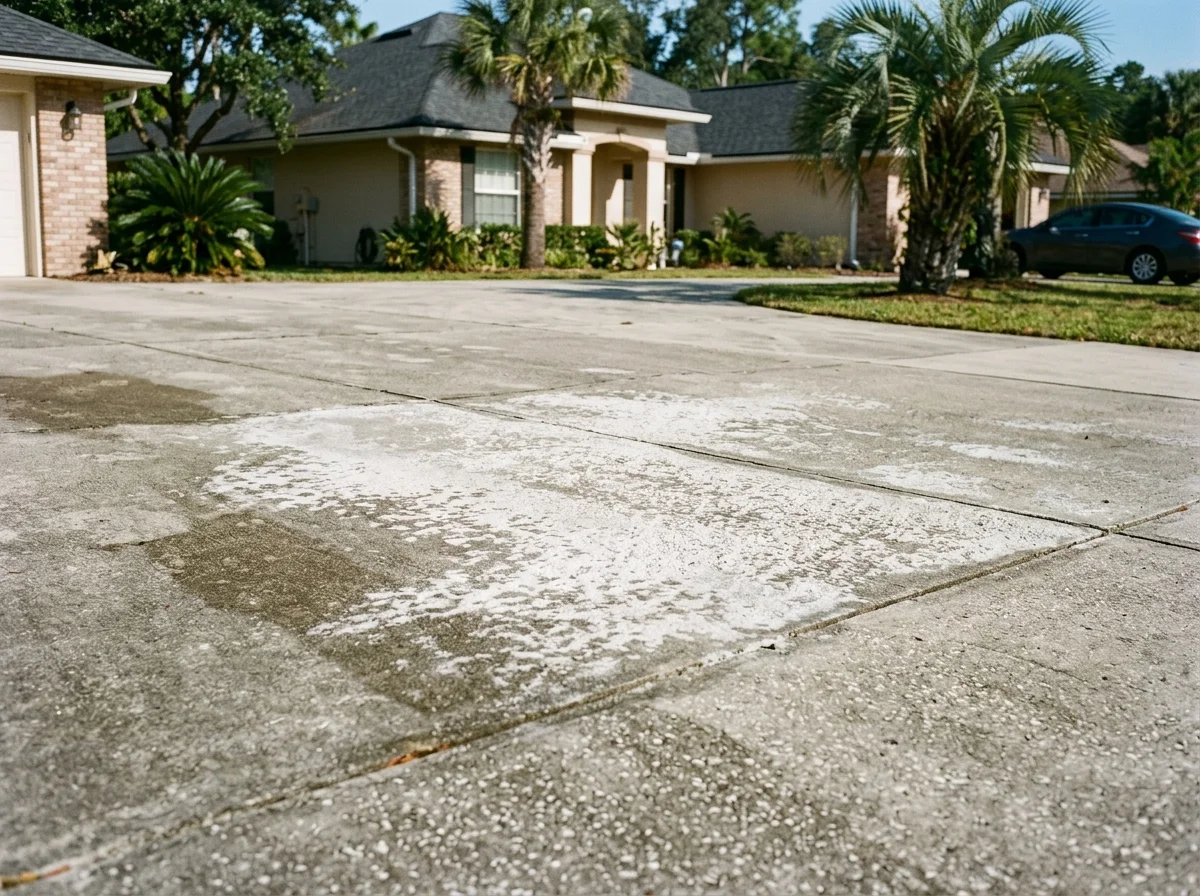
Seeing a white, chalky film forming on your driveway, patio, sidewalk, or pool deck? The White Spots On Concrete Jacksonville, FL homeowners notice are typically caused by efflorescence, one of the most frequent surface stains associated with the appearance of water in porous concrete.
While efflorescence may be alarming, it is not necessarily a sign of serious damage to the concrete. It is important to know what the Concrete Efflorescence Jacksonville entails so you can gauge whether you are just having some harmless salt deposits or if there is another type of stain or if you have a moisture-related issue that needs to be addressed.
What Is Concrete Efflorescence?
Efflorescence in concrete is the separation of mineral salts from the concrete and their deposition as a white or greyish crust on the surface of the concrete. The water evaporates as it gets closer to the surface, leaving behind the minerals as a powdery or chalky substance.
Concrete is composed of cementitious materials, which react with water when it is hydrated. Hardened concrete may have interconnected pores that allow the flow of moisture later on, carrying dissolved substances to the surface.
What homeowners refer to as White Powder On Concrete Surfaces is the result. It may be possible to brush off some of it, but if moisture persists in moving through the slab, it can be back.
Why Does Concrete Turn White in Jacksonville?
The climate in Jacksonville can exacerbate moisture issues in concrete, which can be more apparent. The average rainfall and warm temperatures result in significant exposure to water and changing drying conditions on outdoor concrete. An example is that there was measurable precipitation throughout the year in Jacksonville’s 2025 climate report, including during the warmer months.
Several factors can contribute to Concrete Turning White Causes, including:
Moisture Moving Through the Concrete
Dissolved salts are transported to the outside of the concrete primarily in water. A porous slab can be subjected to the flow of rainwater, groundwater, irrigation water, or moisture from adjacent soil and be drawn through its capillaries. When the water evaporates, the minerals that were dissolved in the water may form white deposits.
Porous or Permeable Concrete
Concrete is not totally impermeable. The permeability is dependent on mixture proportions, water/cement ratio, curing, and construction quality. The American Cement Association says that decreasing the permeability of concrete can minimize exposure to aggressive materials and moisture issues. Concrete can also be more permeable if it is old or has been exposed to extreme weather for extended periods.
Drainage and Runoff
Improper drainage will allow concrete to be exposed to moisture for extended periods of time. Any water that consistently pools around a driveway, patio, or concrete slab provides ample opportunity for it to work its way into the surface. This is especially relevant when downspouts, irrigation, landscaping, or grading direct water toward rather than away from concrete.
Repeated Wetting and Drying
Efflorescence can become more noticeable if the concrete surfaces are dampened regularly and then allowed to dry out. These minerals are carried to the surface in the water, and the water evaporates, leaving the minerals behind. That cycle can continue after rain, irrigation, cleaning, or other moisture exposure.
Where White Deposits Commonly Appear
There are numerous types of concrete in Jacksonville homes and commercial buildings that can result in efflorescence, including surfaces installed as part of concrete paving and site concrete projects. Sometimes clues to the source of the moisture can be found in the location.
Driveways: Repeated rain, irrigation, vehicle runoff, and surrounding soil can contribute to Driveway Efflorescence Treatment concerns.
Patios: White deposits can form on a concrete patio from water buildup or from a lack of drainage.
Pool Decks: A constant supply of water around pools can make the surface more discernible.
Sidewalks: Joints, cracks, low areas, and landscaping edges can provide paths for water to enter the sidewalk.
Garage Floors: Moisture migration from the ground can occur in interior slabs, especially in areas where there is low humidity and poor ventilation, which impair drying.
Is Efflorescence the Same as Mold?
No. Efflorescence and mold can look different once you know what to look for. Typically, efflorescence will be a white, gray, or chalky powder. It is usually linked with mineral or salt deposits, which remain after the moisture has evaporated.
Mold and mildew are usually biological growths and are darker in color than mineral deposits. They can be black, green, gray, or brown and often form in spots where moisture accumulates for long periods.
When you’re not sure what’s causing the discoloration, don’t mistakenly think that all white or dark spots need to be treated the same. The solution depends on what is the cause of the stain.
How to Remove White Residue From Concrete
The right approach to concrete efflorescence removal for Jacksonville properties depends on how severe the deposits are and whether the moisture source remains active.
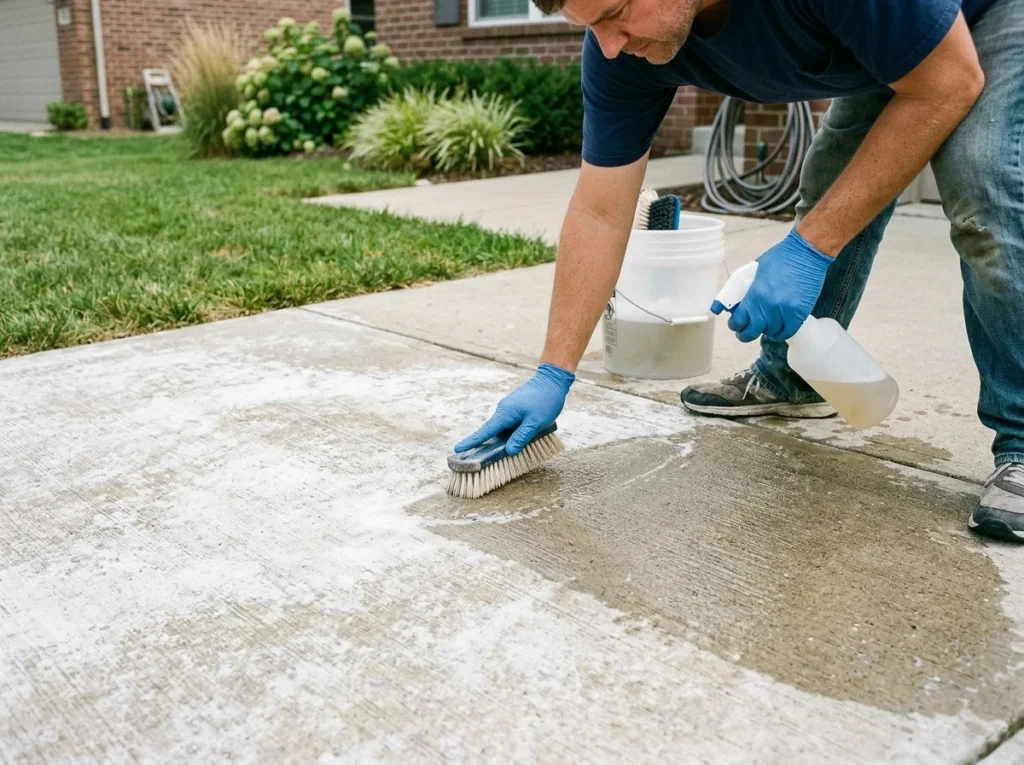
Light deposits may be loosened from the surface by dry brushing or sweeping. In some cases, a suitable concrete cleaning solution may be able to remove any residue left behind after dry cleaning. However, aggressive cleaning is not always better. Decorative finishes, coatings, and the surface of the concrete may be compromised by the use of harsh chemicals, excessive pressure, or an incorrect cleaning method.
The American Cement Association suggests selecting stain-removing agents based on the nature of the stains to be removed. Depending on the type of contaminant, the approach used to clean the surface can vary, so it is important to know what contaminant is present prior to treatment.
What About Pressure Washing?
Efflorescence may be removed by pressure washing, but this does not necessarily resolve the cause of the efflorescence.
Excessive pressure can also damage the surface of the concrete, especially if the surface has been compromised due to weathering or damage. When assessing a Jacksonville property for Professional Concrete Cleaning, a professional might take into account the state of the concrete, its finish, the kind of stains, and the moisture level.
Can Concrete Efflorescence Be Prevented?
While it is impossible to completely prevent efflorescence, it is possible to decrease the conditions under which it can form.
Control Water Around the Concrete
Start with drainage. Be sure to prevent any runoff and/or irrigation from being consistently directed towards the driveway, patio, or slab. When water gathers in the same place over and over, washing the white film without fixing the drainage could only resolve the cosmetic issues in the short-term.
Keep Concrete Properly Sealed
When properly selected and applied to the right surface, a proper concrete sealer can help to minimize water penetration. However, sealing should not be used to solve an existing moisture issue. Sealing the bottom of the slab may not solve the problem if water is coming in from beneath the slab.
Address Cracks and Joints
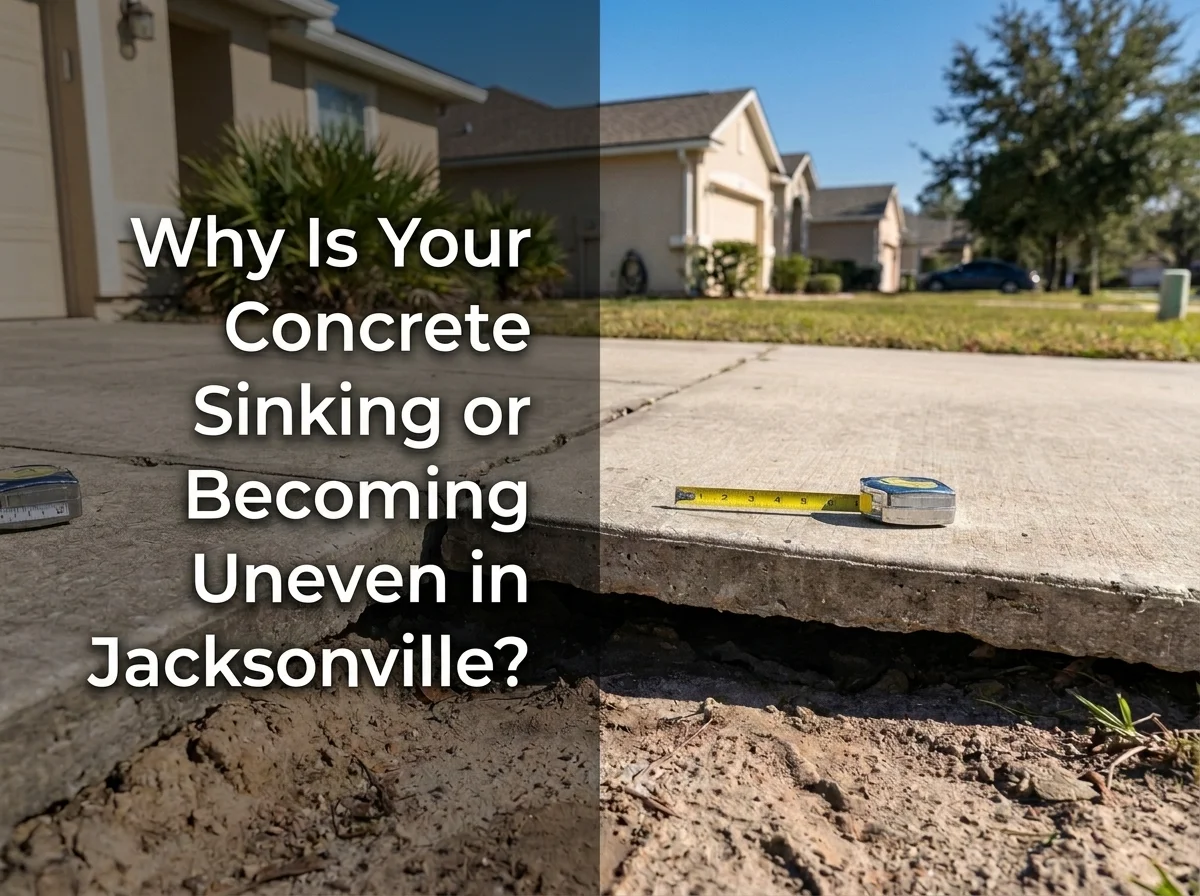
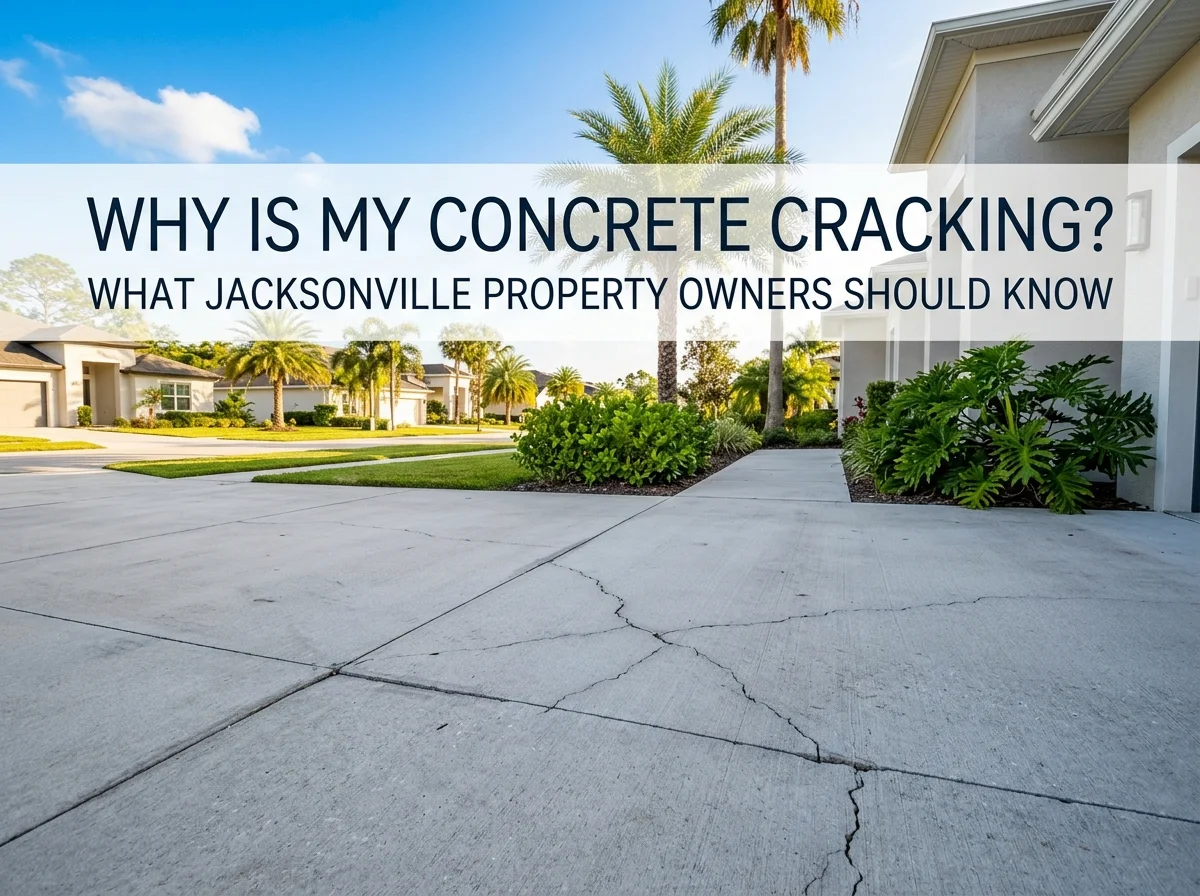
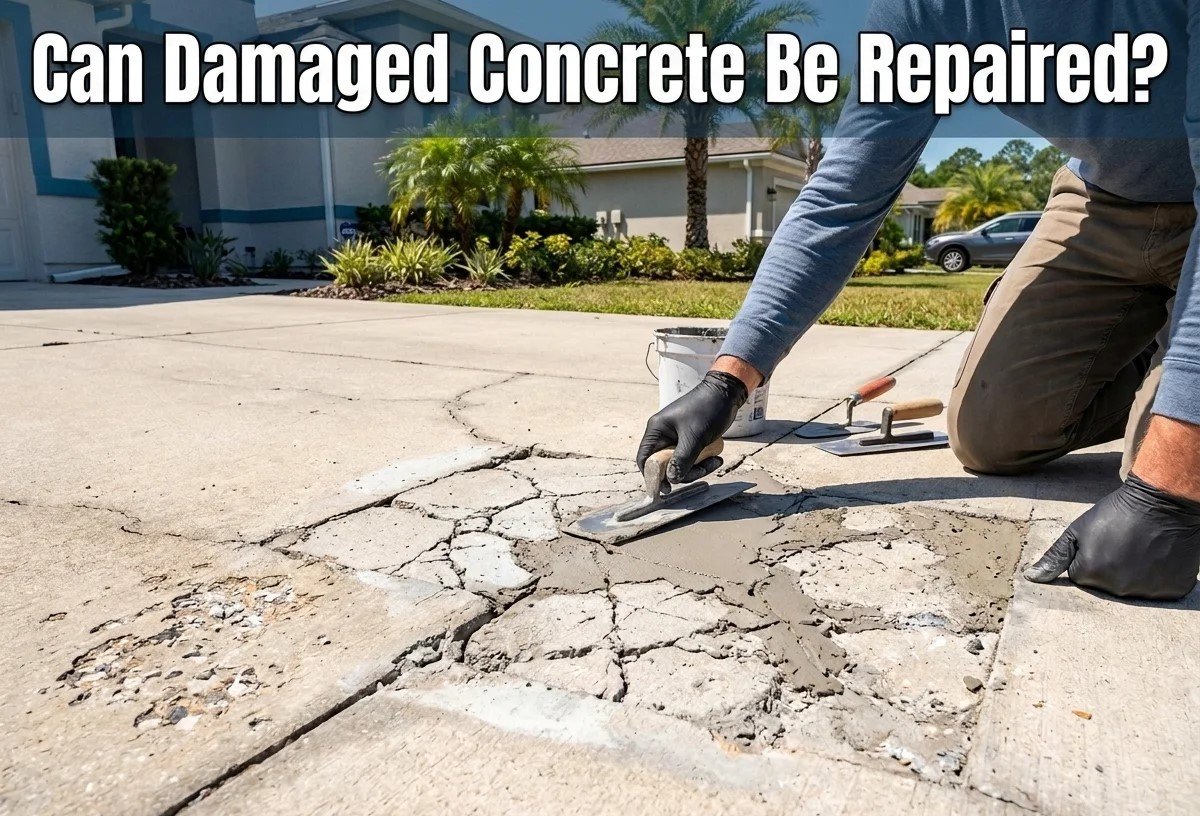
Areas of concrete cracking and crumbling joints can allow water to penetrate concrete. Concrete Maintenance in Jacksonville, FL, can be done by repairing these areas, so that there is limited exposure to moisture. This is great to have for older driveways, patios, or walkways that have begun to show obvious signs of wear.
Avoid Sealing Moisture Into the Concrete
Sealing is important because it is done at a certain time. Before applying a sealer or coating to a concrete surface, the moisture content of the concrete must be known. Inappropriate application or sealing of a surface with unresolved moisture can cause other adhesion, appearance, or moisture-trapping issues.
When White Concrete Stains Need Professional Attention
Not all white marks need to be restored in this way. The removable powder, which may be present on a surface if it is otherwise structurally sound, may be cosmetic in nature. Professional evaluation is more useful when the residue keeps reappearing, covers a large area, is found with cracks, or when the residue is found along with other indicators of Moisture Damage On Concrete.
Pay attention if you notice:
- Recurring white deposits after cleaning
- Cracks or joint deterioration
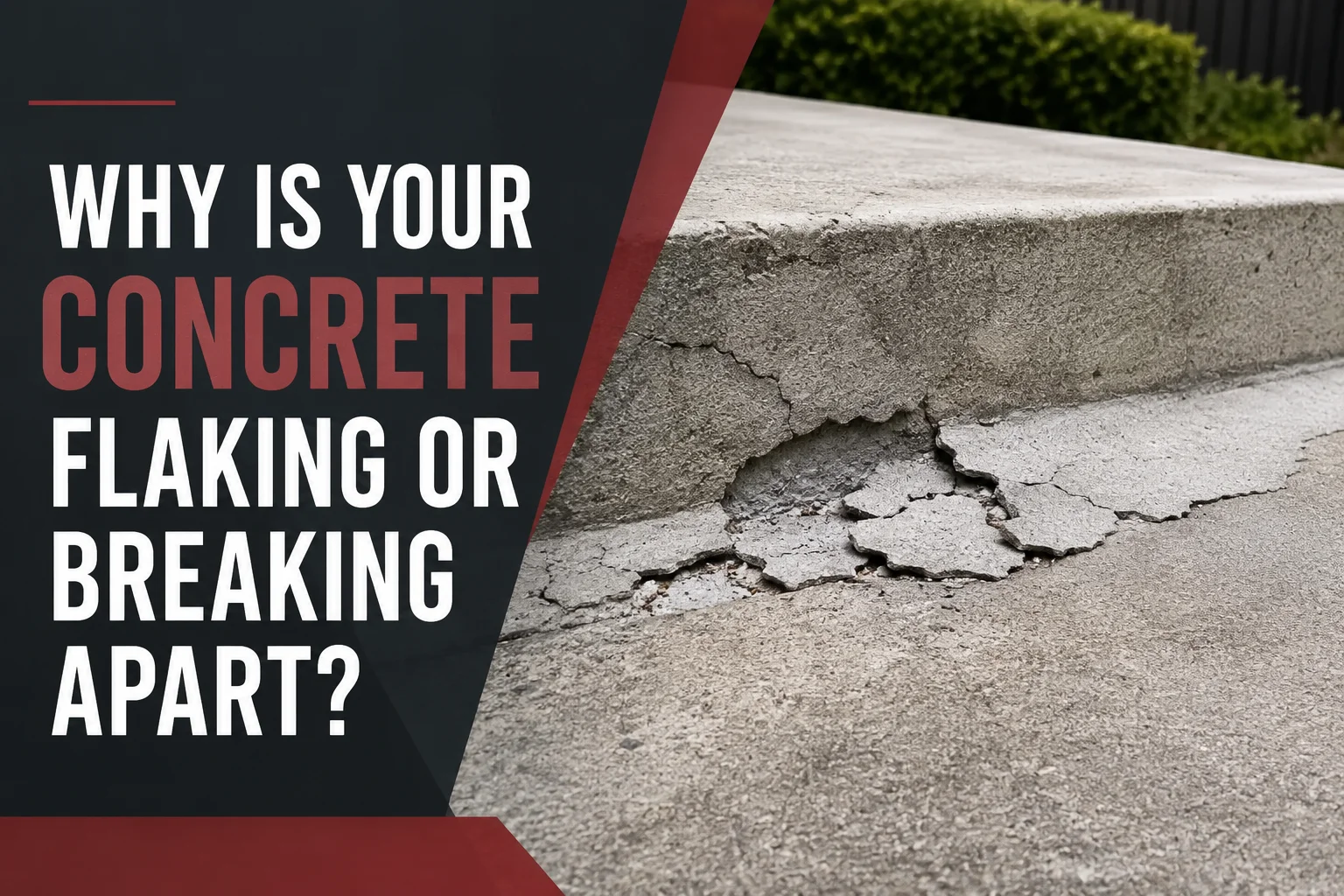
- Scaling or flaking concrete
- Areas that stay damp for unusually long periods
- Water pooling around the slab
- Significant discoloration that does not respond to normal cleaning
- Deterioration beneath or around the affected area
These signs can indicate that the issue involves more than surface staining.
Efflorescence vs. Other Concrete Stains
Before selecting a treatment, it is important to recognize efflorescence from other Concrete Surface Stains. Concrete can get stains from oil, rust, organic material, fertilizer, algae, and other materials. A different product or technique may be necessary to remove them.
For example, while mineral deposits may be treated in the same manner, a concrete stain from oil might not be. Similarly, pressure washing a surface will not remove deeply penetrating stains.
That is why Concrete Stain Removal Jacksonville homeowners’ requests should begin with identifying the substance rather than immediately applying a strong cleaner.
Does Efflorescence Mean the Concrete Is Failing?
Typically, efflorescence is not a sign of the failure of the entire concrete slab. But if efflorescence appears again and again, it serves as a good sign that water is flowing through the concrete. If the area is also cracked, scaled, flaking or breaking apart, settled, and/or remains damp, a wider survey might be justified.
The distinction matters because cleaning can address the appearance while leaving the moisture source untouched. Effective concrete restoration in Jacksonville, FL, may require both surface treatment and correction of the conditions contributing to deterioration.
How Professionals Approach Concrete Efflorescence
A proper evaluation should start with the concrete itself, not just the white residue. A professional will be able to see the affected areas and look for any drainage or moisture issues, determine if the deposits are associated with efflorescence, and determine the condition of the concrete surface.
From there, the appropriate solution may involve cleaning, stain removal, crack or joint repairs, sealing, or a combination of treatments. Concrete Advantage can help Jacksonville property owners address visible discoloration while considering the underlying condition of the affected surface.
The goal is not simply to make the concrete look cleaner for a few days. The better approach is to identify why the deposits appeared and select a treatment that fits the concrete’s condition.
Frequently Asked Questions
Why is my concrete turning white in Jacksonville?
When moisture enters concrete through the porous surface, the mineral salts that it contains are dissolved and carried up to the surface, which can cause the concrete to become white. As the water evaporates, those minerals remain as white or chalky deposits. Jacksonville’s frequent rainfall, humidity, irrigation, and other moisture sources can contribute to repeated wetting and drying.
What is concrete efflorescence?
Efflorescence is the mineral salt deposit that moves to the surface of the concrete and is visible. It is usually observed as whitish, grayish, or powdery spots. The deposit is usually cosmetic, but if it is a recurring one, it means that there is still moisture moving through the slab.
How do you remove efflorescence from concrete?
Dry brushing or using a suitable surface cleaner may occasionally be used to remove light deposits. A more effective cleaning method may be needed for more tenacious deposits, depending on the state of the concrete and the nature of the deposit. Cleaning may not be enough to expel deposits if the moisture keeps invading the concrete.
Does rain cause concrete to turn white?
The white residue is not caused by rain itself, but it can add to factors that contribute to efflorescence. Water can infiltrate porous concrete, dissolve soluble minerals, transport them towards the surface, and leave behind the minerals when the water evaporates.
Can concrete sealing stop white stains?
A well-chosen concrete sealer will help to minimize water intrusion into the surface and can aid in any future exposure to moisture. But simply sealing does not guarantee that moisture from below or around the drain will be eliminated. Before using sealing as a preventive measure, the source of the moisture needs to be addressed.
Final Thoughts: Keep White Concrete Deposits From Becoming a Bigger Problem
The white residue on a Jacksonville driveway, patio, sidewalk, or garage floor is often due to water moving through the concrete with the minerals. Efflorescence is often a cosmetic problem, but repeated deposits may indicate drainage, groundwater, humidity, or other moisture problems that need to be explored.
For homeowners dealing with persistent discoloration, Concrete Advantage can evaluate the affected concrete and determine whether cleaning, stain removal, sealing, or restoration is the most appropriate next step. Addressing the moisture conditions along with the visible residue gives your concrete a better chance of staying cleaner and protected over time.