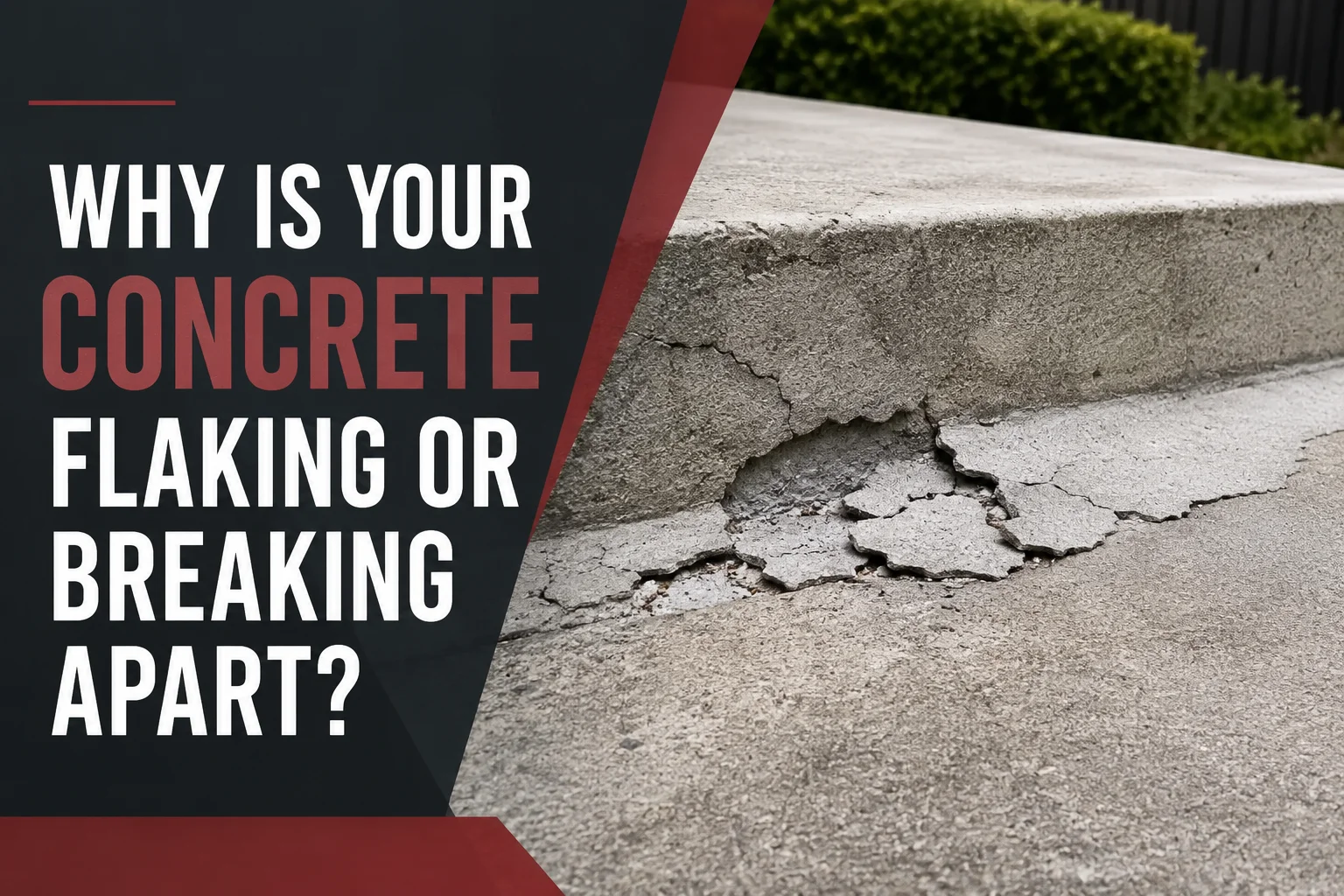
Walk out to your driveway some morning, and there it is. A patch of concrete that used to be smooth is now shedding little flakes, like the top layer forgot how to stick to the rest of the slab. Maybe it started as a few chips near the garage door. Maybe you swept and found gray dust where there shouldn’t be any. Either way, you’re looking at spalling concrete, and it’s one of the most common calls we get in Jacksonville.
It doesn’t happen overnight. Spalling builds for months, sometimes years, before it becomes obvious. By the time you notice it, the damage has usually been working under the surface for a while already. This guide walks through why concrete flakes or breaks apart, what makes Jacksonville tougher on slabs than most places, and how to know whether you’re looking at a weekend patch or something that needs a professional eye.
What Is Concrete Spalling, Exactly?
Every concrete slab has a thin top layer, usually less than half an inch thick, that does most of the visible work. It’s the part that gets walked on, driven on, and rained on. When that layer loses its bond to the concrete underneath, it starts to lift, chip, and eventually fall away. That’s spalling.
You’ll usually catch it as one of a few things:
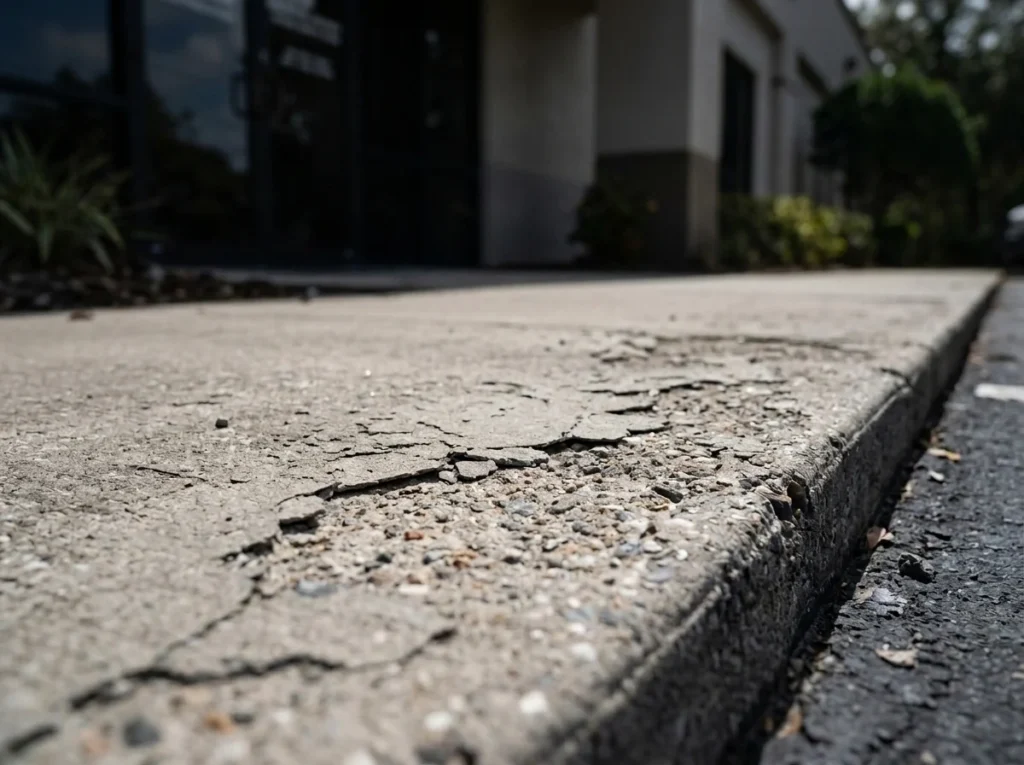
- Small flakes or chips lifting off the surface, sometimes no bigger than a coin
- Shallow pits or craters where pieces have already broken loose
- A chalky gray dust that gets on your shoes or wipes off with a rag
- Bare stones or aggregate showing through where the top paste is worn away
People mix up spalling with a couple of related problems, so it’s worth sorting out the difference. Cracking goes deep and actually splits the slab. Crazing is just a fine spiderweb of hairline lines on the surface, mostly cosmetic. Concrete scaling is broader, more like the whole top layer peeling off in sheets rather than isolated chips. Spalling sits between crazing and scaling. It has real depth, and left alone, it spreads.
Warning Signs Worth Catching Early
Concrete usually tells you something is wrong before it falls apart completely. Here’s what to watch for:
- Small flakes lifting near the edges of a slab
- Shallow pits scattered across the surface, not just in one spot
- Dust that builds up again a day or two after sweeping
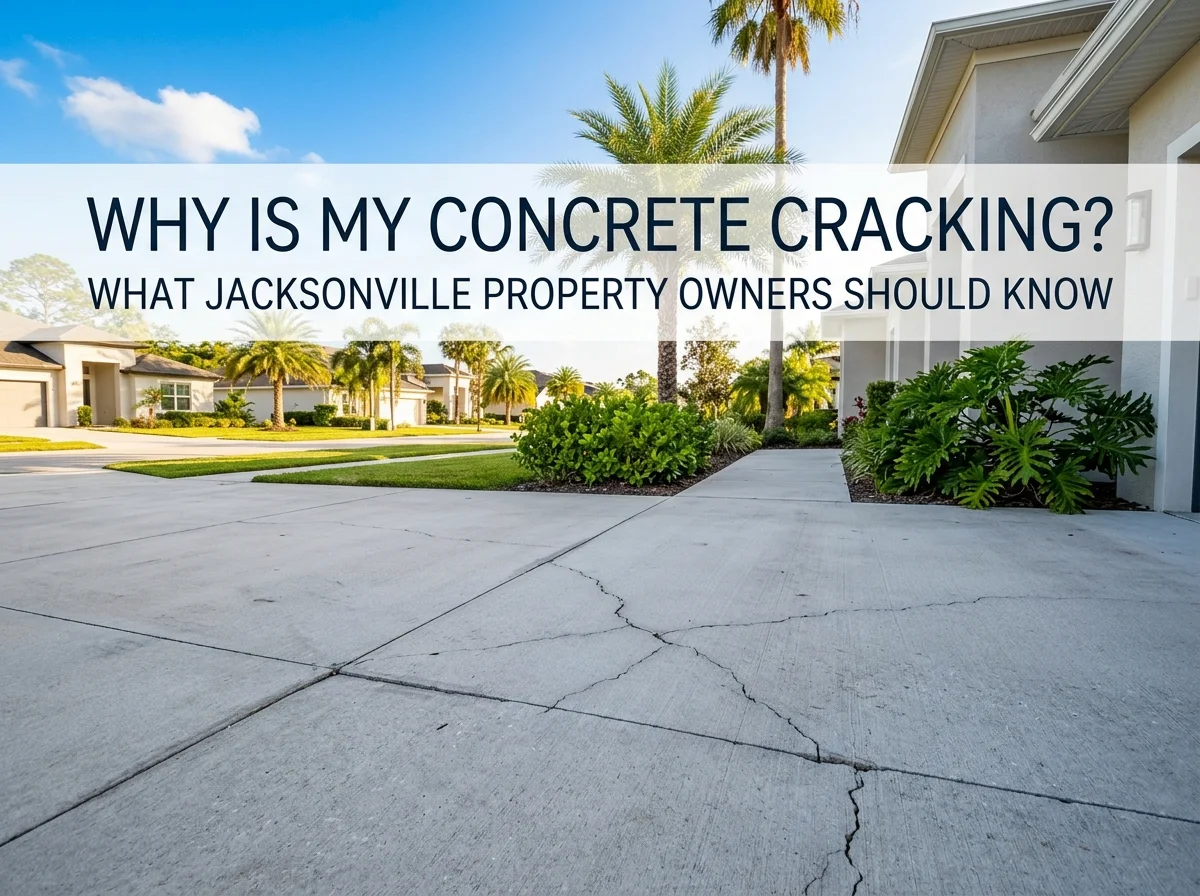
- Hairline cracks that seem to be spreading or connecting
- Rust-colored staining, which usually means the rebar underneath is corroding
- A hollow sound when you knock on the concrete with something solid
None of these on their own means disaster. But catching them early is the difference between a small patch job now and a full resurface two summers from now. Concrete damage almost never gets better on its own.
What’s Actually Causing It
Jacksonville concrete spalls for reasons that don’t get much airtime in the average online guide because most of those guides were written for cold-weather states. Here’s what we actually see on local driveways, patios, and walkways.
The Water Table Is Working Against You
A lot of Jacksonville sits on sandy soil, and in plenty of neighborhoods, the water table sits just a few feet down. Older slabs poured without a proper vapor barrier end up pulling that moisture straight up through the concrete, day after day. That moisture pushes against the underside of the top layer and slowly breaks its grip. Downspouts, garage thresholds, and any low corner of the yard tend to show it first.
Florida Heat Does Real Damage
Heat hurts concrete twice. First, during the original pour, fast evaporation under direct sun can leave the surface weak and porous before it’s even cured properly. Second, years of daily heat swings keep stressing a surface that was never that strong to begin with. Add hot tires gripping a soft driveway on a July afternoon, and you’ve got a recipe for flaking that shows up right in the tire path.
Rain Does More Than You’d Think
Jacksonville doesn’t deal with freeze-thaw cycles the way northern states do, but our rainy season puts concrete through something similar in effect. Water soaks in, the sun bakes it back out fast, and that repeated swing wears at the surface over time. It’s usually worse right at joints and slab edges, where standing water has more time to sit before it drains or evaporates.
Salt Air Eats at the Steel Inside
Homes near the beaches or along the Intracoastal deal with salt in the air, and that salt finds its way into concrete slowly, over years. Once it reaches the rebar, the steel starts to rust. Rusting steel expands, sometimes several times its original size, and that pressure pushes the concrete around it apart from the inside out. This is usually behind the deeper, chunkier spalling you see on older coastal driveways and pool decks.
Some Slabs Were Never Finished Right
Not every cause traces back to the weather. Some spalling starts the day the concrete goes down. A crew overworking the trowel, adding extra water to make finishing easier, or letting a slab cure too fast under the summer sun all leave a weak top layer that is destined to fail early. We see this a fair amount in older subdivisions across Jacksonville, where slabs were poured quickly during hot stretches.
Most guides you’ll find online lean hard on freeze-thaw cycles and de-icing salt as the top cause of spalling. That advice just doesn’t apply here. If an article’s main fix involves keeping salt off your driveway in winter, it wasn’t written with Florida concrete in mind.
Matching Cause to Fix
Here’s a quick way to line up what you’re seeing with what’s likely causing it and what the concrete repair usually involves.
| Cause | What you’ll notice | Typical fix |
| High water table, rising moisture | Damp patches, flaking with a white residue | Moisture testing, better drainage, patch, and seal |
| Salt air, corroding rebar | Rust stains, deep chunks missing, exposed steel | Chip back the damage, treat or replace steel, structural patch |
| Heat and sun stress | Wide surface flaking, wear along tire paths | Grind the weak layer, then resurface |
| Rain and wet-dry cycling | Random pitting, worse near joints and edges | Reseal joints, patch damage, correct drainage |
| Poor original finishing | Sandy, dusting the surface over a large area | Full resurface after grinding out the weak layer |
Is It Just the Surface, or Something Deeper?
This is the question that actually matters. Not every case of spalling is the same problem underneath, and figuring out which kind you have decides how the repair goes.
Most of the time, you’re looking at surface-level damage. That’s flaking limited to the top quarter inch or so, shallow pits sitting over concrete that’s still solid, and dusting without any cracking underneath. This kind of damage patches up well and stays fixed.
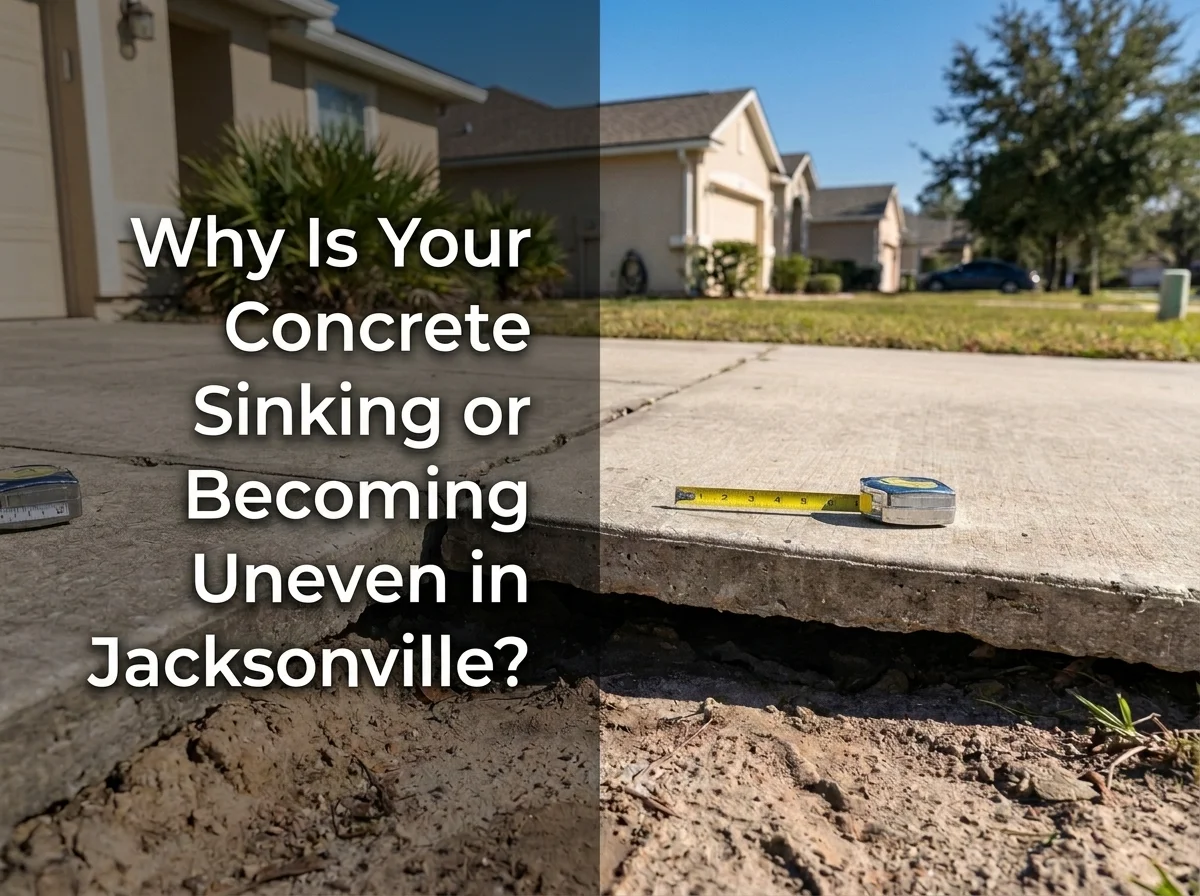
A smaller number of cases point to something structural. Watch for cracks wider than about an eighth of an inch, especially where one side sits noticeably higher than the other. Large patches of exposed, actively rusting rebar are another red flag. So is a section that sounds hollow when you tap it or new cracking that shows up right after a heavy rain, which can mean the soil underneath the slab has washed out. If you’re seeing any of those, get someone to look at it before you spend money on a patch.
How Spalling Actually Gets Fixed
For minor spalling, the fix is usually a straightforward patch. For anything wider or structural, it takes more, and sometimes the honest answer is concrete replacement rather than repair.
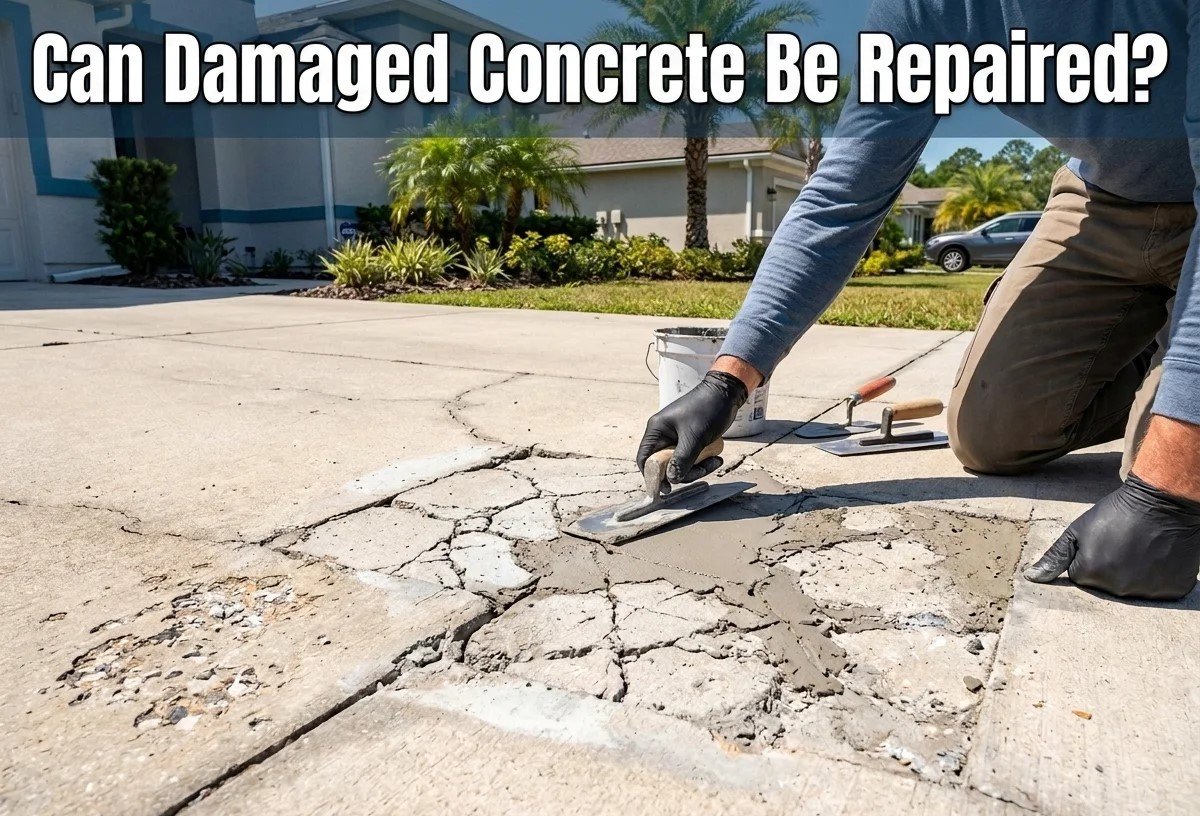
Sealing has a place here, but it’s often misunderstood. A sealer slows moisture from getting in going forward. It does nothing for damage that’s already happened. Patching and resurfacing are what actually address existing damage. That means grinding out the weak, failing layer and applying a repair mortar or overlay so the new surface bonds properly with what’s underneath. When a slab has major structural cracking or rebar that’s corroded through a large section, full replacement tends to be the only fix that lasts.
What Does Concrete Spalling Repair Cost?
In today’s market, concrete spalling repair costs run between $20 and $400+ per square foot. It depends on how bad the damage is and how deep it runs. A small surface patch on a driveway corner costs a fraction of a deep repair that involves exposed rebar, and full slab replacement costs more than either. What most homeowners don’t realize is that timing matters as much as scope. Concrete spalling repair cost tends to climb the longer you wait, since a small patch job today can turn into a resurfacing project in a year or two if the moisture or corrosion behind it keeps working.
Keeping It From Coming Back
A repaired slab doesn’t have to spall again, but it takes a few habits to keep it that way. Get your downspouts pointed away from the driveway and patio edges instead of letting them dump water right at the slab. Keep control joints and expansion joints sealed, since a cracked joint is basically an open door for water.
If you’re near the coast, rinse the salt off your concrete every so often rather than letting it sit. A penetrating sealer on new concrete, reapplied on a normal schedule, buys you real protection. And honestly, the biggest one is just not letting drainage problems sit for years before you deal with them.
When It’s Time to Call Someone
If you’re seeing rust staining, cracks with a noticeable lip, or spots that sound hollow, it’s worth getting an actual evaluation before you spend money on a patch that might not hold. A proper inspection looks at how deep the damage goes and figures out what’s actually causing it, rather than just covering up what’s visible on top.
Concrete Advantage offers free evaluations for homeowners across Jacksonville dealing with flaking, pitting, or cracked concrete. We check the slab, test for moisture where it’s called for, and tell you straight whether you’re looking at a patch or something bigger.
Frequently Asked Questions
What causes concrete spalling in Jacksonville?
The main drivers here are moisture from the region’s high water table, heat and sun stress, heavy seasonal rain, and salt air corroding rebar near the coast. Poor original finishing is also a factor in a good number of older slabs.
Is spalling concrete dangerous or just cosmetic?
It depends on the depth. Surface flaking is mostly a cosmetic issue. Spalling that exposes rebar or leaves uneven, tripping surfaces behind is a real safety concern and shouldn’t sit for long.
Can I repair spalled concrete myself?
Small, shallow patches are doable if you’re reasonably handy. Anything with exposed rebar, deep cracking, or damage spread across a large area is worth having a professional take a look at first.
How much does concrete spalling repair cost?
It typically runs between $20 and $400 or more per square foot, and it does depend on the job. A small surface patch costs the least, a deep repair involving rebar work costs more, and full replacement sits at the top.
Will sealing stop concrete from spalling?
Sealing slows down moisture getting in and protects concrete going forward, but it won’t undo damage that’s already there. It works best as prevention, either on new concrete or right after a repair job is finished.
Final Thoughts
Spalling concrete almost always traces back to a specific, identifiable cause, and once you know what that cause is, the fix stops being a mystery. Most cases in Jacksonville turn out to be surface damage that a proper patch or resurfacing handles well. The earlier you catch it, the smaller the job stays.
If your driveway, patio, or walkway is flaking, pitting, or breaking apart, Concrete Advantage can take a look and give you a straight answer on what it actually needs.