Commercial concrete takes a lot of daily use. Cars turn on it. Trucks stop on it. Workers move carts and tools across it. A weak slab may crack, sink, or hold water. These problems can slow your business and raise repair costs.
Choosing the right commercial concrete contractors Jacksonville FL businesses can trust takes more than checking prices. You need a team that understands loads, drainage, soil, access, and local weather. The contractor should also plan around your business hours. This helps protect workers, customers, tenants, and deliveries.
This guide explains common services, project steps, cost factors, and hiring tips. It also covers repairs, replacement, permits, and Jacksonville site concerns.
What Services Do Commercial Concrete Contractors Provide?
Commercial concrete work covers many parts of a business property. The right service depends on how people and vehicles use the site. A retail center may need sidewalks, curbs, ramps, and parking areas. A warehouse may need thick floors, loading pads, or equipment bases. An office property may need safe walkways and better drainage. Experienced commercial concrete contractors inspect the site before giving advice. They look for cracks, low spots, soft base material, water problems, and tight access. They also check the loads the slab must carry. This helps them choose the right depth, mix, steel, joints, and finish.
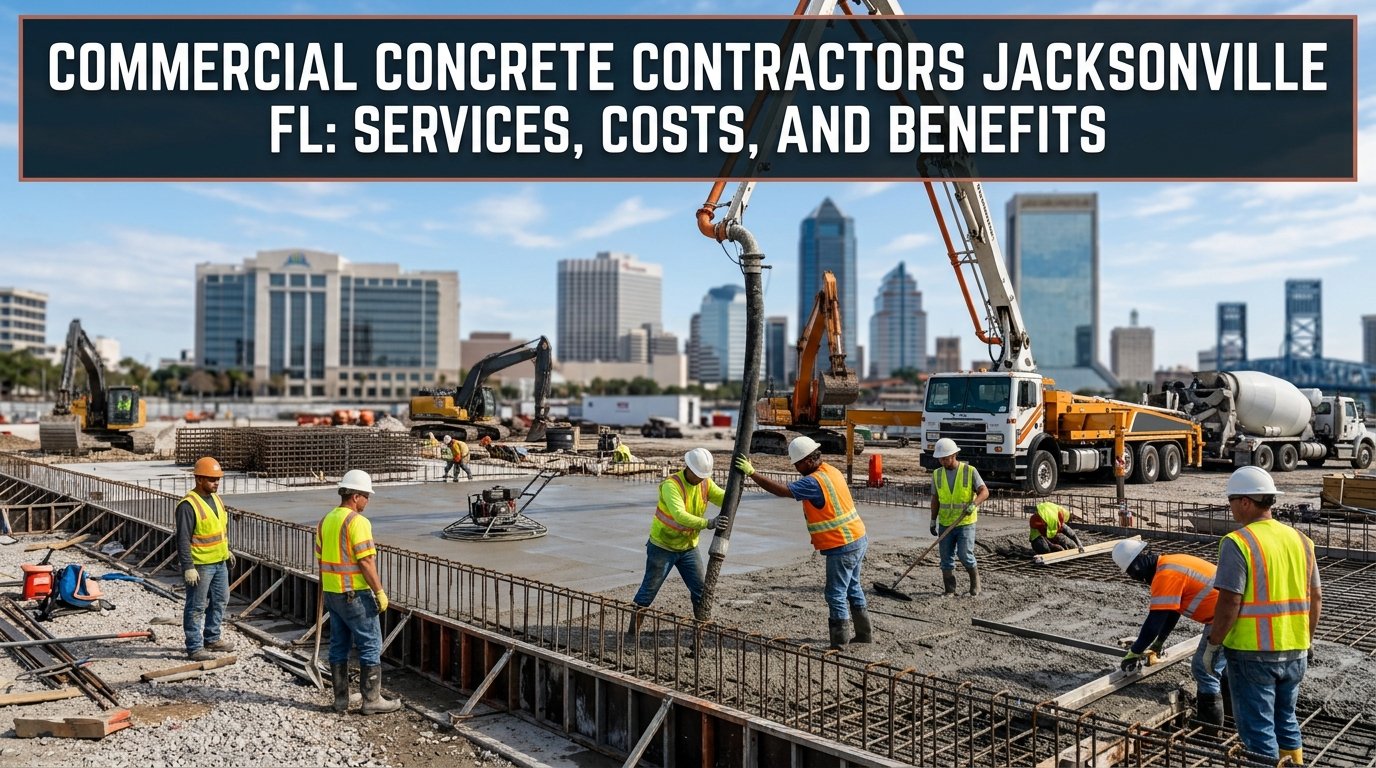
Commercial slabs and warehouse floors often carry heavy use. They may support forklifts, storage racks, machines, carts, and delivery traffic. Crews grade and compact the base first. Forms set the slab shape and height. Steel bars or wire may be added when the plans require them. The concrete is then placed, leveled, finished, jointed, and cured.
Concrete parking lots face rain, heat, turning tires, and heavy vehicles. Loading zones face even more stress. Good work starts with firm base material and correct drainage. Crews may also make some areas thicker where trucks stop or turn. Curbs, sidewalks, and ramps must also fit the site safely.
Concrete foundations spread building loads into the ground. Footings, walls, and equipment pads must match the project plans. The commercial concrete contractor should also check nearby utilities, anchor points, and access before work begins.
How Does a Commercial Concrete Project Start?
A strong project starts before any concrete arrives. The contractor visits the site and studies the work area. They measure the space, check damage, and learn how the property is used. They also review truck access, drainage, slopes, gates, and nearby buildings. If old concrete must come out, they check its depth and condition. The next steps may include drawings, permits, utility checks, traffic plans, and material orders. The contractor should explain each step in simple terms. You should know which areas will close, how long access may change, and who will handle inspections. Clear planning helps the crew work safely and keeps your business informed.
What Happens During Site Preparation and Installation?
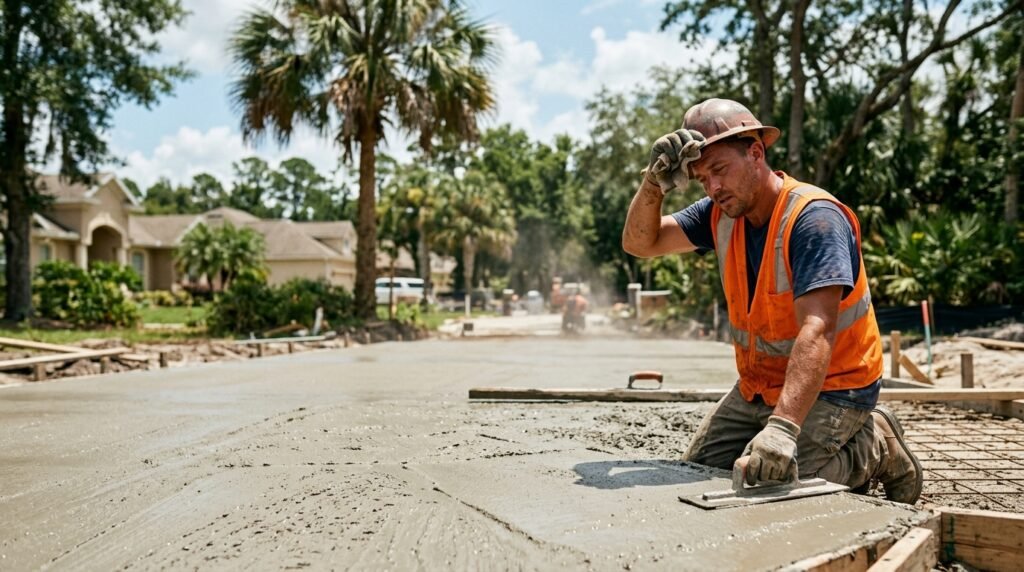
Site preparation has a major effect on the finished concrete. Crews remove weak concrete, roots, loose soil, and other bad material. They then shape and compact the base. Soft areas may need more work before forms are set. Forms hold the wet concrete in place and guide the final height. Steel or wire may be added based on the plans. Before the pour, the crew checks depth, slope, joints, and access. Concrete is then placed at a steady pace. Workers spread it, level it, and complete the chosen finish. After that, the curing work begins. Barriers should stay in place until the slab can handle the planned use.
The timing depends on the job size and site. A small repair may take one working day before curing starts. A large parking area may need several stages. Rain, hidden base damage, inspections, and access limits can also change the schedule. A clear plan should include removal, base work, the pour, curing, and the date each area can reopen.
What Affects Commercial Concrete Costs?
Commercial concrete costs depend on the full job, not one price per square foot. A small repair with easy access may cost less than a deep slab behind a building. Size and thickness affect how much concrete is needed. Steel, forms, pumps, testing, and special finishes may also add cost. Old concrete removal can raise the total, especially when crews must haul heavy debris. Base repairs may also increase the price. The same is true for tight access, night work, traffic control, and phased construction. A local site estimate is the best way to price the work. Ask for a written scope that shows labor, materials, removal, disposal, base work, placement, finishing, and cleanup.
Weather can also affect the schedule and price. Heavy rain may soften the base or delay the pour. Hot weather may call for an earlier start or more workers. A project near a busy entrance may need barriers and temporary routes. Permit and inspection needs can also vary. Don’t compare bids by total price alone. One bid may include demolition and base repair, while another may not.
Why It Matters
Commercial concrete affects safety, access, and daily business use. A raised slab edge can trip a worker or customer. Standing water can block a door or weaken nearby soil. Broken pavement can slow trucks and damage wheels. Poor drainage can send water toward the building. These issues may seem small at first, but they often grow with traffic and weather. Skilled commercial concrete contractors Jacksonville FL property owners hire should look below the surface. They should find the cause, not only cover the damage. Good planning can reduce repeat repairs, protect access, and help the new concrete handle real use.
Safe concrete should feel stable under foot and under tires. Walkways need smooth height changes. Ramps need the correct slope and clear landing areas. Parking lots need clear travel paths and good drainage. Loading areas must support the trucks that use them.
Concrete work can also affect normal business hours. In many cases, the job can be split into stages. One area stays open while another area is repaired. The schedule should include curing time because new concrete may look hard before it can carry traffic.
Should You Repair or Replace the Concrete?
Repair may work when damage is small and the slab still has firm support. A contractor may repair a joint, edge, shallow crack, or small worn area. Replacement often makes more sense when the slab has deep cracks, major settlement, broken corners, or wide surface failure. Drainage and base problems also matter. A patch won’t last if water keeps washing soil from under the slab. The same is true when soft ground keeps moving. A careful commercial concrete contractor should explain both choices. They should show why a repair can last or why removal is safer. The goal isn’t the cheapest short fix. The goal is the right fix for the site.
How Do Jacksonville Conditions Affect Concrete Work?
Jacksonville heat, rain, and wet ground can affect every stage of the job. Heavy rain may wash loose base material from one area and leave soft spots behind. Water may also collect where the slope is too flat. Hot sun can make fresh concrete lose moisture faster. This may shorten the crew’s working time. Contractors often watch the weather closely before a pour. They may start early, add workers, or change the work plan. The site should also be checked after heavy rain. Measurements taken before a storm may no longer match the base. Drainage is very important around parking lots, loading areas, walks, and building edges.
Permit needs depend on the work. Some projects may need building review, right-of-way approval, or traffic plans. This is more likely when work affects public sidewalks, streets, or access routes. Ask the contractor who will check local rules and submit needed forms.
How Should You Compare Commercial Concrete Contractors?
Start with work experience. Ask whether the company has handled sites like yours. A warehouse floor is different from a restaurant drive lane. A loading dock is different from an office walkway. Review the written scope line by line. It should explain removal, base work, slab depth, steel, joints, finish, curing, cleanup, and access. Ask who will manage permits and inspections. You should also ask about insurance, work hours, weather delays, and change orders. Reliable commercial concrete contractors should answer these questions without using confusing terms. They should explain risks and choices before work starts. A clear bid often gives more value than a low bid with missing details.
Final Thoughts on Choosing a Contractor
The best contractor looks at the whole property, not only the cracked surface. They check use, loads, water, soil, access, and safety. They also explain how the work may affect your business. Before hiring commercial concrete contractors Jacksonville FL, compare the full plan. Review site preparation, drainage, materials, schedule, curing, and cleanup. Ask how the team will handle hidden damage after removal. Make sure the written scope matches the final price. Good concrete work starts with clear planning and careful site checks. It should solve the current problem and lower the risk of the same issue returning soon.
Frequently Asked Questions
What Does Commercial Concrete Work Include?
It may include slabs, foundations, parking lots, sidewalks, curbs, ramps, loading areas, repairs, demolition, and replacement. The right service depends on the property and how it is used.
How Much Does Commercial Concrete Cost?
Costs vary by size, depth, steel, access, removal, base work, permits, and finish. A local site visit gives a more useful estimate than a general online price.
Can My Business Stay Open During the Work?
Often, yes. Crews may divide the job into stages and create temporary routes. The final plan depends on access, safety, curing time, and the size of the work area.
Is Commercial Concrete Different From Home Concrete?
Yes. Commercial concrete often carries heavier loads and more traffic. It may also need thicker slabs, more steel, testing, traffic control, and a more detailed site plan.
When Should Concrete Be Replaced?
Replacement may be best when the slab has deep cracks, major settlement, failed base material, or wide damage. A site check can show whether repair will last.
What Should I Ask Before Hiring?
Ask about similar jobs, insurance, permits, base preparation, drainage, steel, joints, curing, access, cleanup, and change orders. Request a clear written scope before approving the work.