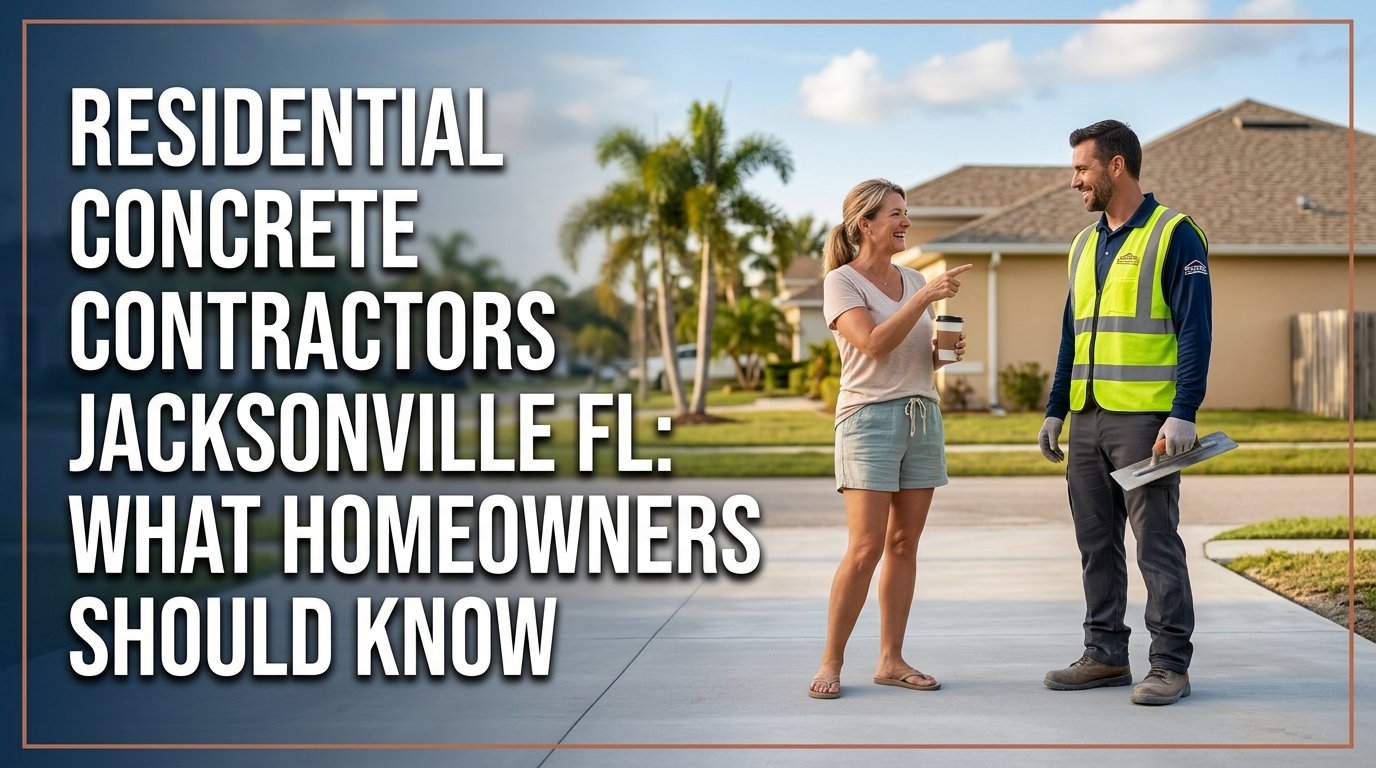
Hiring a concrete crew can feel harder than it should. Many companies make the same claims about price and skill. Yet the key facts may stay hidden until work starts. You need clear answers before anyone enters your yard. Good residential concrete contractors Jacksonville FL homeowners trust will inspect the whole site. They will check the soil, slope, drains, and work space. They will also explain each step in plain words. That care can help you avoid cracks, low spots, and water near your home. This guide shows what to ask, check, and place in writing. It also shows how to spot weak bids early.
Jacksonville homes face strong sun, hard rain, and wet soil. Tree roots and soft ground can also shift old concrete. These local issues can harm a driveway, walk, concrete patio, or concrete slab. Strong concrete installation starts with the soil below the new surface. The base must stay firm, and rain must flow away. This guide covers bids, work steps, permits, and common red flags. It will help you compare concrete contractors Jacksonville FL and concrete companies Jacksonville FL with care. You will know what good work should look like before the truck arrives. That can save time once the work begins. Visit Concrete Advantage to explore our concrete capabilities across Jacksonville and Northeast Florida.
Why Does the Right Contractor Matter?
The right crew can protect your home and your budget. Poor work may look fine for a few weeks. The real issues often show after rain or heavy use. A weak base can let one side sink. A bad slope can send water toward your garage. Joints in the wrong spots may lead to odd cracks. Skilled residential concrete contractors Jacksonville FL homeowners choose will plan for these risks. They will also plan truck paths, tools, forms, and clean-up. Good planning does not stop every small crack. Still, it gives the slab a much better start. That strong start can also cut repair needs later.
How Can Good Work Protect Your Home?
New concrete should move rain away from your home. It should not trap water by doors or walls. This is vital near garages, patios, pools, and side gates. A good crew checks the slope before setting forms. They may need to shape the soil or add drains. Strong residential concrete work also protects plants, fences, and old walks. The crew should mark pipes and other hidden site parts. You should know where trucks and tools will pass. These steps help stop yard harm and water issues. They also lower the chance of costly changes after the pour. It keeps each part of the job safer too.
How Can a Clear Plan Control Costs?
A clear plan shows what your money will buy. The price covers much more than wet concrete. A job may need removal, base stone, forms, steel, and labor. It may also need hauling, permits, and final clean-up. Trusted concrete experts will list these parts in the bid. They should explain when an extra cost may come up. Soft soil is one common surprise after old slabs come out. A written change plan helps both sides handle that issue. You can then approve new work before the crew moves on. Clear bids also make two companies much easier to compare.
How Can the Right Team Lower Stress?
A home job can block cars, gates, and yard paths. It can also affect pets, kids, and daily plans. A good crew tells you when each step will start. They explain which parts of the yard you can use. You should know when the truck may arrive. You should also know when rain may cause a delay. The crew must tell you when walking or parking is safe. Clear news helps you plan your day with less stress. A neat work area also shows care for your home. Good service means you do not have to chase each update each day.
What Home Concrete Work Can a Crew Handle?
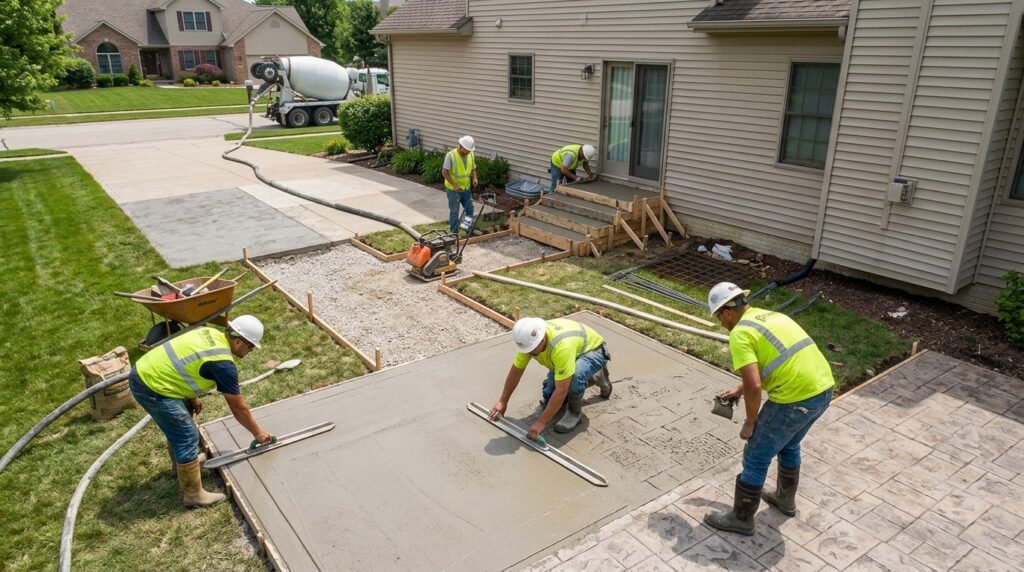
Homeowners often need driveways, paths, patios, steps, pool decks, and shed pads. Each job needs a plan that fits its use. A concrete patio must slope away from doors and walls. A concrete slab for a shed needs firm and even support. A driveway must hold cars without weak or thin edges. Walks need safe slopes and smooth links to other paths. Good residential concrete work may include removal, grading, forms, pouring, joints, and clean-up. Ask if one company will do the whole job. You should know who will work on your land each day. That makes the full plan much easier to judge. For broader pavement, structural, and site projects, review our concrete contracting services.
How Should You Compare Local Crews?
Try to get bids from three local crews when you can. Ask each crew the same set of clear questions. Check the company name, license, insurance, address, and past work. Ask for photos from jobs like your own. You may also ask to speak with a past client. When you compare concrete contractors Jacksonville FL, listen to how they explain the site. Their plan should cover water flow, base work, depth, joints, and cure time. Some concrete companies Jacksonville FL may leave out key work to cut the bid. Compare the full job, not just the last price. The best crew will explain why each step matters.
What Should a Written Bid Include?
A good bid should tell you what the crew will do. It should list size, old slab removal, and base work. It should also show slab depth, finish, joints, and steel. Look for clean-up, hauling, pay steps, and work dates. Ask who will check if a permit is needed. The bid should also list what the price leaves out. Good residential concrete contractors Jacksonville FL homeowners hire will not use a one-line quote. They give enough detail so you can judge the work. Keep the signed bid and all later changes in one safe place. Clear dates also help you plan around the work.
What Happens During the Work?
Most jobs start with layout and old slab removal. The crew then shapes the soil and adds a firm base. Next, workers set forms and check the slope. They may add steel based on the job needs. During the pour, workers spread and smooth the wet mix. They also add joints to guide normal cracks. The slab then needs time to cure and gain strength. Good concrete installation should not be rushed for a fast finish. Your crew should tell you when walking and parking are safe. Follow those rules, even when the surface looks dry. That wait helps the slab grow firm and strong.
Which Jacksonville Issues Should You Discuss?
Jacksonville rain can change a pour plan very fast. Hot sun can also dry the top too soon. Soft or sandy soil may need more base work. Large roots can lift old slabs or block new paths. Low yard spots may hold water after summer storms. Ask how the crew will deal with these site issues. You should also ask about permits and local group rules. A patio roof or new drain may change the needs. Rules may vary by job and street. A careful crew checks first and does not guess. That step can stop long delays or costly work later.
Which Red Flags Should You Avoid?
Be careful when a crew gives a price without a site visit. Ask more questions if they skip talk about the base or slope. Large cash needs before work starts can also bring risk. So can strong pressure to sign on the same day. Watch for no company name, no insurance, or no written bid. Good concrete experts do not promise that concrete will never crack. They explain how joints, base work, and water flow reduce risk. Clear facts matter more than big sales claims. Walk away when simple questions bring anger, blame, or more pressure. Your home and budget both deserve that care.
What Should Homeowners Remember?
The lowest bid may not give you the best job. Look for clear plans, local work, fair terms, and plain answers. Strong residential concrete contractors Jacksonville FL homeowners use will inspect the full site first. Compare concrete companies Jacksonville FL by what each bid includes. Ask about water flow, soil, depth, joints, cure time, and clean-up. Put all key promises and later changes in writing. These steps take some time before the work starts. Yet they can save stress once the crew arrives. They can also help the new slab stay safe and useful for years. A clear plan is worth more than a cheap guess.
Frequently Asked Questions
How Do I Check a Contractor?
Check the company name, license, insurance, address, and local work. Ask for a full written bid before you pay. Make sure all papers show the same company details.
Does a Patio Need a Permit?
Some patio jobs may need city or group approval. The rules can change with size, place, and added parts. Ask the crew to check before work starts.
How Long Does the Job Take?
Small jobs may take a few work days. Large jobs need more time for removal and base work. Rain may also move the planned pour day.
Why Does Concrete Crack?
Concrete can crack from weak soil, roots, water, or heavy loads. Good joints and base work can lower that risk. No honest crew should promise no cracks.
Can Concrete Cover an Old Slab?
It can work when the old slab stays firm and flat. Bad cracks or sinking may harm the new layer. A site check should guide the final choice.
When Should I Replace a Slab?
Replace it when large parts sink, move, or break. Small and still cracks may allow a simple repair. Ask for both choices when the answer is not clear.